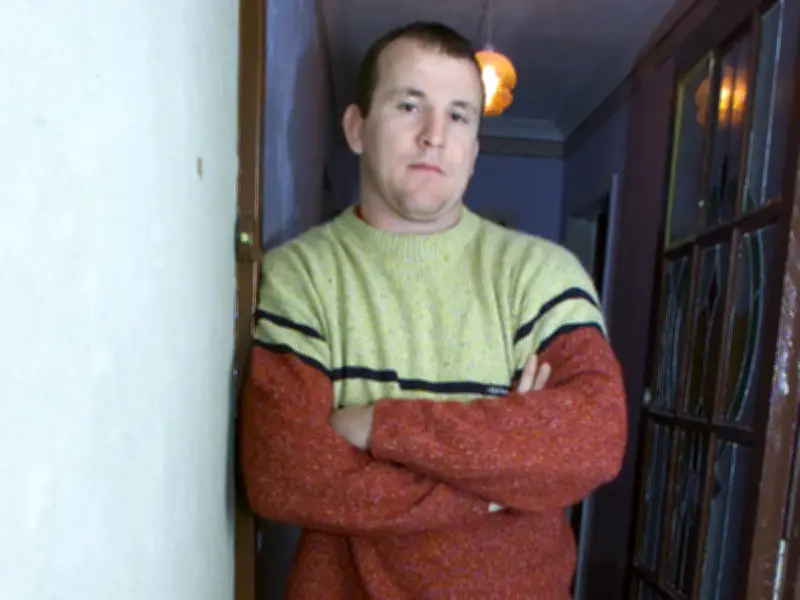
The name Brett Sinkinson is synonymous with one thing to rugby fans of a certain age. Sinkinson, along with Wales team-mate Shane Howarth and Scotland international Dave Hilton, were caught up in the infamous Grannygate scandal back in 2000.
The eligibility row erupted when it became apparent that none of the three were actually able to play for their chosen country, despite winning a number of caps at that point. Howarth and Sinkinson, both hailing from New Zealand, believed they were eligible to play for Wales through family ancestry.
The International Rugby Board, as rugby's global governing body was known back then, allowed you to play for a nation based on your parents' or grandparents' country of birth.

Sinkinson's grandfather born in Oldham
The assumption was that Sinkinson's grandfather came from Wales. In the end, it transpired he was actually born over the border in Oldham, Lancashire. At that point, he had worn the red jersey 14 times.
“I never set out to deceive anyone,” he said after the story broke. “It is still a bit unclear. My grandfather was not registered for a month or so after his birth, which maybe caused confusion. But a birth certificate has been produced which says he was born in Oldham.”
Barred from playing for Wales, he would go on to qualify on residency, showing a fairly thick skin to stick it out in Welsh rugby. “What happened was regrettable, but that has to be put in the background now,” he said following his recall in 2001. “This is about re-establishing myself as an international player and doing everything I possibly can to help Wales.”
Life after rugby in New Zealand
By the end of his career, he went on to win 20 caps for Wales. Since finishing playing, he's returned to New Zealand, where work saw him become a landscape gardener in Papamoa in the Bay of Plenty. He is the owner of Bay Landscapers, with his company specialising in “creating stunning outdoor spaces that exceed your expectations”.
As for Howarth, he now runs a supermarket in Auckland, New Zealand, after returning home following the scandal that saw his Wales career ended in an instant. His qualification for Wales had been founded on his grandfather, Thomas Williams, being born in Cardiff.
However, following newspaper reports suggesting his maternal grandfather was actually somebody different, it quickly emerged there was an issue. “I couldn't prove he was my grandfather. It wasn't on the birth certificate,” he said. “But, in my heart, I truly believed, and I still believe now, that I had Welsh blood running through my veins.”
Howarth's lasting regret
“There were a lot of players involved in it, but, unfortunately - I guess because I was an All Black - I kind of got singled out,” he previously told WalesOnline. “That's the way it is and you cop that on the chin. But, to this day, I am Welsh. If I can't get papers to prove that, then have a look at the 20 games I played in the red jersey and see if I wasn't Welsh.”
“To have that taken away from me hurt, it hurt big time. But what upsets me the most is it hurt my mum's side of the family. It dragged up things that didn't need to be bloody dragged up. It all came out in the wash. The most disheartening thing for me, out of it all, was I let my mum and my grandmother down.”
“That sits with me still today. As much as I could, I went up to see nana and apologise. It did bring skeletons up that didn't need to be brought up. I took that pretty hard. It really gutted me. It hurt me a lot because it put mum and that side of the family under pressure, which was just crap to be honest.”