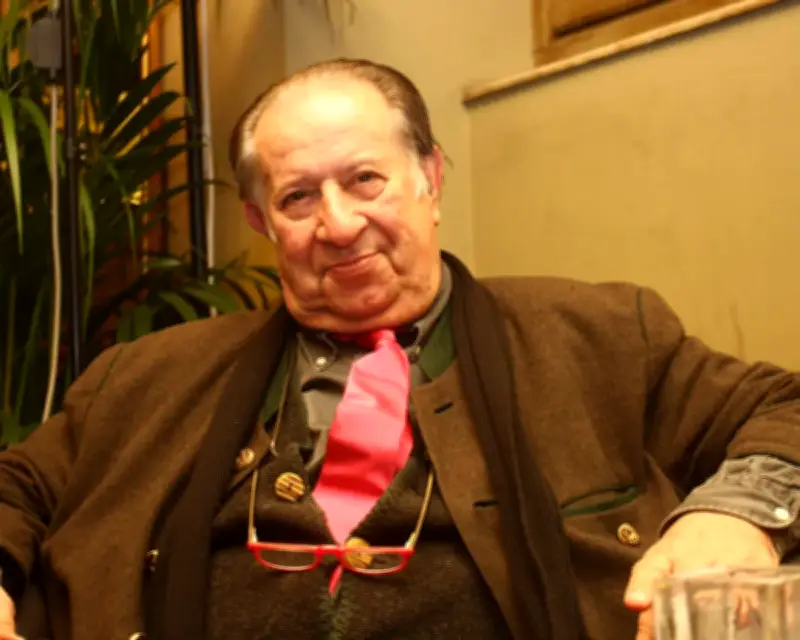
Italian film director Tinto Brass, celebrated for bringing erotic cinema to wider audiences with films such as Caligula and Salon Kitty, has died aged 93. His wife Caterina Varzi and children Bonifacio and Beatrice Brass announced the news to Italian press agency Ansa on Wednesday.
From Rossellini assistant to cult auteur
Born in Milan and raised in Venice, Brass began working in cinema after moving to Paris, where he was an editor and archivist at the Cinémathèque. Returning to Italy, he worked as an editor and assistant director to Roberto Rossellini.
His experimental and anarchic approach earned him a reputation, and in 1964 he was commissioned by Umberto Eco to create two short films experimenting with visual language for the Triennale di Milano. Warner Bros reportedly approached him to direct A Clockwork Orange, though scheduling conflicts meant the film went to Stanley Kubrick instead.
Move into erotic cinema
In the 1970s, Brass turned to erotic cinema. Though crass and filled with nudity, his early work in the genre was also politically minded, exploring the relationships between sex, power and money.
“I made so many erotic films because I believed eroticism to be a fundamental key to human expression and, above all, the key to portraying women,” he told La Repubblica newspaper. “That was what interested me most.”
His 1976 film Salon Kitty, based on the true story of a Berlin brothel co-opted by Nazis to spy on foreign allies and fellow officers, caught the attention of producer and Penthouse founder Bob Guccione. Guccione hired Brass in 1979 to direct Caligula, an attempt to make a star-studded, mainstream pornographic film based on the story of ancient Rome’s most feared ruler.
Legacy and final years
Starring Malcolm McDowell in the title role, alongside Helen Mirren, Peter O’Toole and John Gielgud, the film was based on a screenplay by Gore Vidal, which Brass rewrote to include orgies, decorative phalluses, and plenty of female nudity. Vidal disavowed the film, as did Brass after Guccione shot additional unsimulated hardcore sex scenes and spliced them in without the director’s permission. It was released in the UK and US in 1980, with Brass only credited for “principal photography”. A recut version without Guccione’s inserts was released in 2023, although Brass was not involved and did not approve of it.
In recent years, Brass lived in Isola Farnese, on the outskirts of Rome. He is survived by his wife, Varzi, whom he married in 2017 and who curated his archive. In an interview on his 90th birthday, he expressed a wish for his ashes to be scattered in the Venice lagoon.