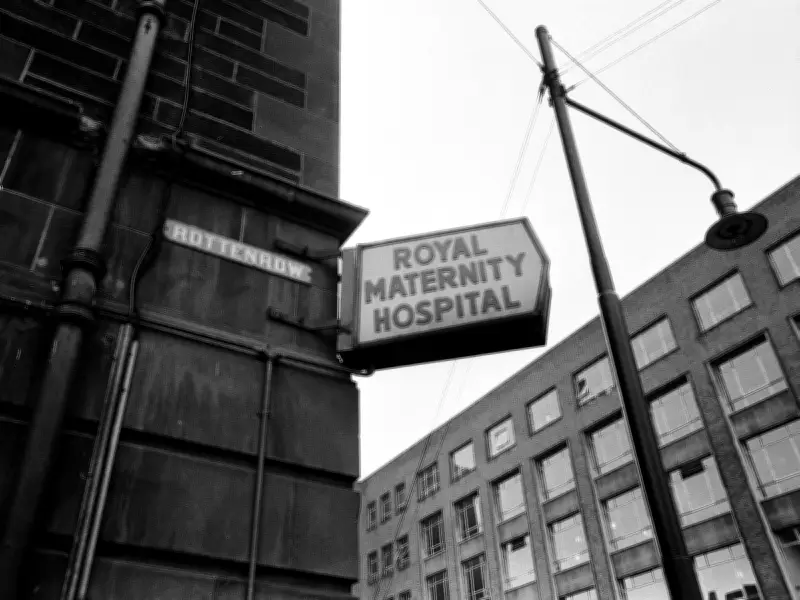
Glasgow's Rottenrow Maternity Hospital, a historic institution that pioneered modern childbirth techniques including the Caesarean section and ultrasound, has left an indelible mark on medicine. Founded in 1834 as the Glasgow Lying-In Hospital and Dispensary on Greyfriars Wynd, it addressed the needs of women who could not afford safe home births, according to the Royal College of Physicians and Surgeons of Glasgow.
Early Years and Relocations
The hospital moved to St Andrews Square in 1841 and then to Rottenrow in 1860, where it gained its iconic name. Expansions around 1880 and 1908 added over 100 beds, a lecture theatre, and an operating theatre, establishing it as a centre for midwifery training. In 1888, a West End branch opened on St Vincent Street.
Pioneering the Modern C-Section
In 1888, Professor Murdoch Cameron performed the world's first modern C-section at Rottenrow. Using antiseptic sutures and dressings, he prevented infection, resulting in the survival of both mother and child. This breakthrough transformed Caesarean sections into a safe, reliable procedure.
Other Medical Milestones
Other pioneers included Munro Kerr, who contributed data on maternal and perinatal mortality, and Ian Donald, who helped develop the first diagnostic ultrasound machine. Their work at Rottenrow shaped modern obstetrics and gynaecology.
World War II and Later Developments
The St Vincent Street branch closed around 1941 after damage from an air raid. After WWII, a new out-patients department opened in 1955, and the hospital was officially renamed Glasgow Royal Maternity Hospital in 1960.
Closure and Legacy
By 2000, the hospital had deteriorated significantly. It moved to new premises at Glasgow Royal Infirmary. The University of Strathclyde purchased the site, demolishing it and opening Rottenrow Gardens in 2003. The original entrance was preserved, and a large safety pin statue was erected to honour its legacy.