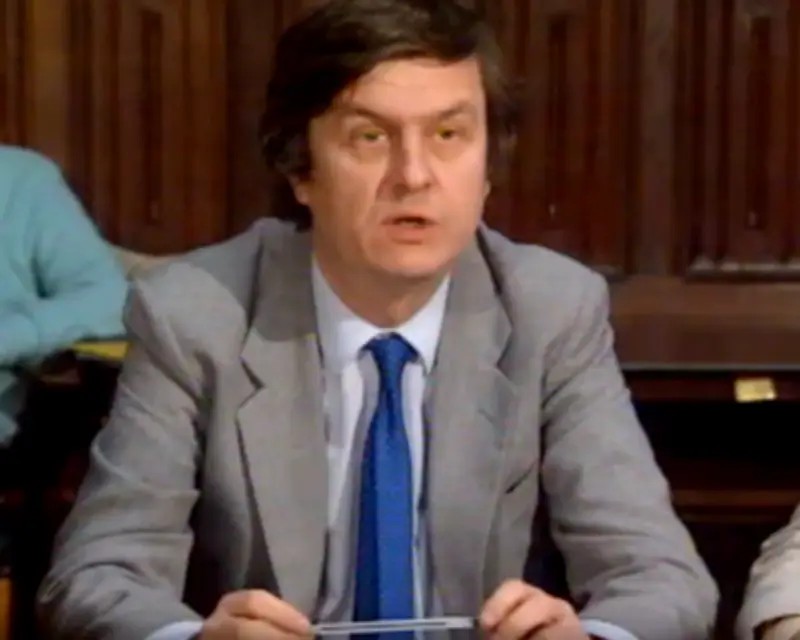
Paul May, who has died aged 74 of a pulmonary embolism, was the tireless chair of the Birmingham Six campaign that secured the release of six men wrongly convicted for the 1974 Birmingham pub bombings. Their convictions were quashed by the Court of Appeal in 1991 after they had spent 17 years in prison.
Campaign beginnings and growth
In 1985, May became chair of the Birmingham Six campaign, which started from a small backroom in the Camden Irish Centre, north London. Journalist and later Labour MP Chris Mullin presented new evidence in World in Action TV programmes and a book. Alongside his work as a housing officer for Islington Council, May expanded the campaign into a huge network of supporters in Britain and abroad. By the time the Six's new appeal opened, he had swayed public opinion on one of the worst miscarriages of justice in British history.
May was completely on top of the underlying evidence. He produced pamphlets that summarised and let the evidence speak for itself, so people could draw their own conclusions. Travelling around the country, he spoke at often small public meetings to spread the word.
Building support and fundraising
As the campaign grew, May spoke to and briefed many politicians and journalists, recruiting a growing number of well-known actors, comedians and musicians to the cause. He organised increasingly large fundraising events, culminating in a concert at the Wembley Conference Centre in 1990, with acts including folk singers Christy Moore and Peggy Seeger.
At the heart of the initiative lay May's friendships with the Six, when they had no hope and felt they would be buried in prison for the rest of their lives. He visited them and their families, ensuring they had a voice as a friend and advocate.
Impact on Irish community
In speaking out about the Birmingham Six, May gave confidence more widely to Irish people living in Britain. In the 1950s and 60s, boarding houses and pubs carried signs saying "No Blacks. No dogs. No Irish." This anti-Irish racism was compounded by sentiment linked to the IRA bombing campaign. The Birmingham Six campaign gave the wider Irish community a sense of vindication, pride and energy.
Other miscarriage of justice campaigns
May collaborated closely with campaigns for the Guildford Four, wrongly convicted of the Guildford pub bombings in 1974; the Maguire Seven, wrongly convicted of possessing explosives in connection with the Guildford and Woolwich pub bombings; the Tottenham Three, wrongly convicted of killing PC Keith Blakelock in 1985; the Bridgewater Four, wrongly convicted of murdering newspaper boy Carl Bridgewater in 1978; and Judy Ward, wrongly convicted of the M62 bombing in 1974.
After the Birmingham Six's convictions were quashed, May threw himself into Ward's and the Bridgewater Four's campaigns. Then came the East Ham Two campaign for two young Tamil men wrongly convicted in 1988 for murder in a firebombing attack. Working with solicitor Gareth Peirce and then Labour MP Jeremy Corbyn, May was instrumental in getting the case reopened by the Home Secretary in 1992, with one man, Sam Kulasingham, on hunger strike. The convictions were quashed in 1994.
May also campaigned for Danny McNamee, wrongly convicted of the Hyde Park bombing in 1982; Eddie Gilfoyle, convicted of murdering his wife in 1992 and released on licence in 2010; and Sam Hallam, wrongly convicted of murder following a street brawl in Islington in 2004.
Later campaigns and personal life
For 15 years until his death, May led the campaign for Colin Norris, a nurse convicted in 2008 of murdering four patients by injecting insulin. Norris continues to protest his innocence, though in 2025, having changed his name to Colin Campbell, he lost his appeal.
May also worked on wider social and political issues, including ensuring prisoners were involved in the Good Friday agreement, and campaigning to extradite Augusto Pinochet to Spain in 1998. He fought for changes to disability legislation affecting prisoners and for pension contributions for released prisoners after long sentences.
May rose to become assistant director of housing for Islington, retiring in 2000 and subsequently working for the disability charity Scope. He was driven by leftwing politics from a hard upbringing in Manchester tenements in the 1950s and 60s.
Born in Stepney, East London, May grew up in Manchester, son of John May, a painter and decorator, and Mary Treacey, who ran an off-licence. After leaving Xaverian College at 16, he worked in a fruit market and then for Manchester Corporation. In the early 1970s, he moved to London and joined Islington housing department.
In 2000, May met Jane Mair while doing a part-time law degree at Birkbeck, University of London, each graduating with first-class honours. They married in 2004. Jane survives him, along with two of his sisters.