Archivists Unite to Finish Welles' Passion Project
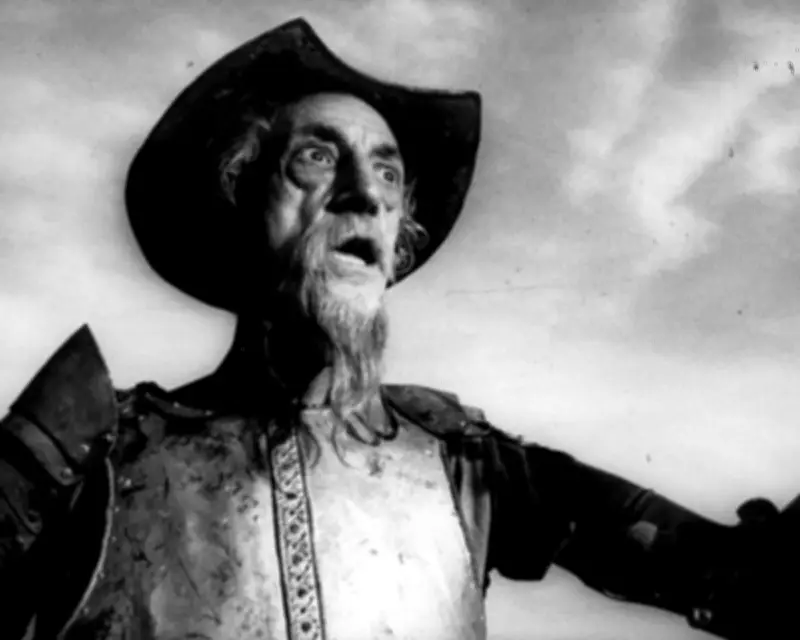
More than 70 years after Orson Welles shot the first frames, his ambitious project to adapt Miguel de Cervantes' Don Quixote may finally be completed. A consortium of European film archivists, backed by Oja Kodar, Welles' partner and collaborator, is working to produce a coherent film from 30 hours of footage scattered among archives in France, Spain, Italy, and the Munich film museum.
Welles began reworking the classic novel in 1957 as a television film backed by Frank Sinatra, but the deal fell through. He continued working on the project intermittently until his death in 1985, shooting scenes in Mexico, Italy, and Spain whenever he found a backer.
Reconstruction Challenges
The team, led by Esteve Riambau, a Welles authority and former head of the Catalan film archive, faces significant hurdles. The Cineteca Nazionale in Rome must digitize 50,000 metres (164,000 feet) of negative, adding to 50,000 metres of 16mm and 35mm film held by Spain and 80 minutes of 35mm footage in France.
"We don't have a complete script but enough to reconstruct it," Riambau said. "Half the material is in the form of a negative in Rome which has to be printed before we can see it." He emphasized that the project is a work in progress, with scenes shot from 1956 to 1976. "It would be surprising to discover that every scene has been shot but I think there's enough. It's hard to say what [Welles] wanted definitively because in the script there are alternative scenes, but we'll work with what we have."
Riambau added: "We're not going to invent anything or use special effects to fill in the gaps. We're not working with hypotheses. The idea is to show the original in so far as it's possible, but it's like working on a mosaic where there are missing pieces."
Film's Unique Take on Cervantes
First published in 1605, Cervantes' novel follows Don Quixote, a minor noble who lives out a fantasy as a chivalrous knight with his sidekick Sancho Panza. The film is not a faithful adaptation. "There are some opening scenes that are faithful to the book but there are others that are, shall we say, enhanced," Riambau said. For instance, the puppet theatre scene in the novel, where Don Quixote attacks puppets, is set in a cinema in Mexico where he attacks the screen to save the heroine.
Most footage is in black and white, though some scenes were shot in colour in Andalucía. The soundtrack is incomplete, but where it exists, Welles himself voices Don Quixote and Sancho Panza.
Welles' Legacy and Timeline
Welles co-wrote, produced, directed, and starred in his first film, Citizen Kane (1941), which regularly tops polls of the greatest films. He also directed A Touch of Evil (1958) and starred in The Third Man (1949) and A Man for All Seasons (1966). Riambau considers Welles "much more than a film-maker, he's more like Michelangelo," and believes Don Quixote will be a significant addition to his body of work.
Welles called the project his "bambino" (baby) and wrote several screenplay versions, suggesting uncertainty about how to finish it. Riambau noted Welles joked about changing the title to "When are you going to finish Don Quixote?" Riambau echoed: "So I would say the same, 'when are we going to see the reconstruction of Don Quixote?' And the answer is: I think we'll need at least until 2028."