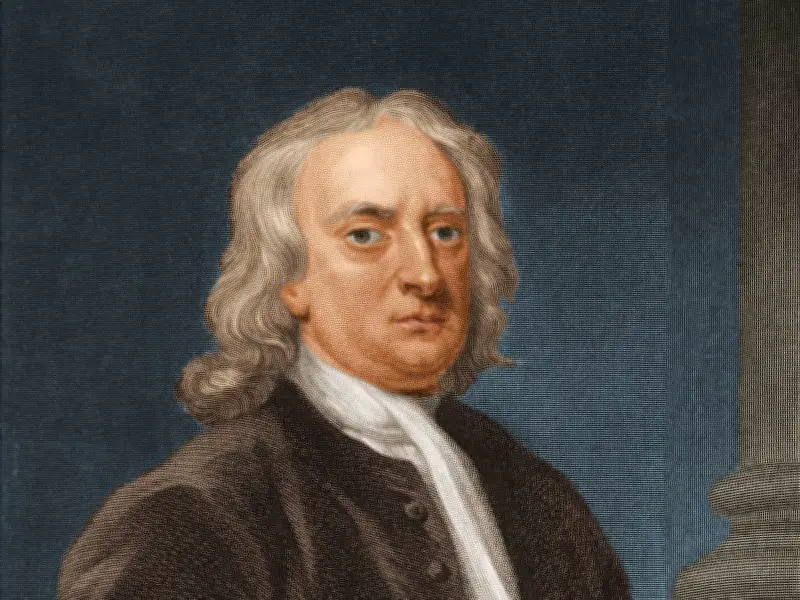
Sir Isaac Newton, the celebrated scientist known for revolutionary breakthroughs in physics and mathematics, once predicted the exact year the world would end. His chilling biblical prophecy, written in 1704, foretells humanity's destruction in 2060, a date that now looms just 34 years away.
Newton's Biblical Calculations
Newton reached his doomsday date through meticulous examination of the Bible and other religious texts. He theorised that the current world would be replaced by a literal 'Kingdom of Heaven' on Earth, with Christ returning in the mid-21st century to rule for a millennium, during which the Jewish people would establish 'a flourishing and everlasting Kingdom' in Israel.
In archaic English, Newton wrote: 'So then the time times and half a time are 42 months or 1260 days or three years and an half, recconing twelve months to a yeare and 30 days to a month as was done in the Calendar of the primitive year. And the days of short lived Beasts being put for the years of lived kingdoms, the period of 1260 days, if dated from the complete conquest of the three kings A.C. 800, will end A.C. 2060.' He added, 'It may end later, but I see no reason for its ending sooner.'
Public Reaction and Expert Insights
Newton authority Stephen D Snobelen noted that while academics have long known of Newton's forecast, it has only recently become public. 'For many, the revelation that Newton was a passionate believer who took biblical prophecy seriously came as something of a shock,' he wrote. Snobelen also highlighted that modern scientists make similar apocalyptic predictions, citing Sir Martin Rees's book Our Final Hour (titled Our Final Century in the UK), which argues humanity has only a fifty-fifty chance of surviving the 21st century.
Recent surveys suggest roughly one in seven people believe they will witness the end of the world in their lifetime. With headlines dominated by threats of World War III and new pandemics, the prospect of global destruction feels increasingly plausible.
Impact and Legacy
Newton's prediction, though rooted in religious interpretation rather than scientific method, continues to resonate. As the 2060 deadline approaches, his eerie prophecy serves as a reminder of humanity's enduring fascination with the apocalypse. If one of Britain's most brilliant intellects is to be believed, we have roughly 30 years remaining—so we might as well make the most of them.