Jason Manford Questions Cancel Culture Narrative in Candid Interview
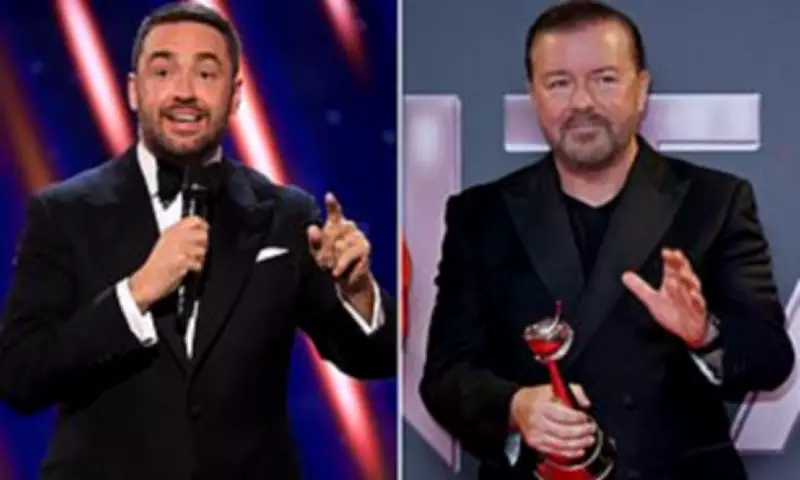
Comedian Jason Manford has openly shared his perspective on the controversial topic of cancel culture, delivering a subtle yet pointed critique aimed at fellow comic Ricky Gervais. The 44-year-old funnyman, in a recent discussion with The Daily Mail, explored whether comedy has become excessively politically correct in recent years, while highlighting what he sees as a paradox in the industry.
The Irony of "Cancelled" Stars
Manford pointed out the apparent contradiction where numerous high-profile comedians build entire careers around claims of being "cancelled," yet continue to enjoy substantial success. "That's the funny thing, isn't it? It is and it isn't," he explained. "Look at the most watched shows on Netflix for example—they are Ricky Gervais, they're Jimmy Carr, they're Jim Jefferies. They're comics who are really offensive, and Dave Chappelle."
The comedian couldn't resist a cheeky dig at his peers, noting: "Makes me laugh, Ricky and Dave say, 'Oh, I've been cancelled'... I think I wish I was cancelled! He just signed a 20 million pound Netflix deal. I'd love to be that cancelled... I'm on a worldwide arena tour being cancelled."

The Live Comedy Experience Versus Online Clips
Manford, who recently partnered with cheesy baked snack Cheez-It to spread joy across London, emphasized the crucial difference between experiencing comedy live versus through isolated online clips. The Waterloo Road star explained that jokes often land significantly better in person during actual performances, where context and delivery are fully appreciated.
"Sat around the table with your family reading a joke that was said the night before in front of a room full of people, hits different," he continued. "You know that, of course, that might be offensive, but in the room on the night, you can see a wink in the eye. You can hear the tone of voice. You know there's no malice behind it. Live comedy is still as fun and as raucous and as edgy as it's ever been."
The Changing Landscape of Comedy Production
When questioned about why classic comedies like The Royal Family and Absolutely Fabulous remain popular today, Manford suggested that contemporary comedy production has become overly bureaucratic. These beloved shows originally aired on the BBC between 1992-2004 and 1998-2012 respectively, representing a different creative era.
"I think there was definitely a point where laughter was first, and it was just about right," Manford reflected. "What's the funniest thing to do? Let's not worry too much about sensitivities, and let's be funny. And the more you make comedy by committee, the more people are involved, the less funny it gets."
He elaborated with a personal anecdote: "A lot of those shows were one or two people's vision, and they were sort of left to do it. And now, I'll be sat in rooms with people I think you don't even make your own friends laugh, and yet you're in charge of comedy! I've had that before, where I remember being in a meeting once, and I did whatever the joke was in the hosting thing I was doing, and this commissioner said, 'You know, that bit at the end where they laugh, there's quite a long build up to that. Is there any way of moving that bit to the beginning?' And I was like, 'What the punchline? No. That's not how this works.' That's like building a house on top of a roof, that's not going to work!"
Balancing Inclusivity with Humour
Despite his criticisms, Manford doesn't align himself with comedians who claim "you can't say anything anymore." He actually sees value in more inclusive approaches to comedy, believing they push comedians to work harder creatively.
"I don't necessarily think I'm one of these people who's like, 'Oh, you can't say anything anymore', and everyone's offended. I don't think that's true," he stated. "I actually think being inclusive, if anything, makes you work harder for comedy. You can't just go for the low-hanging fruit now, you have to work a little bit harder to make sure that everyone feels included. I don't mind that at all. That fits into my comedy anyway."

However, he expressed concern about what he perceives as competitive liberalism within the comedy world: "I feel like I'm quite liberal, but I think some people in comedy sort of try and out-liberal each other. They try and find like another way. I feel like even now I've got material that I think in 20 years time, someone will say, 'Oh, my God, I can't believe you said that about dogs. Like dogs have got their own people, and how dare you, and you're gonna get cancelled because you said that joke about dogs.' Like just finding other ways of sort of getting in the way of being funny."
The Fundamental Joy of Live Performance
Manford remains optimistic about the state of live comedy, emphasizing that audiences are generally receptive and open to laughter. "When you're live in front of a room of people, everyone from all walks of life, everyone is just up for a laugh. No one is trying to be offended or try and be upset," he observed.
He concluded: "So, yeah, I think modern comedy is sort of victim of its own niceness, in a way. And that's probably why those old comedies sit so well, is because they didn't worry too much about that. They just went, 'Let's be funny first.'"
Spreading Joy Through Comedy
Jason Manford's extensive career spans comedy, television, theatre, and radio, including multiple successful UK tours such as A Manford All Seasons, Like Me, Muddle Class, First-World Problems, and Turning into My Dad. His recent collaboration with Cheez-It aimed to address what research identified as a national need for more joy during winter months.
According to Cheez-It's findings, nearly two-thirds of Brits admitted yearning for more joy in winter, with one in ten confessing they couldn't remember their last proper laugh. Manford took to London's streets to lift spirits, explaining his personal motivation: "I feel like I'm constantly trying to fix people's moods. You know, if someone's down, I feel like that's my responsibility. And I guess people do presume that because you're a comic, you're always full of laugh, full of banter."
For his own mood enhancement, Manford turns to familiar sources: "But for me, I suppose I'll watch same as everybody else, really—comedy clips, sitcoms. I'll ring a friend, got a couple of mates who were dead funny. My mate Steve and Dave and we have a little laugh. My kids make me laugh—my son's hilarious, like, just stuff he comes out with. So, yeah, I think it's about people, isn't it? Fundamentally, it's very hard to laugh by yourself. So a campaign like this hopefully brings people together, gets people laughing."
The Cheez-It initiative, dubbed the "Comedy Credit Service," sought to provide Brits with much-needed laughter during the gloomy February period. Research conducted by the brand also revealed the top ten UK cities with the best sense of humour, led by Liverpool at 16%, followed by Glasgow at 7%, and London at 6%.