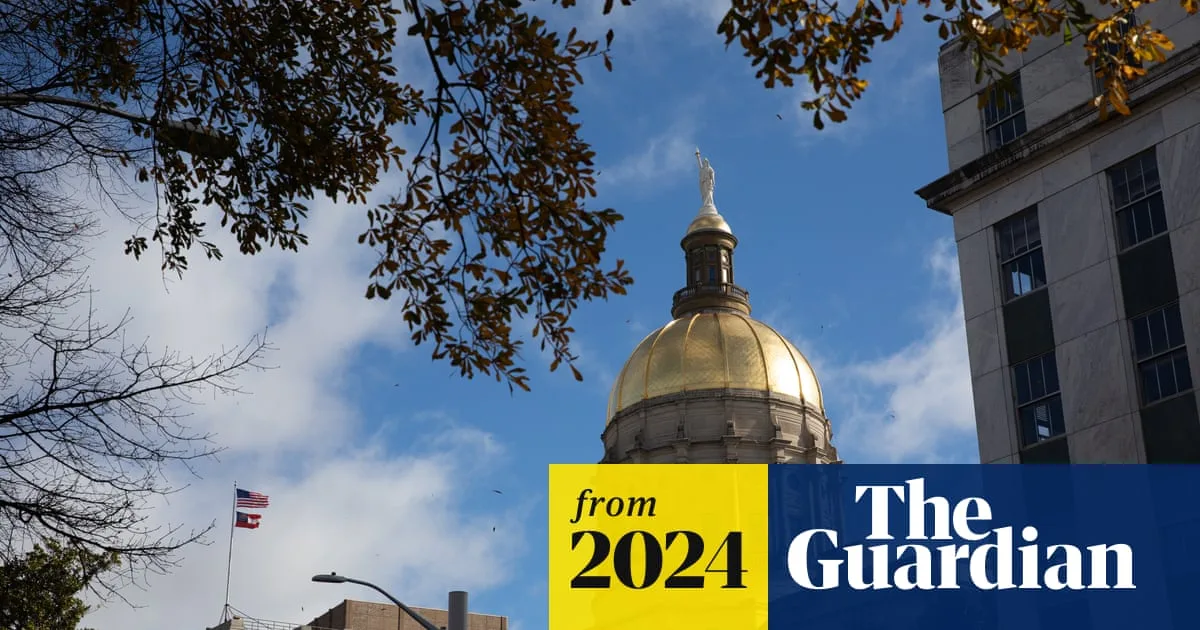
Georgia lawmakers are employing an AI-generated deepfake video to advocate for legislation that would ban the use of such technology in political communications. The bill, introduced by Republican state representative Brad Thomas, seeks to criminalise the creation and distribution of deceptive AI media that could influence elections.
To demonstrate the potential for abuse, Thomas presented a deepfake video to the state judiciary committee that used AI to impersonate state senator Colton Moore and former congressional candidate Mallory Staples. In the video, the AI-generated Moore falsely endorses the bill, saying: 'How is using my biometric data, like my voice and likeness, to create media supporting a policy that I clearly don’t agree with the first amendment right of another person?'
Thomas noted that the tools used to create the video are inexpensive and widely available. 'The particular one we used is, like, $50. With a $1,000 version, your own mother wouldn’t be able to tell the difference,' he said. The pace of AI advancement, he added, is outstripping legislative efforts to prevent misuse.
The proposed legislation, House Bill 986, would make it a felony to publish materially deceptive media within 90 days of an election if it significantly influences a candidate’s chances or confuses election administration. Penalties include two to five years in prison and fines up to $50,000.
Moore, who has been ostracised by his Republican colleagues and barred from the Georgia house chamber, declined to comment. He has opposed the bill on social media, arguing it threatens protected satire and 'memes'. Staples has also voiced opposition, citing the federal conviction of alt-right influencer Douglass Mackey as an example of potential overreach.