A Labyrinthine Tale of Homecoming and Unrest
Irish author Keith Ridgway's latest novel, Dooneen, deals both mischievously and menacingly in ambivalence. The book's epigraph is taken from a misty-eyed ballad pining for the Cliffs of Dooneen, but a footnote warns that debate continues about whether those cliffs exist at all. This sets the tone for a narrative where place and knowledge remain wilfully unstable.
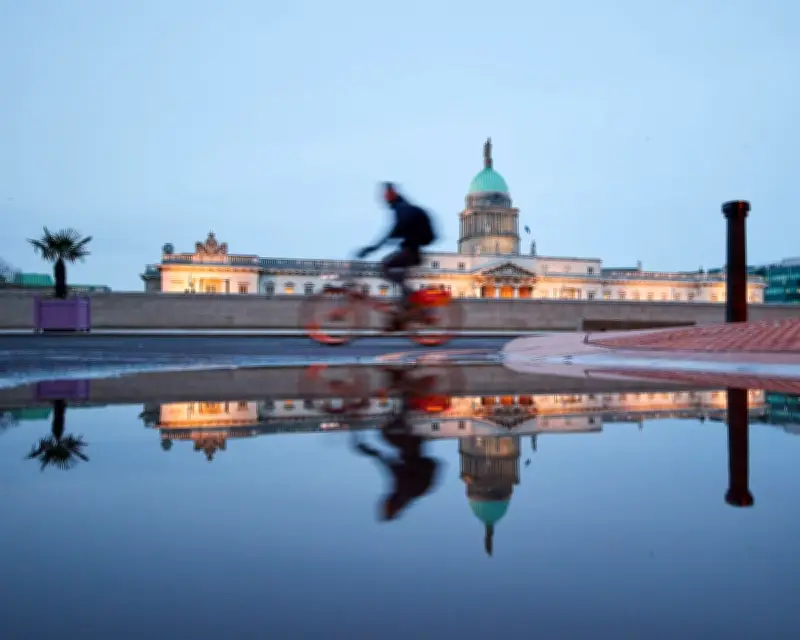
Protagonist Bartholomew Port, known as Mew, leaves his partner Mootie in south London to return to his birthplace, Dublin. In an Alice in Wonderland-style sleight of hand, Mew reaches Dublin not by air or sea, but by slipping through bushes in Camberwell's Burgess Park. The Dublin he finds is uncanny, a place that can turn on you in an instant. He recognises streets and landmarks, but unsettling apparitions, children at windows, and mysterious passersby in yellow flicker into being around him.
The Uncanny City and Social Turmoil
Mew's dislocation in a city where he should feel at home forms part of Ridgway's inquiry into what happens to home when we leave and return. The uncanniness intensifies because Mew relates events from a future exile, the circumstances of which remain unclear until the novel's end. As in Paul Lynch's Booker-winning Prophet Song, this is an Ireland trembling with nascent social unrest. Early on, a musical number by bellboys at Mew's hotel reveals a growing schism between Dublin's rapacious landlords and their disenfranchised tenants.
Change is in the air. Over tea and biscuits, an old friend, Dinny, whispers to Mew about activism gaining momentum and political assassinations. Dinny characterises their tense historical moment as one where 'weird items abound. Strange things. Strange times. Dark times.' This period largely mirrors our own or sits in the near future.
Underground Protest and Narrative Fragmentation
For much of the novel's claustrophobic central section, Mew joins an underground protest movement planning to besiege Garda headquarters. He spends a night in murky tunnels beneath the city, where the narrative becomes polyphonic. As separate factions travel through different passages where 'acoustics swam and tumbled and bobbed', attention shifts from Mew's confusion to Beckettian monologues and Joycean declamations from radicals and revolutionaries. These elliptical sections offer the novel's most concentrated wisdom, with reflections on Ireland's history of thwarted resistance, the role of imagination in politics, and the nature of time.
Ridgway's strategy of reproducing ambivalence on the page could risk alienating readers, but the linguistic energy and variety provide sustenance. There are laughs too: slapstick digressions about split trousers, disquisitions on making crisp sandwiches, and scheming military horses are part of the novel's offbeat comedy.
Longing and Human Connection
The most affecting element is Mew's longing for Mootie. In a world of political turmoil and botched plans, the desire for human connection transcends everything. Towards the novel's close, Mew says: 'Perhaps I died before I met you and you were only a dream. You, Mootie. A figment. Did I make you up? Your tall laughing body in the evening light, your laughter and your jokes … No, your beauty was not something I would dare to dream. You were real. I can taste you still. I can feel the heat of your body in the cold of the morning. You are real.'
Dooneen by Keith Ridgway is published by Fitzcarraldo (£14.99).