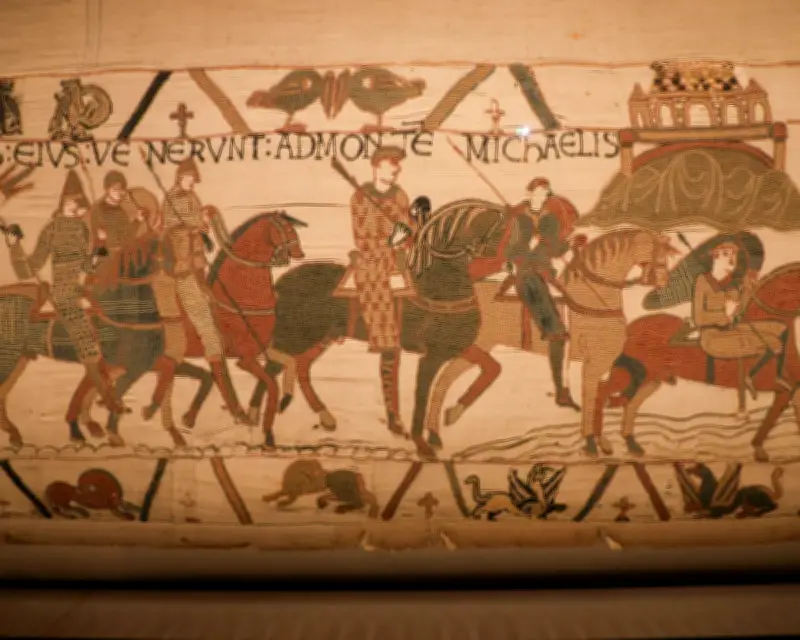
The Bayeux tapestry, on loan to the British Museum from September 2026 to July 2027, caused online queues of up to nine hours when tickets went on sale for the first time on Wednesday morning. The museum's ticketing website experienced huge traffic as the public scrambled for access.
Massive Demand and Long Wait Times
Reports indicated that 40,000 people were queueing by mid-morning, with the number ballooning to nearly 80,000 by mid-afternoon. Those waiting online were told: "We're currently experiencing high levels of demand. Booking online is still recommended however wait times may extend up to nine hours." Visitors were asked to "be patient" and advised that queueing online was still better than contacting the museum's "exceptionally busy" phone lines or email inbox.
Ticket sales on Wednesday covered slots from the show's opening in September through December. Two additional releases will follow in October and January for the remainder of the tapestry's stay in Britain, which runs until July 2027.
Pricing and Revenue
Tickets are priced at £33 during peak times, nearly triple the €12 (£10) charged in Normandy, where the tapestry is normally displayed. Off-peak tickets cost adults £27. The British Museum could generate more than £8.6 million from the exhibition.
Dr Nicholas Cullinan, the museum's director, defended the ticket prices in advance of the sale. He told BBC Radio 4's Today programme: "Well, £33 are the peak tickets. The majority of tickets are off-peak, so they're less and all children under 16 will see it for free. We felt it was very important to make this something that all young people have access to."
Cultural Significance and Loan Agreement
The tapestry's arrival in Britain is one of the most anticipated cultural moments of the year and is closely tied to the soft power agenda of both Britain and France. In exchange for allowing the British Museum to show the tapestry—which is almost 1,000 years old and depicts William the Conqueror's victory over King Harold II of England at Hastings in 1066—the Lewis chessmen, the Sutton Hoo helmet, the Mold gold cape, and the Dunaverney flesh hook will travel to Normandy.
The 70-metre-long cloth has not been seen in England since it was created in the 11th century and has been insured for £800 million before the British Museum exhibition. It is covered under the Government Indemnity Scheme, an alternative to commercial insurance that allows art and cultural objects to be shown in the UK.
Controversy and Transport
French President Emmanuel Macron has faced a backlash for allowing the loan to go ahead, with critics saying he ignored expert advice that the artefact was too fragile to be transported to the UK. French campaigners sought to block the loan by taking their case to the Conseil d'État, France's highest court for determining the legitimacy of executive power.
Despite those efforts, the tapestry will come to the British Museum from September 2026 to July 2027, joining France's 1963 loan of the Mona Lisa to the Metropolitan Museum of Art in New York as one of the most high-profile loans ever. The piece will be transported in a specially designed container made to absorb shocks and vibrations from potholes, while humidity levels will be closely monitored.