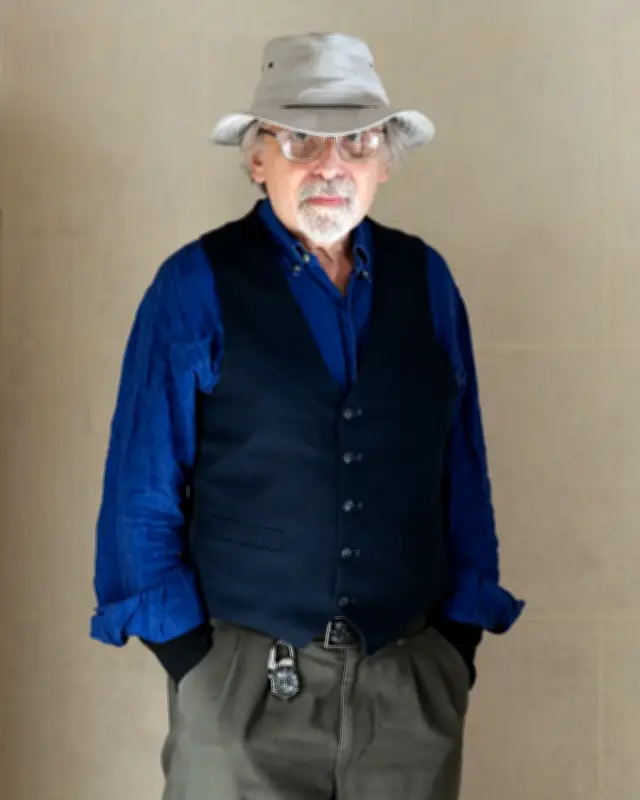
Art Spiegelman, the Pulitzer Prize-winning cartoonist, has said the United States needs a “counter-revolution” in response to what he describes as the “fascist” Trump administration. In an interview, Spiegelman, 78, discussed the shadow of 9/11, the rise of fascism in America, and his own ambivalence about the success of his Holocaust graphic novel Maus.
A Life in Comics
Spiegelman became the first cartoonist to win a Pulitzer Prize in 1992 for Maus, a graphic novel about his father’s memories of the Holocaust. He and his wife, Françoise Mouly, art editor of the New Yorker, have lived in a Soho apartment for five decades, surrounded by high-end designers. Spiegelman refers to the new arrivals as “very fancy airport mall stores”.
The couple used to print their own “oddball” comics from a printing press that Mouly installed in their house. Spiegelman earned a living designing collectible parody cards for Topps bubblegum before starting Raw magazine with Mouly. Maus was initially serialised as an insert in Raw, and Spiegelman struggled to find a publisher because no one knew what to do with such an unusual work. Eventually, Pantheon published it, and it became a bestseller.
Trauma and 9/11
Spiegelman’s work often explores trauma. His parents were Polish Jews who survived the camps but lost most of their family, including their first-born son, Richieu. In 1968, his mother, Anja, killed herself. Maus is partly about Spiegelman’s fraught relationship with his father Vladek, depicted as mean, difficult and racist.
Spiegelman had virtually stopped making comics when the 9/11 attacks took place. From his Soho apartment, he could see the north tower burning. He produced a series about 9/11 for the German magazine Die Zeit, later compiled in In the Shadow of No Towers, being reissued to mark the 25th anniversary of 9/11. He notes the direct link between the post-9/11 security crackdowns and some excesses of the Trump administration: Immigration and Customs Enforcement, Ice, was created after the attacks.
Political Views
Spiegelman describes the Trump administration as fascist. “It’s fascism,” he says. “It’s not nazism, per se, but it has a template that it’s following. And it does have to do with othering, which is the basis of what Maus is about, it’s: ‘OK, you guys are mice, we’re cats.’”
He says Trump has “very effectively dismantled” the country’s democratic ideals. “Whatever the ideals were, we never lived up to them, but at least we had them. Now it’s all so cynical and sordid and stupid.” He adds that the president is “cutting off civil liberties and using his powers to squelch dissent and enrich himself in such thoroughly illegal ways, it’s kind of mindblowing”.
Spiegelman says the US needs a “counter-revolution”. “But I don’t know where to look for it because the Democrats are so timid.” He remains pessimistic: “I tend to be pessimistic, but this is worse than most things I know. I just don’t see how we get out of this.”
A new edition of In the Shadow of No Towers will be published by Penguin in September.