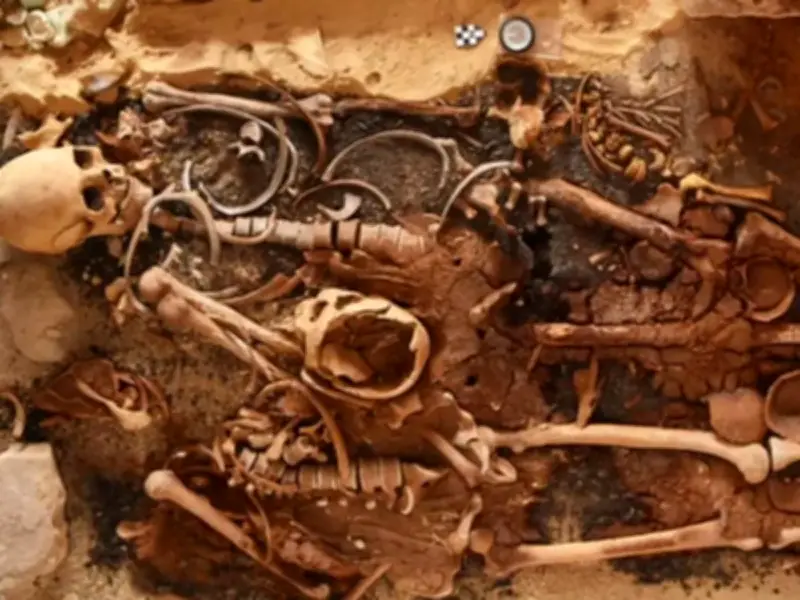
Archaeologists have uncovered 18 undisturbed burial grounds in Alamin, Egypt, about 60 miles west of Alexandria, dating back to the Ptolemaic (322–30 B.C.) or Roman (30 B.C.–A.D. 395) period. The Egyptian Ministry of Tourism and Antiquities announced the discovery, highlighting 11 tombs carved deep into the ground and seven closer to the surface.
Gold Tongues and False Door
The tombs contained numerous artifacts, most notably 24 gold tongues placed in the mouths of mummies. These were likely intended to enable the deceased to speak in the afterlife, particularly during judgment before Osiris. An offering altar with a base designed as a false door was also found.
Hesham Hussein, undersecretary for Lower Egypt and Sinai archaeology at the ministry, explained: "The false door is one of the oldest and most recognizable elements of ancient Egyptian funerary architecture. In traditional Egyptian belief, it symbolized the interface between the worlds of the living and the dead, through which the deceased could spiritually receive offerings presented by the living."
Symbolic Significance
Hussein added: "The fact that the design of a false door was carved into the altar suggests that the symbolic meaning of the false door remained important even as its architectural function evolved." Gold tongues have been found at other ancient Egyptian sites, serving as amulets to help the dead communicate and recite sacred formulas in the next world.
The discovery sheds light on funerary practices during the Ptolemaic and Roman periods, when such gold tongues were a documented feature in some burials.