Lost Federico García Lorca Poem Discovered After 93 Years
A previously unknown verse attributed to the celebrated Spanish poet and playwright Federico García Lorca has been discovered, 93 years after it was originally written. The eight-line poem was found on the reverse side of a manuscript from Lorca's collection Diván del Tamarit, a homage to the Arab poets of his native Granada.
Discovery and Verification
The manuscript was purchased by flamenco singer and Lorca enthusiast Miguel Poveda from a German antiquarian. Poveda's attention was drawn to the verse when Lorca expert Pepa Merlo identified the handwriting as belonging to Federico García Lorca. Merlo has since verified the authenticity of the poem, which will be featured in an upcoming book titled Las cosas del otro lado. lo inédito en Federico García Lorca (Things from the Other Side: the Unpublished in Federico García Lorca).
Miguel Poveda expressed deep emotion over the fortuitous discovery, describing it as a heartfelt gift. He recently led efforts to transform Lorca's childhood home into a cultural centre dedicated to the poet's life and work.

The Poem and Its Themes
The verse, believed to have been written in 1933, reveals Lorca's familiar preoccupation with the passing of time. The lines read: "The clock sings / I count the hours mechanically / Seven o'clock; twelve o'clock / It's all the same / I am not here / It is the mark of flesh / That I left behind when I departed / So as to know my place / Upon my return."
Pepa Merlo noted that while the verse may have been overlooked because it was scribbled on the back of another work, it nonetheless highlights the importance of the concept of time in Lorca's poetry. The poem was composed just three years before Lorca was murdered at the start of the Spanish civil war in August 1936.
Lorca's Legacy and Recent Interest
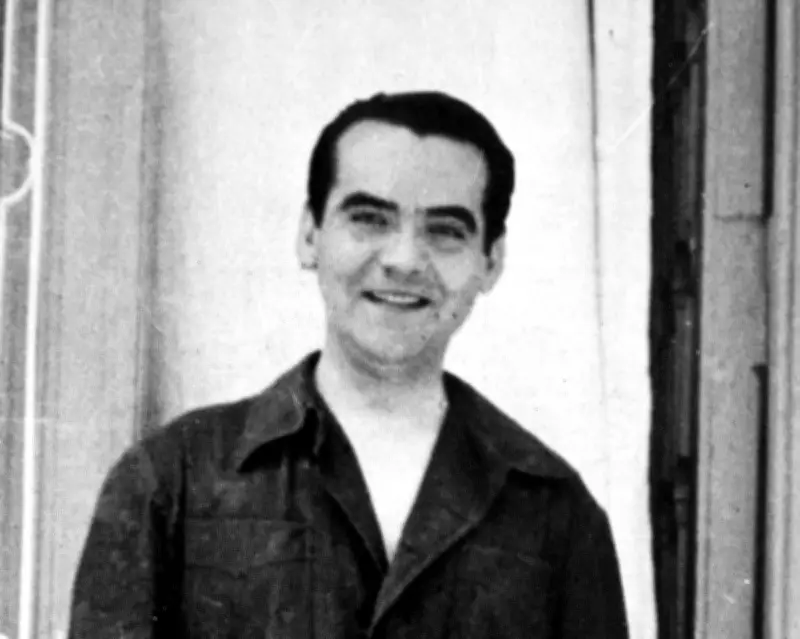
Federico García Lorca, a gay and progressive writer, is perhaps the most prominent victim of Spain's three-year civil war. His body has never been found and is thought to lie in a shallow grave near Granada. His works include Gypsy Ballads, Poet in New York, Blood Wedding, Yerma, and The House of Bernarda Alba.
Interest in Lorca has grown as the centenary of his death approaches. Last summer, a facsimile edition of his posthumously published Sonnets of Dark Love was issued to bring these homoerotic and anguished poems to a new readership. Although long known to scholars, the sonnets had been hidden by Lorca's family, who feared they would taint his legacy.
The newly discovered poem adds to the ongoing exploration of Lorca's unpublished works, offering fresh insights into his literary preoccupations and enduring influence.