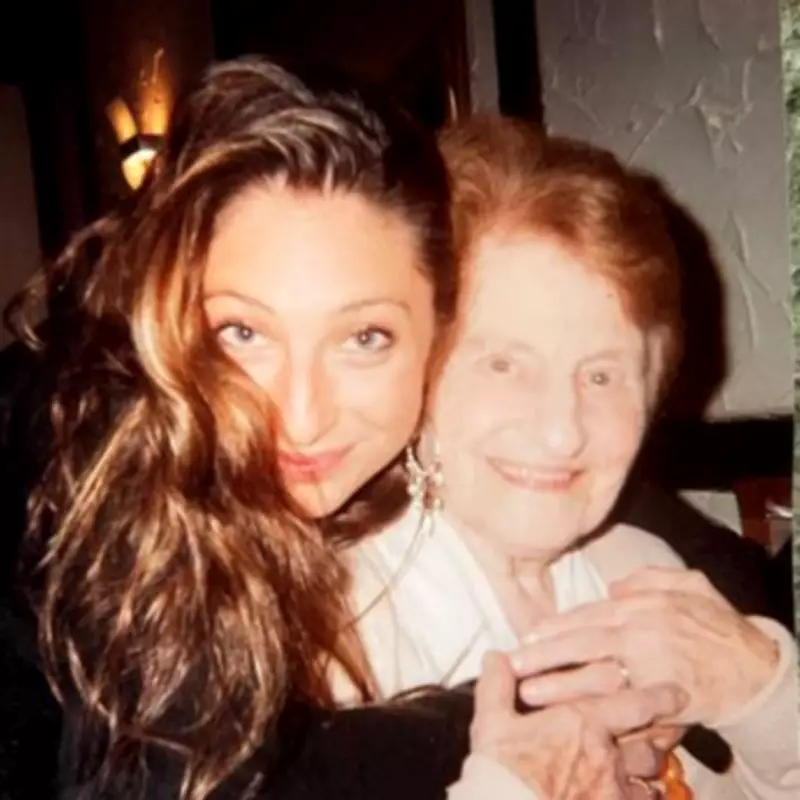
Comedian and impressionist Jess Robinson has uncovered remarkable connections with her grandmother's Holocaust diaries through her new memoir, creating a poignant exploration of generational trauma and resilience.
Unexpected Parallels Across Generations
When Robinson, known for her work on Dead Ringers, Spitting Image and Horrible Histories, began investigating her German Jewish heritage, she discovered surprising commonalities with her maternal grandmother Rosi Schul. At age 23, Robinson was navigating the early stages of her acting career, while at the same age, her grandmother documented her deportation to Poland by the Gestapo and witnessed Nazi atrocities against her community.
The Diary Project That Became a Book
This discovery forms the foundation of Robinson's book Life Is Rosi, which juxtaposes diary entries from both women's lives at specific moments in time. Grandma Rosi's entries span from 1938 to 1943, while Robinson's contemporary reflections cover 2006, creating a powerful chronological dialogue between generations.

Rosi endured horrific internment in the Polish town of Zbąszyń for over six months, while Robinson at the same age was attempting to secure a mortgage and establish her career. "She was so stoic and so compassionate, and that compassion and her love for children really saved her life," Robinson reflects on her grandmother's experiences.
Navigating Trauma Through Humour and Gravity
The book masterfully interweaves humour with serious reflection, examining how both women navigated trauma during their youth. Robinson shares her own experiences with sexual harassment by a director and assault by a taxi driver, incidents she chose not to report at the time.
Meanwhile, Rosi witnessed Jews "being herded like farm animals" as they were packed into lorries and described "the filthy, stinking barn, lying on damp straw, everyone squashed together like animals, not human beings."
Recognising Different Realities
Robinson acknowledges the profound differences in their experiences: "At 23, I was obsessing over my weight and debating whether or not a red cardigan would help manifest my wildly vacuous dreams. At 23, Rosi was being wrenched from her life and praying she'd see her family again."
Unexpected Emotional Parallels
Despite the vastly different circumstances, Robinson discovered surprising parallels in their emotional journeys. Both women experienced romantic moments, love and desire during their early twenties, and both demonstrated remarkable resilience and determination.
"I found a lot of compassion for my younger self as well," Robinson reveals. "There was one point when I was told I looked too Jewish for roles and then other times I wasn't Jewish enough, and at that time I would just nod and go, 'Okay, thank you for having me,' because I've always been told to be a good girl, keep your head down and don't make a fuss."
The Pandemic Project
Robinson chose to write the book during the pandemic, driven by what she describes as a family trait: "I've got this thing, which I think Rosi had and my mum has, which is, keep busy, keep going. It was just in my anxiousness to keep busy, keep moving forward."
With the world at a standstill, she delved deeper into her German roots, rediscovering her grandmother's diaries. Rosi had escaped the Nazis in August 1939, travelling with a group of youngsters on a Kindertransport and eventually making her home in England while the conflict continued.
Legacy and Reflection
"I wonder if I would have been able to show that same dignity and drive and stoicism," Robinson remarks about her grandmother's experiences. "She was quite open talking about her experiences but she did always fob them off, saying it was just a big adventure and that she didn't suffer like other people because she escaped to Britain."
Today, Robinson lives in Brighton with her husband, musician Jonty Fisher, whom she describes as "unbelievably kind, supportive and steady." She has undergone extensive therapy, particularly focusing on body image issues.

From Documentary Idea to Published Memoir
Regarding her grandmother's story, Robinson discloses that she previously attempted to propose it as a documentary, tried securing a spot on Who Do You Think You Are?, and even suggested it as a TV sitcom. Ultimately, she decided a book would be the most appropriate medium to honour her grandmother's legacy.
Rosi, described as a formidable figure who placed great importance on appearance and was sharp and guarded, passed away just days before her 103rd birthday in 2018. Robinson believes her grandmother would have endorsed the book.
"I think, especially with what is happening in the world at the moment and the parallels that we are seeing all over the world, that she would feel it was important that we didn't forget," Robinson concludes.
Life Is Rosi by Jess Robinson is published by Mudlark and priced at £16.99, available now through major booksellers.