This Week in History: Front Pages Capture World-Changing Events
Between February 16 and 22, numerous pivotal moments have unfolded across decades, each captured vividly on the front pages of The Independent. From Cold War tensions and literary controversies to environmental catastrophes and sporting scandals, this retrospective week reveals how headlines have documented turning points that shaped our global landscape.
Cold War Diplomacy and Literary Firestorms
On February 22, 1988, Prime Minister Margaret Thatcher issued a stark warning to NATO allies regarding Mikhail Gorbachev's Soviet Union. Describing Moscow's advances as "sophisticated" and "seductive," Thatcher cautioned against being swayed by proposals for a nuclear-free Europe, reflecting Western uncertainty about whether Soviet reforms represented genuine change or strategic manoeuvring during the Cold War's final stages.
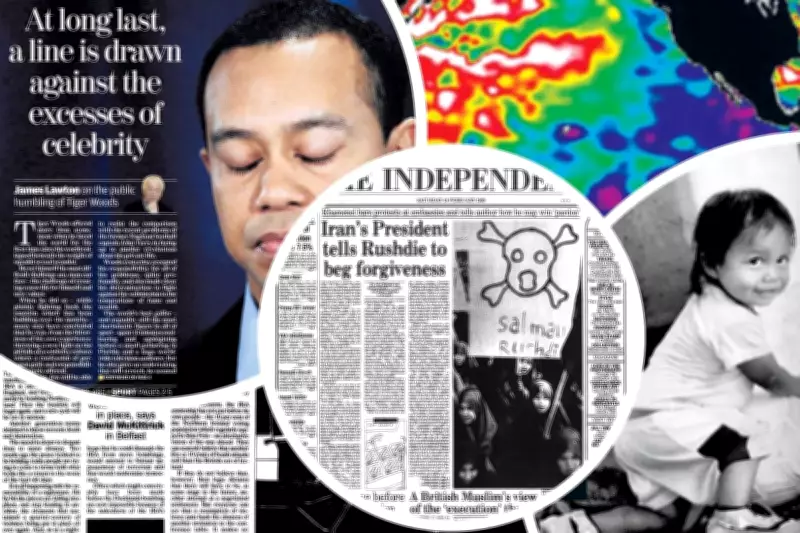
Just days later on February 18, 1989, the fallout from Ayatollah Ruhollah Khomeini's fatwa against Salman Rushdie intensified. Iranian President Ayatollah Ali Khamenei suggested the death sentence could be lifted if the novelist sought forgiveness from Muslims, highlighting internal unease within Iran's leadership about international diplomatic tensions. Rushdie remained under long-term police protection as the dispute strained Iran-Western relations for years.

Environmental Disasters and Scientific Revelations
February 16, 2011 saw an Ecuadorian court order Chevron to pay billions in damages for decades of toxic waste dumping in the Amazon rainforest. Dubbed "Amazon's Chernobyl," the contamination devastated indigenous communities' land and water supplies. Despite being hailed as a landmark environmental judgment, Chevron rejected the verdict, leading to protracted legal battles where Ecuador was later ordered to pay damages to the company through international arbitration.
On February 19, 2005, The Independent headline declared "The final proof: global warming is a man-made disaster." Scientists presented unequivocal evidence linking four decades of ocean temperature rises to greenhouse gas emissions, adding momentum to growing international calls for climate action during the mid-2000s.
Political Conflicts and National Transformations
February 21, 1991 marked a critical deadline in the Gulf War as Iraq considered a Soviet-brokered peace proposal while occupying Kuwait. The US-led coalition rejected conditions allowing delayed withdrawal, leading to a ground offensive that rapidly liberated Kuwait by month's end.
In London on February 20, 1996, fresh IRA bomb attacks raised fears of collapsing peace processes in Northern Ireland after the 1994 ceasefire ended. Despite this violent setback, negotiations resumed the following year, culminating in the historic 1998 Good Friday Agreement.
February 18, 2008 witnessed Kosovo proclaim independence from Serbia, celebrated in Pristina but rejected by Serbia and Russia, exposing renewed Balkan tensions. That same day, Britain nationalised troubled mortgage lender Northern Rock, becoming an early symbol of the impending global financial crisis.
By February 21, 2014, deadly clashes in Kyiv during anti-government protests left over 75 dead, with live ammunition authorised amid fears of civil conflict. The violence led to President Viktor Yanukovych's removal days later, marking a turning point in Russia-Ukraine tensions that later erupted into open war.
Cultural Icons and Sporting Scandals
February 22, 2005 brought news of Hunter S. Thompson's suicide at age 67. The Fear and Loathing in Las Vegas author, known for his gonzo journalism and candid discussions of mortality, left behind a legacy blending performance and reality, with investigators reaffirming the suicide conclusion in January 2026 after renewed case scrutiny.
On February 20, 2010, golfer Tiger Woods delivered a 13-minute televised apology after revelations of multiple extramarital affairs shattered his public image. The Independent noted this "public humbling" drew "a line against the excesses of celebrity" as Woods faced lost sponsorships and competition breaks.

These front pages collectively illustrate how a single week across different years can encapsulate geopolitical shifts, environmental reckoning, cultural transformations, and personal downfalls that continue to resonate through history.