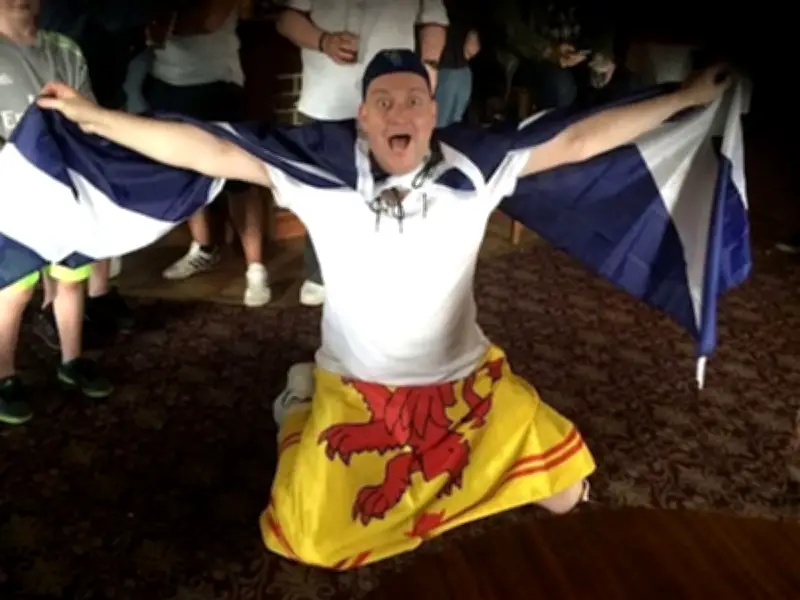
Keith Webster, a Scottish-born sports news editor at Reach England, has lived south of the border for nearly four decades. In a personal reflection, he explores his conflicted emotions during major football tournaments, particularly when England plays. Webster, who grew up in Glasgow and moved to England in 1986 for work, now has an English family and friends, yet finds his Scottish roots resurface every two years.
Early memories and heartbreak
Webster's first experience of Scotland vs England came on May 27, 1972, when his father took him to Hampden Park. Scotland lost 1-0 after Alan Ball scored a scruffy goal. The seven-year-old Webster cried all the way out of the stadium, not having been told that Scotland could lose. He missed the 1974 and 1976 victories but returned in 1978 to see Alan Rough spill a cross, allowing Steve Coppell to score the only goal.
It was not until 1985 that Webster witnessed a Scotland win over England. Richard Gough looped a header over Peter Shilton at the Celtic End, but Webster, three-quarters of the way up the Rangers End, missed the goal due to a fan jumping in front of him. He still celebrated the noise.

The test of 1996
The most challenging moment came on June 15, 1996, when Paul Gascoigne scored his iconic goal against Scotland at Wembley. Webster had a ticket in an England section. Before the match, he was involved in a brawl at Marylebone Station with an England fan angry at his Saltire and Lion Rampant flags. Later, on an empty train carriage, 14 skinheads cornered him, intending to harm him until a policeman intervened—the officer was English.
During Gascoigne's celebration, someone behind Webster spat on the back of his head. When he challenged them, no one owned up.
Recent encounters and knee slide
Twenty-one years later, in 2017, Webster watched Scotland vs England in a World Cup qualifier at his local pub in Bicester, Oxfordshire. Draped in the same flags, he added a Scotland bandana. When Leigh Griffiths scored his second free-kick, beating Joe Hart, Webster did a knee slide on the pub carpet. The burns on his knees were made worse when Harry Kane scored with the last kick of the game, ruining his dream of celebrating a win over England with English friends.
Webster reflects that England fans are arrogant, but so are Scottish fans. He has learned that people are not so different, regardless of nationality. His grand uncle fought alongside English soldiers at Passchendaele in 1917, and his grandfather at St Valery in 1940, reinforcing that shared experiences can unite.
Webster concludes that if England wins another major tournament, it would be fine, as long as he can see Scotland reach a knockout stage. In a fantasy world, he would love to see Scotland beat England in a final.