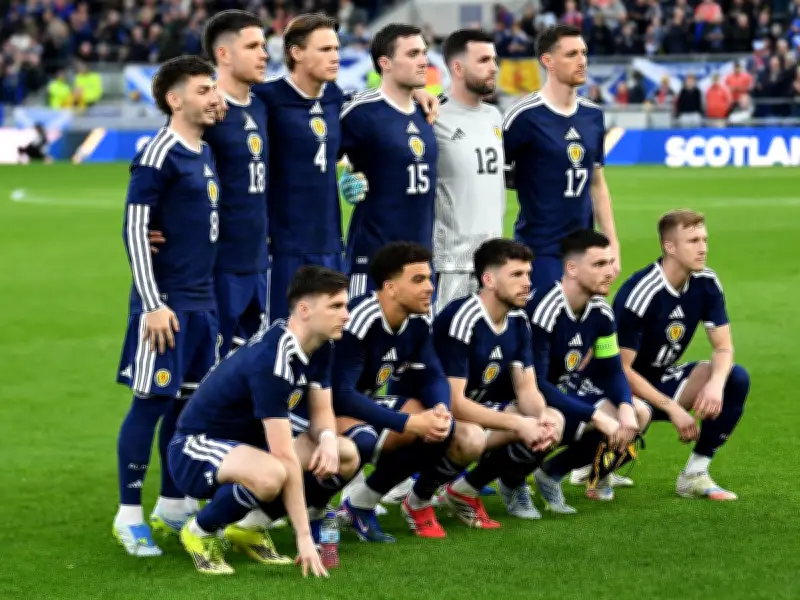
It has been 28 years since Scotland last graced a World Cup finals. Now, the Tartan Army is back on the global stage across the Atlantic, and there is genuine optimism that history can be made.
Qualifying Triumph
A qualifying group featuring Norway and Greece presented an opportunity, but realism and past evidence pointed to a second-place finish and a playoff spot, behind Denmark. However, nothing could have prepared fans for the dramatic finale against the Scandinavians at Hampden Park, which required a helping hand from Belarus to set up. An iconic Scott McTominay overhead kick and a stoppage-time strike from Kenny McLean from inside his own half bookended a 4-2 victory in a winner-takes-all showdown, sparking excitement ever since.
Pressure on Clarke
The "happy-to-be-there" mentality has faded after disappointing showings at the last two European Championships. The Scottish FA’s decision to award Steve Clarke a new four-year contract just before the team flew to the United States was met with surprise and some criticism, with many questioning whether they should have waited to see how the tournament unfolds before committing to the next World Cup campaign. Progressing from the group stage would bring acceptance; failure would invite scrutiny for rushing into a major decision.
Substance Over Style
Few can justifiably claim that Steve Clarke’s teams are easy on the eye. This Scotland side is capable of playing some attractive football and scored some remarkable goals in qualifying. However, being well organized and hard to beat has been the hallmark since Clarke took charge nearly seven years ago. While that was acceptable initially, fans have longed for a more evolved style and greater attacking ambition. Euro 2024 ended with a tame attempt to beat Hungary, who won a dreary match 1-0 at the death. Clarke’s fist-pumping celebration after a 1-1 draw with Switzerland—in which Scotland had taken the lead—was met with bafflement from those who saw it as a missed opportunity.
Attacking Threats
Utilizing their attacking threats more effectively, or at least being more willing to do so, is a key expectation for this World Cup. A 4-0 thrashing of Bolivia in a warm-up match, with all four goals coming in the first half, offers hope that the team can deliver. With Haiti up first—representing Scotland’s best chance for three points, which should theoretically pave the way to the next round—the shooting boots might be coming on at just the right time.
A Striker Worth His Salt
Natural goalscorers have been scarce in dark blue for a long time. John McGinn was the main man during Euro 2020 qualifying, then Scott McTominay took over to fire Scotland to Euro 2024. Lawrence Shankland has been around the squad for a while and has been a prolific scorer in the Scottish Premiership. Now, he appears to be hitting form at the perfect time for his country and is the overwhelming choice to lead the line against Haiti. The 29-year-old was in the Euro 2024 squad after scoring 31 goals for Hearts in the season of his life, but he was limited to brief substitute appearances—one of the criticisms leveled at Clarke. Having netted 20 goals last term for Hearts, who came close to winning the league title, Shankland has agreed to join boyhood club Rangers thanks to a surprise clause in his contract. A double against Curacao at Hampden and the opener against Bolivia have almost certainly cemented his place as Scotland’s first-choice striker ahead of the Group C opener.
Goalkeeping Gamble
Things are less promising at the other end of the pitch. Scotland once boasted three top-class goalkeepers in Craig Gordon, Allan McGregor, and David Marshall, all vying for the number one spot, making it the strongest area of the squad. Now, only the 43-year-old veteran Gordon remains. He will become the oldest Scotland player to feature at a major tournament and the oldest player at this summer’s finals if he plays. However, he is not first choice at club Hearts, and a shoulder injury during the second half of the season means he has only four appearances in total before joining the Scotland squad. Angus Gunn, who started against Bolivia, played just once for Nottingham Forest, while Liam Kelly—the clear third choice—managed only three games for Rangers. Gordon did produce the save of the season to earn ten-man Hearts three points away at Dundee. His ability to make genuinely great stops, combined with his experience, probably makes him the safest choice, although Clarke has brought Gunn back into the fold and played him after injury.
Old Foes
After nearly 30 years watching from the sidelines, the Tartan Army would have welcomed variety in opponents at this World Cup. While Haiti offers a break from the usual, their other Group C rivals give the section a very familiar look. Craig Brown’s side opened the 1998 World Cup with a 2-1 loss to holders Brazil at the Stade de France. The Selecao are in their group once again and will face Scotland in their final group game in Miami. Morocco’s presence in 1998 was seen as a positive and a winnable game to secure passage to the knockout rounds, but a 3-0 defeat in Saint-Étienne ended that dream. The North Africans are a very different proposition 28 years on. Semi-finalists in Qatar four years ago and African champions on paper, this is a serious team that has been tipped as group winners ahead of Brazil. That makes the Haiti game crucial for Steve Clarke’s men. Win that, and a bonus point from their other two games virtually guarantees qualification, although three points could be enough on their own.