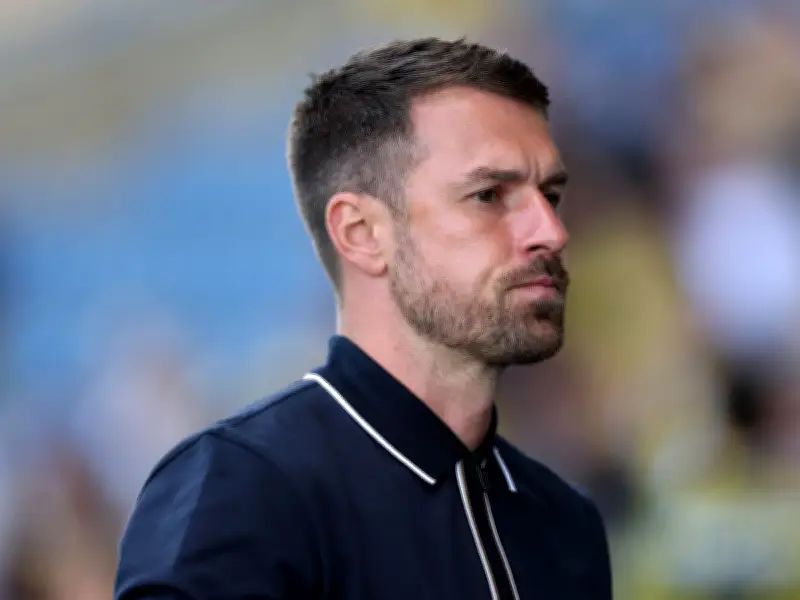
Former Wales captain Aaron Ramsey has revealed he feared he would never walk again after a horrific leg break during his Arsenal days, yet he went on to enjoy a stellar career and recently completed a marathon in under three hours.
Career-threatening injury at 19
Ramsey, who retired from football earlier this year and now manages Oxford United, suffered a broken tibia and fibula in a Premier League clash with Stoke City in 2010. The challenge from Ryan Shawcross left the then-19-year-old with a severe injury that required a metal rod to be surgically implanted through his right shin bone.
The pain was so intense that he dislocated his jaw from screaming. He spent around nine months on the sidelines, and at one point feared the worst.
Remarkable comeback and marathon success
Despite the setback, Ramsey returned to become one of Arsenal's best players of the Premier League era and a key figure in Wales' golden generation, playing at two European Championships and the 2022 World Cup.
After retiring, he proved his fitness by running the London Marathon in 3:00:30, just missing the sub-three-hour mark. Determined to break it, he ran the Stockholm Marathon weeks later and finished in 2:59:20.
Ramsey told The Telegraph: "Still got the metal in there and [in] hot and cold temperatures it flares up now and again. But yeah, still in there. It's part of me. We'll see how my knee holds up over the next few years with the rod sort of sticking into it a bit."
He added: "At the time I didn't know whether I would walk again, never mind come back and play football. It was a long, tedious process for me to overcome that. But it's another example of me being a driven person that I was going to come back from it, if not stronger as well. So, I was proud of that and the career I then had."
Reflecting on his marathon achievements, Ramsey said: "I wanted to break the three-hour mark and managed to do that. It took me two attempts but I got it done. It was something that was important to me, having four or five months not doing a lot after football. To focus on something again and have something to strive for was important."
He admitted he was "quite naive" about the challenge initially, but his high fitness levels from football helped him succeed.