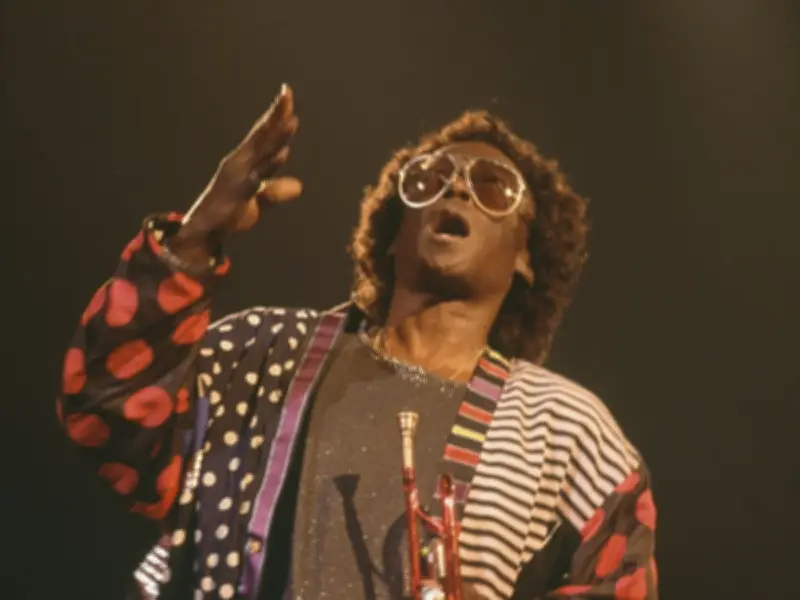
Miles Davis, one of the most important figures of the 20th century, was a master of reinvention who changed music multiple times. Now, his impact is again in the spotlight as the world marks a century since his birth. Worldwide tributes, including a major BBC retrospective, honor the jazz trumpeter and band leader. However, the musician, known for turning his back on audiences, was also marked by volatility and addiction.
The Man Behind the Music
Music journalist Kate Molleson explains: 'Miles Davis remains massively relevant in 2026; he’s the story of the evolution of Black music in America. He constantly evolved and pushed himself to be part of something new—from Prince to Stevie Wonder and Jimi Hendrix. His influence can still be heard today. He was radical and progressive with an unquenchable thirst for new styles. I am a huge fan of his music. As a man though? He was a gnarly character. It’s often really hard to like him.'
Early Life and Rise to Fame
Miles Dewey Davis was born in 1926 in Illinois to an affluent family. His father was a dentist, and his mother a music teacher. He received his first trumpet as a birthday gift and began lessons, later writing in his autobiography: 'By the age of 12, music had become the most important thing in my life.' By his teens, he competed and played in local bands. His big break came in 1944 when the Billy Eckstine Orchestra, featuring Charlie Parker and Dizzy Gillespie, visited St. Louis. The band needed a trumpeter and invited Miles to join. His career was born. He moved to New York to study at Juilliard but often skipped classes to learn from jazz legends in clubs.
US music critic Nat Chenin notes that Miles compared watching his heroes to a child reaching for a white-hot flame. Kate Molleson adds that Miles disliked the word 'jazz' because he didn't want to be pigeonholed by race or style. Success came quickly, with tours alongside Count Basie and Billie Holiday, and a record deal. But success also brought exposure to drugs, leading to heroin addiction. Kate explains: 'He was still in his twenties, but this is a very dark period. He would pawn his belongings and play on borrowed trumpets. We can’t skirt over any of this. There’s a bigger conversation about why heroin was so prevalent in the jazz community in the 1940s and 50s.'
Racism and Resilience
Kate is clear that racism shaped Miles’ identity and work. 'He would be stopped while driving because he was a Black man in an expensive car. Workmen at his Manhattan home questioned ownership. He was once arrested for helping a white woman into a cab—outside a jazz club where his name was in lights.' Miles later said the taxi incident 'changed my whole life and attitude again, made me feel bitter and cynical.' By the mid-1950s, he cleaned up, though drug use continued. He refined his sound and formed the Miles Davis Quintet.
Masterpieces and Reinvention
In 1959, he released 'Kind of Blue,' considered his greatest album and a jazz masterpiece. By the 1960s, he was a superstar, friends with Richard Burton and Elizabeth Taylor. He constantly reshaped his look and sound. 'Fashion was a big deal for Miles,' says Kate. 'It was a statement of identity and artistic freedom. He ditched European-style suits for dashikis, leather vests, bell bottoms, and velvet robes.' His double album 'Bitches Brew' brought jazz into the mainstream with rock, funk, and African rhythms, but divided audiences. 'Some saw him as a traitor chasing money; others got it. For younger listeners into Jimi Hendrix, it was one of the first jazz records that spoke their language.'
Miles famously turned his back on audiences. Kate says: 'It may have been to hear the band better, or a statement: “I’m not here to entertain; I’m taking this seriously.” You couldn’t request his greatest hits because he was determined to move forward.'
Struggles and Comeback
Between 1975 and 1980, Miles quit music, spiraling into cocaine and alcohol addiction. His house became filthy; he later recalled: 'Sex and drugs took the place music had occupied in my life.' But he made a comeback, collaborating with Prince and Scritti Politti, and even appeared in the Bill Murray comedy 'Scrooged.' Called 'the Picasso of Jazz' by French Culture Minister Jack Lang, he earned multiple awards, but his body was failing. His final live performance was at the Hollywood Bowl in 1991.
Legacy
Married three times and father of four, Miles died at 65 from a stroke, pneumonia, and respiratory failure. He was buried near Duke Ellington with one of his trumpets. In his centenary, his legacy lives on in artists like Kendrick Lamar, Radiohead, and John Legend. Kate advises newcomers: 'Start with one album, like “Kind of Blue.” Think of jazz like football—you don’t need to know all the rules to enjoy the thrill.'
BBC Radio 3’s 'Composer of the Week' series 'Miles 100' is available on BBC Sounds.