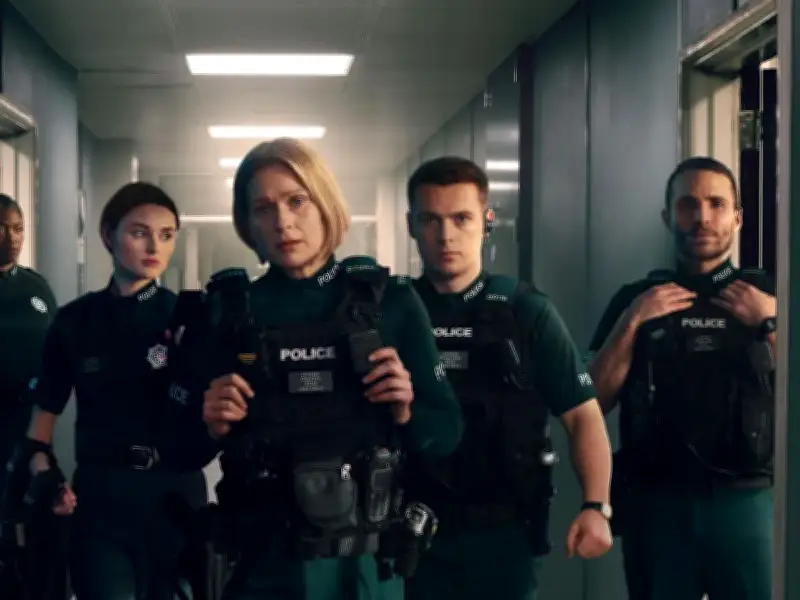
Blue Lights might just be the best thing on television at the moment, with sublime writing and acting making the BBC primetime drama absolutely unmissable.
When Blue Lights first arrived on screens in 2023, Cathy Owen, a Breaking News Editor from Northern Ireland, was unsure how she would feel about it. She knows the place, the people, the history and, perhaps most importantly, the things that aren't always said out loud. It is not an easy place to write about, she says, where a throwaway line can carry 50 years of history, a street corner can mean something entirely different depending on who is standing on it, and the past has an irritating habit of turning up in the present.
A Drama That Feels Authentic
When a television drama announced it would put all of that on screen, she was interested but wary. Would it feel authentic? Would the characters feel like people she recognised? Would the political and social complexities be reduced to television shorthand? And how would it translate to other parts of the UK? It worked for Derry Girls, but would it work for this?
Now on series four, she had her answer when a friend, who is very much not from Northern Ireland, messaged this week: "We are four episodes in. It is such good telly."
What makes it so good is not simply the subject matter but the writing, which is sublime. The series understands that Northern Ireland is not a place where everyone neatly fits into one box. It understands that politics, identity, policing, class, family and community are all tangled together. Rather than stopping every few minutes to explain that, it simply lets its characters live it.
Real Life Mirrors Art
The opening episode of the new series focused on an anti-immigration rally and was particularly striking. People from very different sides of the political divide were brought together in circumstances that felt both uncomfortable and recognisable. There was no easy answer handed to the viewer. Instead, the drama allowed viewers to sit with the contradictions.
Almost eerily, real life mirrored the drama not long after those scenes must have been filmed. The following week, protests took place across Belfast, bringing some of the same issues depicted on screen into the real world. Suddenly, the fictional streets of Blue Lights felt even closer to home.
Television did not predict those events, but there was something striking about watching a drama engage so directly with the fault lines in modern Belfast, only to see those tensions playing out beyond the television screen.
Characters You Care About
It would have been very easy for Blue Lights to become worthy television, the sort of programme that gives you an important subject, a serious soundtrack and characters who spend their time explaining the political situation to one another. Instead, it gives us people we care about, says Owen. Viewers become invested in them, wanting Stevie and Grace to get together and have a happy ending. You worry about them, get frustrated with them, and begin to understand why they make the decisions they do, even when you don't agree with them.
Because you care about the characters, the bigger issues land harder. The politics is there, but it is never simply the politics. The social commentary is there, but it never feels like a lecture.
It also gets something else that many dramas about Northern Ireland have struggled with: there is more to this place than its past. The history matters, but Northern Ireland is also a place where people are trying to get through a shift, raise their children, fall in love, make mistakes, pay the bills and work out who they are. The extraordinary exists alongside the completely ordinary.
As Chief Inspector Helen McNally says in the final episode: "We can't have a future if we are not honest about the past."
The acting is superb, with a naturalism to the performances that makes you forget you are watching actors performing a script. These don't feel like characters created simply to move a plot from A to B. They feel like people who existed before the cameras arrived and will continue to exist after they leave.
It is a police drama, certainly, with tension, danger, crime and all the things you expect. But underneath all of that is a drama about people trying to navigate a society that is still working out how to live with its past while moving towards its future. All four series of Blue Lights can be binged on BBC iPlayer right now.