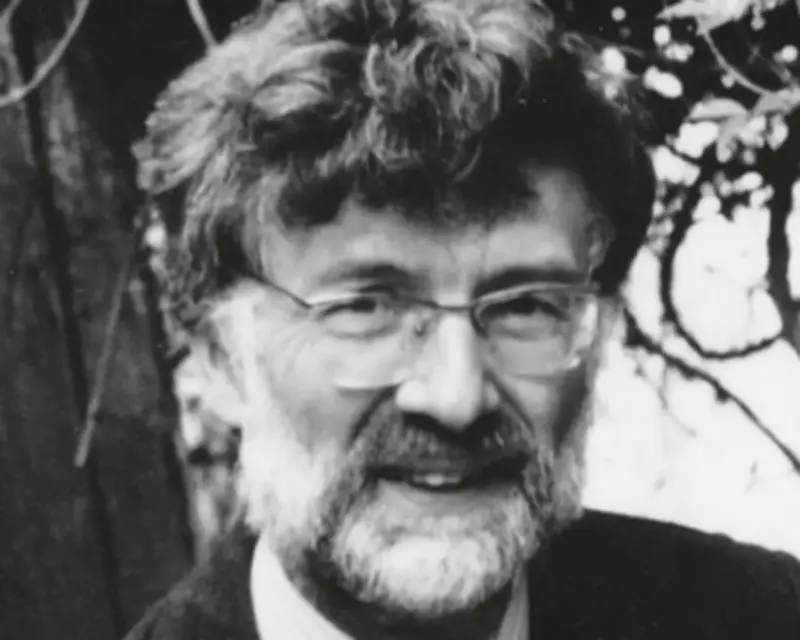
Andrew Rutter, Winchester's first conservation officer, has died aged 93. Trained as an architect, he worked in planning for Hampshire county council, championing the city's old buildings and landscapes from 1974 until his retirement in 1998.
Career and achievements
His great gift in that role was his ability to visualise the effect of planning applications and then to make councillors aware of potential consequences before coming to their decisions. He and his team faced major challenges presented by a re-routing in the early 1990s of the M3 motorway through a small chalk valley near Winchester; he helped to reduce most of the possible destructive environmental impacts of the original plan, apart from the notorious cutting through Twyford Down.
Andrew was born in Shaftesbury, Dorset, the youngest of the five children of William, a solicitor, and Hester (nee Fox), who were both Quakers. At Sidcot boarding school in Winscombe, Somerset, he showed artistic talent and an early interest in architecture. He then went to the Architectural Association School of Architecture in London and gained a diploma in architecture.
Early life and family
National service was due to follow, but as a conscientious objector Andrew was allowed to do architectural-related work for the charity International Voluntary Service for Peace instead, first in Germany and then in newly independent Ghana. In 1959 he met Margery Haygarth at a work camp hostel in the East End of London, and they married in 1960. The following year they moved to Ghana, where Andrew was employed by the United Nations at the Technical University in Kumasi, training planning assistants.
In 1969 he and his young family moved to the UK so he could take up his post with Hampshire county council, where he became a forward planning officer. It was after an internal re-organisation in 1974 that he was appointed as Winchester's first conservation officer.
Retirement and legacy
In retirement he spent some of his time writing a book, Winchester, Heart of a City (2009), which recorded the distinctive features of the buildings and surroundings of Winchester's conservation area. Having been involved in establishing Winchester's first permanent Quaker Meeting house in 1973, he was also a well-known character at vigils and peace demonstrations around the area and was a long time supporter of a local Quaker initiative, Friends of the Family, which helped many vulnerable people.
Margery died in 2022. Andrew is survived by their sons, Mark and the author of this obituary, and grandchildren Toby, Hannah and Theo.