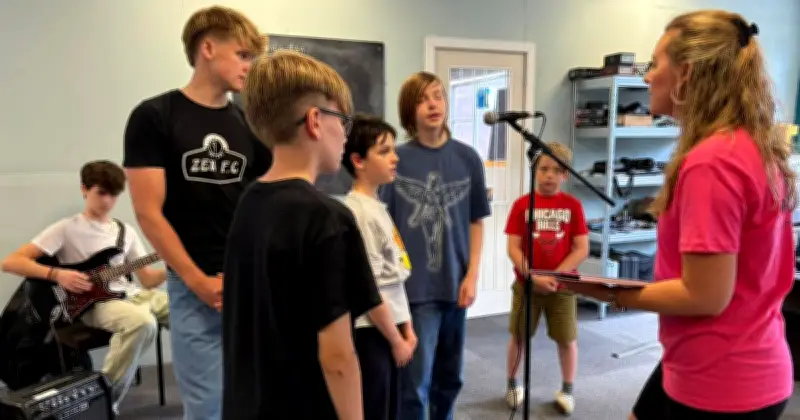
The number of students taking A-level music has fallen to its lowest ever level, with just 4,635 pupils receiving results today, a drop of 4.9% from last year. The decline has prompted fears that the subject could completely vanish over the next decade, despite music bringing over £8bn into the UK economy.
Sharp decline in entries
According to Ofqual figures for exam entries this summer, A-level music entries have plummeted to 4,635, while GCSE music entries are down 1.3%. The fall comes despite overall exam entries rising in line with the 18-year-old population, with GCSE entries up 1.1% and A-levels up 2.9% since last summer.
Analysis by the Campaign for the Arts in 2025 shows that the share of total entries in A-level arts subjects contracted by 0.5%, reaching the lowest level in 15 years. The uptake of A-level music has fallen by nearly 50% since 2010, the year the EBacc system was introduced, which incentivises schools to focus on subjects such as maths, English and science while excluding music and all arts subjects.
Wider decline in arts education
Recent research by the Cultural Learning Alliance (CLA) and the Royal Shakespeare Company (RSC) shows that the number of young people taking arts GCSEs in state schools has fallen by 41.7% since 2010. Although GCSE music had shown signs of a modest recovery in recent years, over a third of schools in England now do not offer GCSE music.
The Express' Strike A Chord campaign has been demanding government intervention to protect the subject. Stars including Def Leppard and trumpet virtuoso Alison Balsom have backed the campaign.
Industry leaders call for urgent action
Deborah Annetts, chief executive of the Independent Society of Musicians (ISM), said: "On a day when young people are hopefully celebrating their exam results, the provisional music entries in England shows us that the future of music A level is in peril. Without urgent action there’s a real risk A level music could disappear from state schools altogether within a decade."
Annetts said it is crucial that the government urgently address the decline of music education in England, stating the "stakes could not be higher". She added: "The government says it wants music to flourish in all schools, but has shown none of the action required to meet this ambition. We need urgent action so every child has access to high-quality music education school."
Chris Grist, artistic director of London Concertante, said: "The Government has promised change, but after years of decline, what matters is whether that ambition actually translates into more young people studying and making music. This is an existential issue for our industry, and we urge the new Prime Minister and his Government to treat it with the seriousness it deserves."
New research commissioned by London Concertante found that 34% of UK adults wish they had continued making or studying music when they were younger, rising to 45% among 25-34-year-olds. In comparison, just 3% wished they had kept going with subjects including law, engineering, finance or accountancy. The nationally representative survey of 2,000 UK adults found that one in three people said they wished they had continued with at least one form of music, whether learning an instrument, singing, studying music as a subject, being in a choir or playing in a band, orchestra or ensemble.