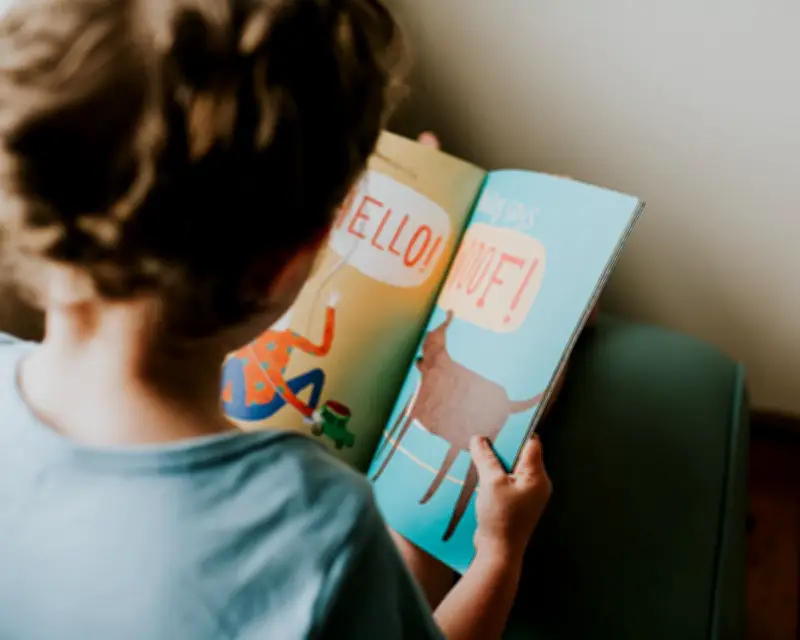
Frank Cottrell-Boyce's 'A British Childhood' is a clarion call about the impoverishment of children's lives and a reminder of the sheer magic of reading. Inspired by his time as Waterstones children's laureate, the book addresses literacy inequality for children in poverty, prompted by the discovery that nearly half of children arrive at school without having been read to. Many have no clue how books work, trying to swipe instead of turn pages or pinch illustrations.
The Campaign for Reading Rights
Cottrell-Boyce ran a campaign with BookTrust called Reading Rights. As a longstanding school visitor, he understands how kids who don't meet spelling and neatness benchmarks can be overlooked. His worldview is a Liverpool-Catholic collectivism that homes in on wealth disparities. One Birkenhead school he visits is near a cruise terminal where luxury liners float at anchor—a good place to see money sailing by without a glance at terraced streets.
Summer Holidays: A Banishment for Many
During the campaign, a teacher tells him: 'Maybe don't go on about the summer holidays. They hate them.' Summer, once a time for adventure, is no longer seen as a glorious escape. For many children, it feels like banishment from school, where society notices them. With breakfast and after-school clubs, school has become a site of security. Cottrell-Boyce wonders if this explains the popularity of Harry Potter and Percy Jackson: they portray school as a refuge.
The Impact of Austerity and Covid
Recalling his parents' experience as wartime evacuees, Cottrell-Boyce argues that 'any crisis is like a barium meal, illuminating the weak spots in the body of the state.' Austerity and Covid have transformed children's lives. Schools were once part of an ecosystem including libraries, youth clubs, and Sure Start centres. Now, in many places, 'the school is the last evidence of a civic sphere – the Alamo of services.' Teachers are exhausted, doubling as therapists, nutritionists, and social workers. Primary teachers, especially in reception, have become caregivers because many children are not school-ready—toilet-trained. Some schools have installed launderettes or maintain stores of pre-loved clothes.
The Housing Crisis and Furniture Poverty
Cottrell-Boyce is particularly exercised about the housing crisis. Children who move house more than 10 times between reception and year 11 have only 11% passing five or more GCSEs. Social housing is often let void standard: empty and unfurnished. He finds it shocking that many children are denied their own bed—Robert Louis Stevenson's 'land of counterpane.' The Merseyside charity Time for Bed gave out 582 bed bundles last year.
A Luminous Autobiography
Despite the serious themes, the book is interlaced with luminous autobiography of the author's early years in a flat off Liverpool's Dock Road, sharing a room with his parents and brother. He remembers lascar sailors in turbans and merchant sailors in white, introducing him to the story of the stranger arriving on shore. Back then, 'the next parish might as well have been the Orinoco' and 'Bootle was more or less Narnia.' He and his brother would spot relatives in the passing crowd. He had no idea he lived near the Mersey until he saw red funnels moving above rooftops. Later, moving to a suburban estate, he finally had a wardrobe where Narnia could be imagined.
The Child as a Camera
These scenes support the argument that a child is a camera with the shutter open. 'Every baby is Galileo,' Cottrell-Boyce says, watching his granddaughter acquire language and motor skills. Professor Sam Wass of the University of East London Baby Development Lab says: 'A few days ago, you were an aquatic creature, and now you are in east London. Where do you begin to make sense of that?' A child is a magical sponge, but bad experiences—black mould, cockroaches, moonlight flits, domestic violence, debt—stay forever.
Reading: Not Moral Education
Cottrell-Boyce does not see reading as moral education. Some Arabian Nights tales revel in lying and cheating; one is about a fart. Lullabies depict babies killed or stolen. Frank L Baum was an apologist for genocide; Roald Dahl was antisemitic. What matters is creating a moment of shared attention and mutual noticing. June O'Sullivan of the London Early Years Foundation calls it 'the pedagogy of the sofa.' It is the antithesis of the frictionless digital world (Cottrell-Boyce is not a fan of Cocomelon). The crucial element is familiar routine, possible only when children have furniture like beds and sofas, and clothes kept in something other than bin bags.
Style and Conclusion
The book's chapters are 'expanded diary entries,' mostly written on trains and in Premier Inns. Cottrell-Boyce has a chatty, unguarded, slightly repetitive style, and an overfondness for single-sentence paragraphs. But he makes the case for how British childhood has changed and why that matters with trenchancy and heart. The children whose school assemblies he graces are lucky to have him.