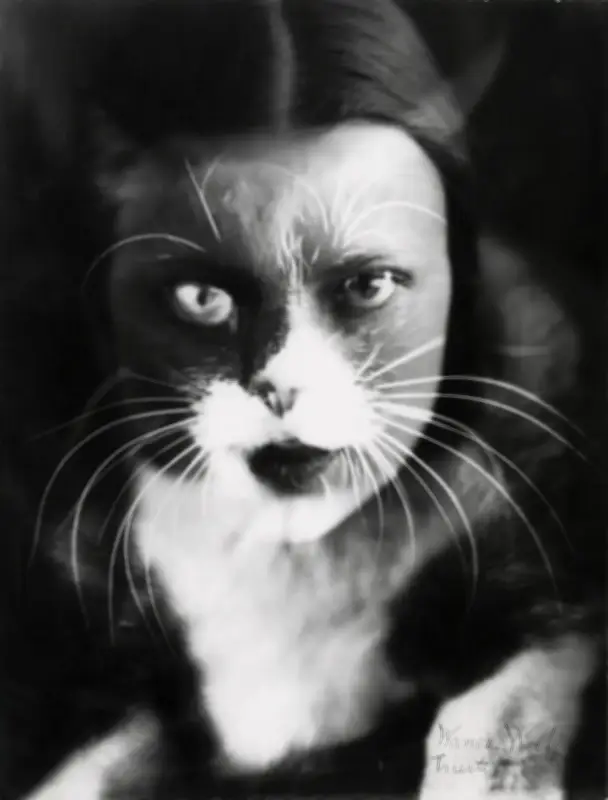
Wanda and Marion Wulz defied the patriarchal ideology of fascist Italy by using photography to champion women's independence, creating the famous I + Cat image featuring their family cat Mucincina. A new exhibition, Wanda and Marion Wulz: Avant-Garde Photography in 20th Century Italy, opens at the Estorick Collection in London, casting Marion as an equal partner in their artistic legacy.
Pioneers of photomontage
The sisters experimented with blended and altered images more than half a century before Photoshop was invented. Their most famous work, I + Cat, is a self-portrait of Wanda superimposed on the face of the family pet. The show aims to highlight Marion's role, showing she was no mere assistant but equal to her sister in photography, as they kept the idea of women's emancipation alive during a time of unbridled patriarchal ideology.
Wanda, born in Trieste in 1903, was a promising dancer and musician; Marion, two years her junior, had been to art school and wanted to paint. After inheriting their father's photographic studio, founded by their grandfather, they realised it represented their best path to an autonomous future. "They photographed modern women, dancing, playing sports, doing gymnastics," says Federica Muzzarelli, curator of the show. Women who were artists, poets, writers and actors sat for the sisters, including painter Leonor Fini and Olympic fencing champion Irene Camber.

Feminist statements in fascist Italy
In 1932, Wanda exhibited six works, including I + Cat, in the National Exhibition of Futurist Photography. The show marked 10 years since the fascist revolution, but Muzzarelli contends Wanda was never interested in that. She just wanted to show, as the only woman taking part, that she was every bit as capable as the men. "She showed she had the ability and skill to create a photomontage," says Muzzarelli.
Her technique for I + Cat, which superimposed one negative on top of another, was invented in the mid-19th century, but Wanda used it in a new way, making one face hers and the other that of Mucincina. Both negatives will be in the London show, as well as the finished work. "Wanda wanted to explore the idea of female identity, of the cat as a free creature, a symbol of freedom," says Muzzarelli, who believes another picture Wanda showed in the 1932 exhibition, Futurist Breakfast, was also included to make a feminist point.
A salon of women artists
The exhibition was Wanda's only foray into futurism, but the years that followed were the sisters' heyday. They continued to live in the apartment block in central Trieste where they had been born and where their studio was based. It became the centre of an informal female salon. "For several years," says Claudia Baroncini, director of the Fondazione Alinari per la Fotografia, which owns the sisters' archive, "the fashion designer Anita Pittoni lived with them. With her, they created a kind of club of artists – women who wanted to experiment with new ways of living."
Their first role in the studio was as subjects – they were often dressed up and photographed by their father, Carlo, when they were children. As portrait photographers they were experts at "improving" the look of their sitters. "They were very clever with negatives," says Baroncini, "creating shadows to change the shape of someone's mouth or eyes, or to improve the quality of their skin."
They also photographed one another: the show will include Marion's striking portrait of Wanda wearing motorcycle goggles and another of her dressed as Cleopatra, while Wanda's shots of Marion include her wearing designs by Pittoni, along with an extraordinarily modern-looking closeup with shining eyes.
Legacy and recognition
In spring 1945, as the second world war ended, Trieste was liberated from fascist rule by the Yugoslav army. From the terrace of their apartment, Marion photographed tanks and soldiers – and later celebrations in the street when the Anglo-American troops arrived. "These images show she was fully part of the artistic partnership," says Baroncini.

Although the women worked until the 1970s, they never recaptured their early success. Money became a struggle and they closed their studio in 1981, while continuing to take photographs. After Wanda died in 1984, Marion – who lived another nine years – documented their life and work together in a series of diaries. "Their lives had been tough," says Baroncini, "and they didn't realise the importance of their work for the history of photography." The exhibition runs at the Estorick Collection, London, from 16 September to 20 December.