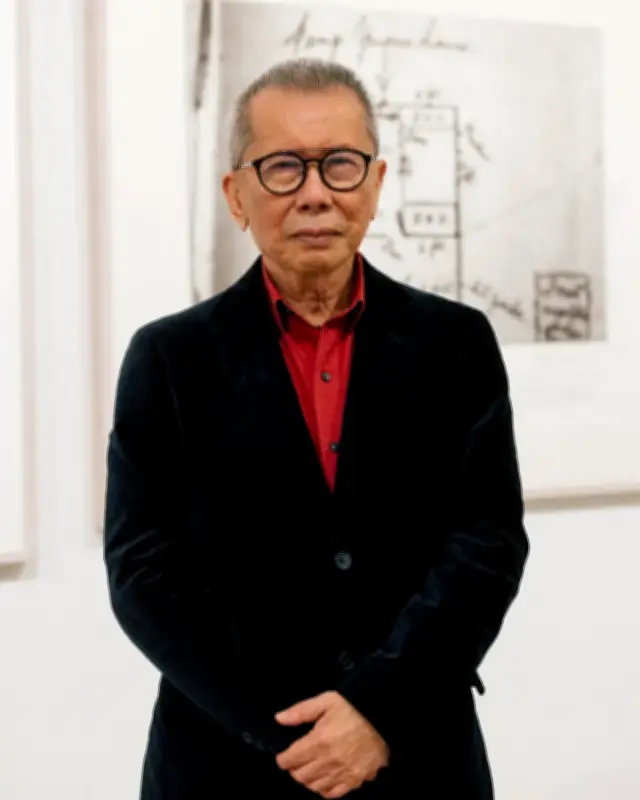
Photographer William Yang, now 82, has spent six decades capturing LGBTQ+ life in Australia, amassing between 500,000 and 1 million photographs since moving to Sydney in the late 1960s. His work is currently featured in the exhibition Inside the Mirage at the TarraWarra Museum of Art in Victoria, which explores the diaspora experience in Australia.
Yang's contribution to the exhibition includes seven annotated photographs telling the story of his uncle's murder in 1922, a family mystery that shaped his upbringing. His uncle, William Fang Yuen, was killed on the family's farm in far north Queensland, and Yang's mother, who was 16 at the time, raised him and his siblings to be "more Australian than the Australians."
Uncovering a family murder mystery
In 1990, Yang travelled to Innisfail to uncover the truth about his uncle's death. Relatives offered conflicting accounts: one aunt said a worker stabbed his uncle with a spear over a gambling debt, a cousin mentioned a gang, and a local woman recalled a card game gone wrong. At the local courthouse, Yang was presented with a dusty box of documents, including papers caked in his uncle's blood.

Piecing together the records, Yang discovered that his uncle had accused an employee of fiddling with the farm's accounts. After an argument, his uncle was shot dead. The employee was brought to trial and acquitted, a decision many believed was racist because Yang's uncle was Chinese and the employee was white. "This verdict upset the Chinese at the time," Yang told his audience. "They thought it was a great miscarriage of justice."
Documenting LGBTQ+ history
Yang came out as gay in his late 20s and became a documentarian of Sydney's LGBTQ+ community, photographing through the 1970s, the HIV/Aids crisis, growing acceptance, and the journey to gay marriage in 2017. He also documented his embrace of his Chinese heritage, saying he "came out as Chinese" in his mid 30s, alongside portraits of cultural figures such as Patrick White, Brett Whiteley, Cate Blanchett, and Sam Neill.
The State Library of New South Wales has acquired about 50,000 of Yang's negatives from the 1970s and is negotiating over his images from the 1980s and 1990s, which he is digitising. "So many photographers leave their negatives in a dusty, unsorted pile," Yang says. "I'm digitising the negatives to give the photos a chance of life."
Reflections on a changing world
Yang still photographs events and is working on a book of nudes titled The Male Body, but spends most days organising his archive. "Looking back, I think the strongest element in my collection is the gay events," he says. "People used to tell me, 'I wouldn't worry about that gay stuff. It's so marginalised. You'll come to your senses and start photographing the real world.' But it's in the margins where I think the value of the work is."
Some of his favourite photos were taken at Ken's Karate Klub, a gay sauna in Sydney, where a drag queen invited him to capture shows beside the pool. "Now I couldn't take a camera into a sauna," he says. "I'd be run out the place!" Another memorable event featured a young man decorated like a cake. "You could eat the cream off him," says Yang. "I don't think people would do that nowadays ... Social media has changed everything."
Visibility and political concerns
Yang recalls that in the 1970s, the gay community was hungry for visibility. "One of the revelations I had in the seventies was that the gay community had been invisible for thousands of years, and now there was a chance to be visible." The 2017 gay marriage plebiscite result allayed his earlier fears about conservatism. "That was a huge victory," Yang says. "It was a cultural shift [proving] we had majority approval."
Today, Yang is concerned about politics again. "I see that the whole world is becoming rightwing and anti-gay," he says, though he adds, "we're extremely lucky that we live in Australia and have free expression." At the end of his talk, Yang reflected on an old worry about fulfilling his destiny as a photographer, now feeling satisfied. "Remember when I felt I had not fulfilled my destiny? Well, now I feel I have. It's a good feeling to be satisfied."
Inside the Mirage is showing at TarraWarra Museum of Art until 1 November.