Kitty Sayers, a journalist who grew up in France as a Briton, argues that French students are more likely to take to the streets than their British counterparts because of their revolutionary history and civic education. She notes that young British people have plenty to be angry about, including crushing student debt, private-school privilege, and a housing market they cannot enter, yet they have little tradition of turning that frustration into collective action.
French revolutionary spirit in action
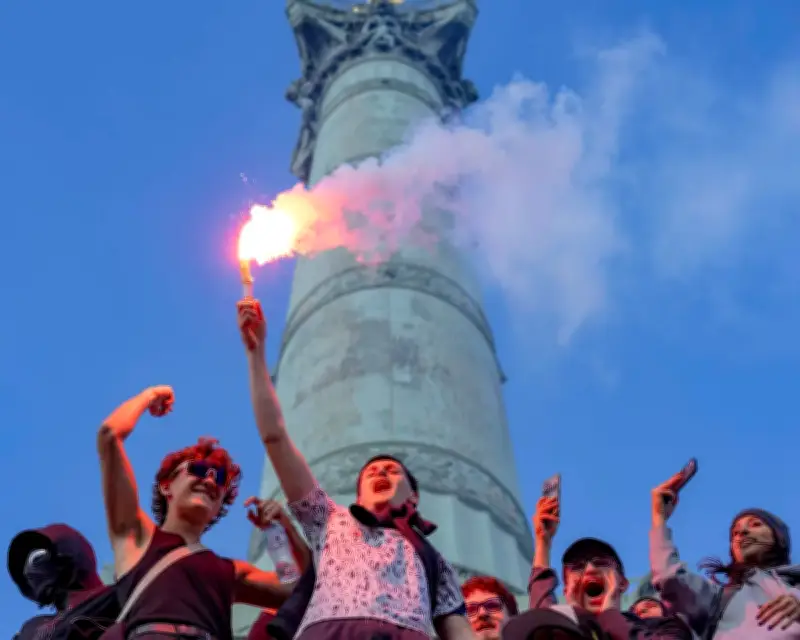
Sayers points to the recent lycée protests in France, where a 15-year-old in Lens lost his hand to a police grenade during a blockade. More than 6,000 people have been arrested, many of them under 18, and hundreds of schools across France are either blockaded or closed. She says these teenagers know the risks and commit to turning up anyway, day after day.
The revolutionary spirit is not a relic of the past, Sayers argues, citing the rousing lyrics of La Marseillaise: "To arms, citizens! Form your battalions! Let's march, let's march!"
Education and the social contract
Sayers explains that France's republic was born of insurrection and has never forgotten it. French pupils learn that protest, uprising, and rioting are the origin story of their freedoms. The French Revolution appears in the curriculum twice, for pupils aged 12 and again at 16, while the student protests of 1968 are taught at age 14 and again at 17. Debating is encouraged in schools from about 11 years old, and young people are expected to have an opinion and defend it.
In the final year of lycée, pupils study Rousseau's Du Contrat Social, which argues that citizens should only surrender their unrestricted natural liberty in exchange for civil and moral freedoms. Sayers explains that when the government raises the retirement age, lets electricity bills soar, or cuts school budgets, that is seen as a breach of the social contract, and protest is the automatic response.
British individualism and union damage
Britons, on the other hand, are characterised more by an American-style individualism and a desire to live and let live, with less collective spirit. Britain has an extraordinary history of protest, spanning Peterloo, the Chartists, the suffragettes, and the poll tax riots, but these are often remembered as stand-alone episodes rather than as the story itself. Sayers also argues that the Thatcher era did permanent damage to unions, contributing to a British public that is grumbling but compliant.
Sayers notes that French student protesters are emboldened by firefighters, nurses, lawyers, and teachers who have joined them in solidarity. A viral video of the mayor of Saint-Denis, Bally Bagayoko, protecting students from the police is a striking example. Parents have also joined their children in protesting, calling on other parents to do the same for the planned general strike on 17 October, in response to police brutality witnessed in the past week.
Not all French support protests
Sayers acknowledges that not every French parent supports every protest, and there is resentment among some students, particularly those from conservative households who believe the blockades are a leftwing plot. She also notes that students in France are not necessarily more political than their British counterparts, who tend to take part in established movements such as Extinction Rebellion or the Gaza protests. The biggest difference, she concludes, lies in the French willingness to take to the streets, suddenly and en-masse, because the state is something the French are taught to engage with as citizens and to challenge when necessary.