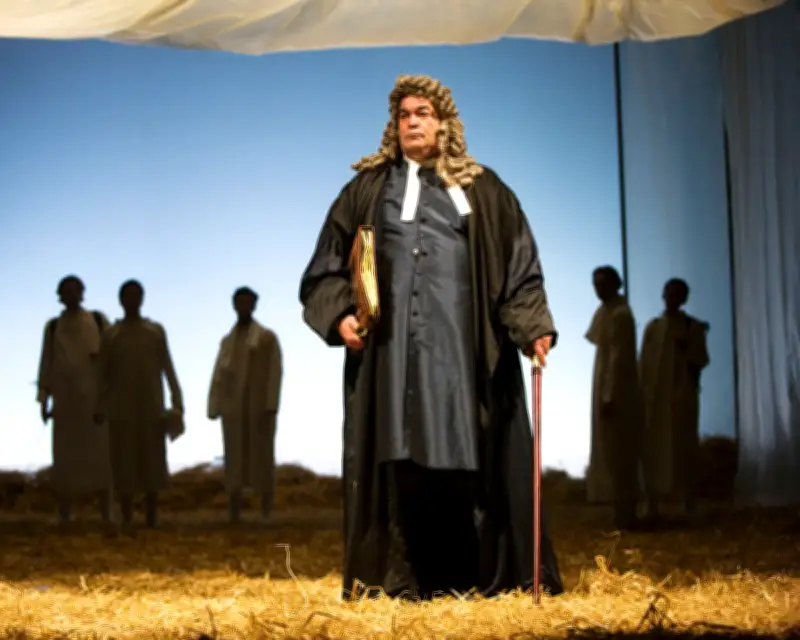
In 1726, Jonathan Swift, dean of Saint Patrick's Cathedral in Dublin, crossed the Irish Sea with the manuscript of Gulliver's Travels in his luggage. Beneath the child-friendly tale of a sailor stranded on an island of tiny Lilliputians, the book was a scathing satire on the corruption of public life under the politically dominant Whigs, whom Swift viewed as moral pygmies.
Swift's Destination: Twickenham
Swift's ultimate destination, however, was not Whitehall but the idyllic Twickenham – known as "Twitnam" – home of his old friend, the poet Alexander Pope. There, he intended to devise a plan for anonymous publication of his biting masterpiece, one that would keep him out of legal trouble. In Pope, he could count on a sympathetic co-conspirator. Both men were members of the Scriblerus Club, an informal association of dissident wits who valued literary collaboration. Pope was equally disenchanted with the state of the nation, though his disdain was aimed at the philistine Hanoverians, who had arrived from Germany in 1714 to take the British throne. Pope, a Catholic barred from royal patronage, emphasized the superiority of his independent suburban life on the banks of the Thames.
The Third Hero: John Gay
The third hero of Hester Grant's engaging dive into early Georgian satire is John Gay, author of The Beggar's Opera. This musical comedy was a savage takedown of Robert Walpole, leader of the all-conquering Whigs, whom Gay considered no better than a highwayman and thief. Unlike Swift and Pope, however, Gay reserved his invective for his writing. The rest of the time, he was a sunny soul, fond of drink and hopeless with money, forever scrounging a bed for the night. In the summer of 1726, he ended up at Twitnam, staying at Pope's exquisitely designed villa, complete with an underground grotto furnished with flints, shells, and glittering glass.
Not All Lovely: 18th Century Life
It wasn't all pleasant. Grant is adept at detailing the less savory aspects of 18th-century life. Consider Swift's regular journeys between Dublin and London. An expensive carriage ride meant sealing yourself in a fetid, jiggling box with five strangers, trying hard not to vomit into their laps (Swift was vulnerable due to Ménière's disease, which affected his balance). Then there was the endless waiting in grubby lodgings in a small port like Holyhead while waiting for favorable tides and weather. Factor in luggage that traveled separately and was almost certain to go astray, and it's no wonder Swift earned a reputation as a misanthrope.
A Questionable Premise
Less successful, perhaps, is Grant's decision to organize this group biography around the proposition that these few weeks in 1726 were some of "the most consequential in English literary history," marking a "pivotal moment" in each man's career. The stubborn fact remains that Swift had already written Gulliver's Travels by the time he arrived at Twitnam, while Pope was still laboring on a tedious translation of Homer, done for money (he was never quite the free spirit he liked to suggest). His masterpiece, The Dunciad, about the stupidity of the Hanoverian court, would not see the light of day for another two years. John Gay, meanwhile, spent the high summer of 1726 in his usual shilly-shallying: it would be 1727 before he began writing The Beggar's Opera.
There is, of course, a case to be made that these summer weeks were a kind of creative laboratory, producing proofs of concept that would ultimately bear fruit in literary masterpieces. But Grant has to work very hard to convince readers that these three clever men were doing anything different from what clever people always do when they get together: gossiping, chatting, and going off on a hundred different tangents. In her previous book, about a largely unknown set of siblings, the Sharps, who rose to social and political prominence in the 1780s, Grant did an excellent job of maintaining cohesion. Here, she writes as beautifully as before, yet fails to make a persuasive case for braiding together three already very famous literary lives.
The Twitnam Summer: Friendship, Satire and the Writing of Gulliver's Travels by Hester Grant is published by William Collins (£25).