Voyage of the Saga Farmann
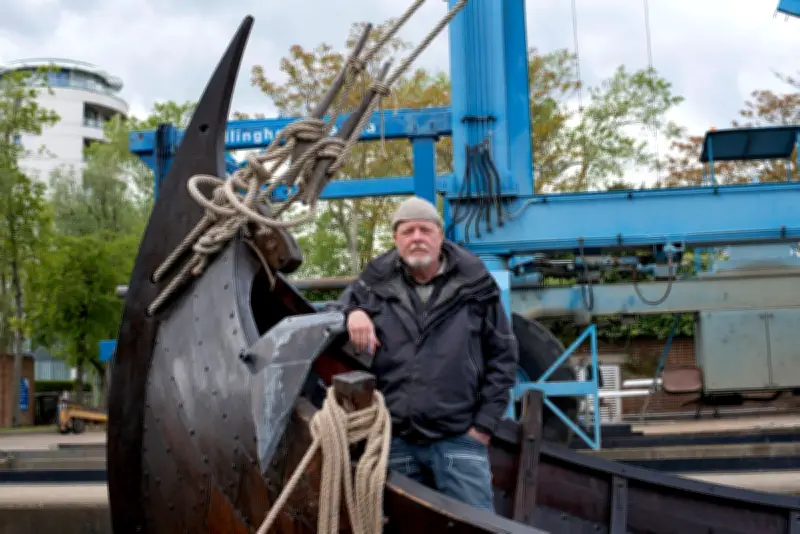
Lars Bill, a retired IT professional from Denmark, has dedicated much of his life to Viking shipbuilding and sailing. Since his teenage years in the 1980s, when he volunteered at the Viking Ship Museum of Roskilde, Vikings have been a central part of his life. In 2023, he became chair of the Oseberg Viking Heritage Foundation in Tønsberg, Norway, which promotes Viking ships and handicrafts.
The foundation, with volunteer help, began constructing the Saga Farmann in 2014. This 20-metre-long vessel is a replica of the Viking Klåstad ship, excavated in 1970 from a farmer's field. Archaeologists determined it was a trading ship from AD 998. The builders used traditional Viking methods: chopping wood with axes and using replica tools. A blacksmith forged thousands of rivets one by one. “It’s hard and slow, but we wanted to showcase how they did it,” Bill said.
Sailing to Istanbul and Beyond
Because the Saga Farmann is a cargo ship, the foundation decided to sail a Viking trading route from Tønsberg to Istanbul—called Miklagard in Old Norse. The voyage began in April 2023. Bill joined two weeks in and was aboard for about half of the 16-week journey. The crew of about 12 volunteers slept on the deck, often in a tent to stay dry. A cabin existed but quickly became smelly from seawater bilge rot. Crew members joined for two-week stints, many never having seen the ship before. “They start out as strangers then quickly become close,” Bill said.

The journey was tough. That spring was cold, with nights freezing and ice forming on the deck. The ship sailed up the Rhine and down the Danube rivers, following Viking routes. Bill learned to sail on Viking ships years earlier, but most crew learned from scratch. Viking ships lack a keel and drift easily. “The ropes are thick and heavy. It’s tough work and takes a lot of muscle,” he said. “The best part is using techniques from 1,000 years ago, but the Vikings would laugh if they could see our incompetence.”
Challenges and Triumphs
One hot day, the ship sailed through a lightning storm. Because it is a wooden boat, lightning bolts hit the sea instead. “It was amazing seeing lightning all around and feeling rain on our toes,” Bill recalled. The water current was fast, making the boat feel as if it were flying. Crossing the Black Sea was a challenge. When conditions were right, they set off from southern Bulgaria at 2 a.m. A big wave breaking into the ship could have sunk it, but it remained steady. “If water enters a Viking ship, it must be pumped out immediately,” Bill said. They sailed almost 24 hours continuously into the Bosphorus Strait toward Istanbul, with crew getting four-hour sleep shifts. “It wore us out, but spirits were high,” he said. Arriving in Istanbul, they saw the full moon over the Bosphorus Bridge. Traveling 2,175 miles (3,500 km) across Europe’s waterways to Istanbul, as Vikings had done centuries ago, was a moment to celebrate.
Continuing the Journey
While moored in Turkey, the crew decided to keep going rather than return to the cold Nordics. Since then, they have taken two voyages—one per year—sailing around Croatia, Italy, through France, and to the UK, storing the boat between trips. After arriving in Croatia, the ship was greeted by about 40 small boats off a small island. The crew had dinner with mayors of three islands over three days, feeling like royalty. In London, Tower Bridge opened as they passed with wind in their sail, and crowds gathered to watch.
Bill spends six to eight weeks per year on board. The rest of the time, he manages logistics for the next voyage with his team. “This ship has brought all of us who’ve crewed it new friendships and showed me how generous people can be,” he said. “I don’t want to bring the ship home until we have to. We’re going to keep sailing for as long as we can.”