An archaeologist who grew up in Pembrokeshire has uncovered evidence of a Roman fort in the county, potentially shedding new light on the extent of Roman activity in west Wales and its links to Welsh folklore.
Mark Merrony, who was born in Pembroke and brought up in Tenby, has spent more than two decades researching the Roman-British period in west Wales in an effort to identify Roman sites that have been overlooked. He first began investigating the area in 2002, driven by a desire to challenge the longstanding perception that the Romans never travelled as far west as Pembrokeshire. He is now a fellow at Wolfson College, Oxford.
Discovery near Crymych
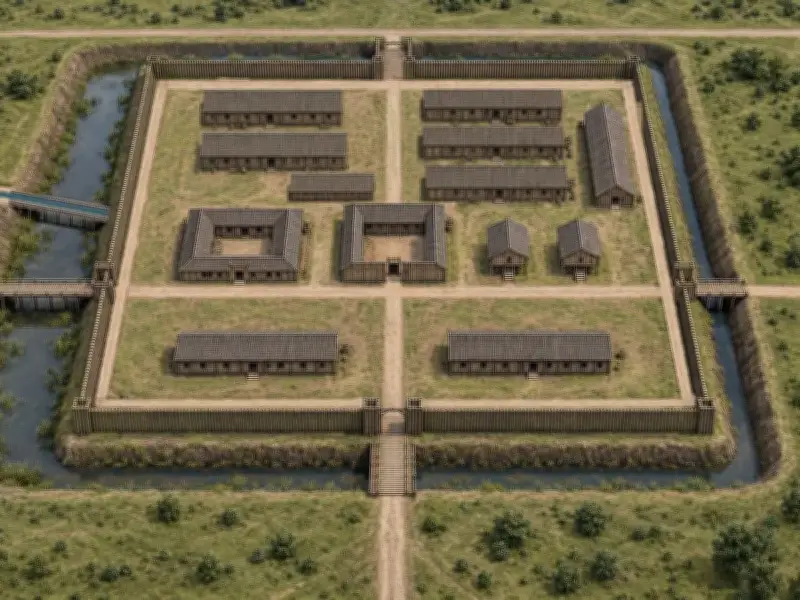
The discovery was found near Crymych, around 12 miles south of Cardigan. It provided evidence of what Merrony believes is a major Roman site, with excavations revealing structural remains and a writing implement known as a stylus, which was used to write on wax tablets.
Merrony said: "There is still this perception that the Romans didn’t go that far, but actually, if you look at the material, there’s an increasing amount of Roman or suspected Roman sites appearing in Pembrokeshire."
His research began with an attempt to trace the Roman road network across west Wales. While examining the landscape, he spotted what he believed to be the outline of a Roman fort. In October 2024, geophysical surveys appeared to reveal buildings where he expected them to be. Trial excavations followed in 2025, before a more extensive excavation began on September 4 this year.
Excavation details and historical context
The latest dig involved five trenches, each measuring 10 metres by two metres. Merrony believes the fort dates back to between AD 74 and AD 78, during the Roman conquest of Wales under the governorship of Sextus Julius Frontinus.
The discovery could also offer a new perspective on the story of Magnus Maximus, the fourth-century Roman emperor whose legendary connections to Wales appear in medieval Welsh literature. In the tale known as The Dream of Macsen Wledig, the emperor dreams of a maiden and sends men to search for her, eventually leading them to north Wales. The story also refers to Carmarthen and a location associated with the name Cadair Maxen, or Maxen’s Chair, near the Preseli Mountains.
"If you recall, there’s always a grain of truth in myth", Merrony said.
Personal significance and support
For Merrony, the discovery is particularly meaningful because of his own roots in Pembrokeshire. Although he moved away around 30 years ago to pursue his studies, the county has remained central to his archaeological interests.
"For me, it’s always been more of a passion than a profession, although the two are entwined," he said. "The fact that it’s a local find, it feels much more. It’s an amazing thing to be local and find something this important and make such a big connection with such a big piece of Welsh folklore."
He studied archaeology at what was then St David’s University College in Lampeter before moving to Oxford in 1996. He went on to complete a master’s degree at Wolfson College and a doctorate at Somerville College, with his research based in Oxford University’s Institute of Archaeology.
His work in Pembrokeshire has been supported by Wolfson College, Oxford University colleagues and a crowdfunding campaign that attracted contributions from people in Wales and the local community. He has also relied on the help of his two brothers, Nick and Nigel, who live in the Tenby area, who have played an important role in the excavation work.
Archaeologist Paul Cheetham, from Bournemouth University, supervised the excavations, with the university also providing equipment. Merrony also credits local Welsh volunteers and friends who have also contributed to the project.
Merrony has said: "I couldn’t afford to do it otherwise. The crowdfunding, I have to thank them wholeheartedly. I’ve had some great and generous support from crowdfunding. A lot of it in Wales, actually, and in the local community."