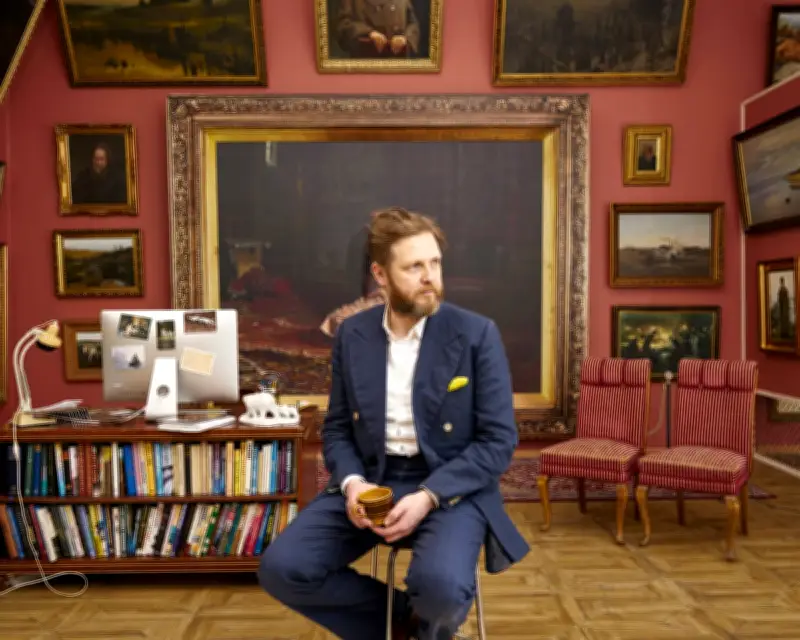
Icelandic artist Ragnar Kjartansson presents his first major solo exhibition in Australia at the National Gallery of Victoria (NGV) in Melbourne, featuring eight video works including the acclaimed nine-screen installation The Visitors, which the Guardian named the best artwork of the 21st century in 2019.
Exhibition Highlights and Key Works
Titled Mercy, the exhibition runs from 26 June to 4 October and showcases Kjartansson's signature blend of authenticity and performativity, irony and sincerity, comedy and tragedy. One of the most striking works is Me and My Mother, a series of videos begun in 2000 when Kjartansson was an art student in Reykjavík. In the first recording, his mother, Guðrún Ásmundsdóttir, then 65, repeatedly spits into his face while he stands silently. Every five years, the pair have restaged the piece, documenting the ageing process. The latest instalment, filmed in 2025 when Ásmundsdóttir turned 90, shows her struggling to spit. 'She almost can’t spit any more. It’s very hard for her,' Kjartansson said.
A guest lecturer initially dismissed the first recording as a 'failure' because 'you see that you are pretending,' a critique that stung but ultimately shaped Kjartansson's artistic philosophy. 'It became the essence of my works: working with this reality that is pretend,' he recalled. 'When you are on stage, pretending, it is still reality.'

The Visitors: A Cult Phenomenon
The centrepiece of the exhibition, The Visitors (2012), is a 64-minute single-take video filmed at Rokeby Farm, a dilapidated Gilded Age mansion in upstate New York. Each of nine screens shows a different musician performing alone in a room, playing individual parts of a haunting, looping song that builds to catharsis. The work reflects on the breakdown of Kjartansson's first marriage but also serves as a love song to the United States, a celebration of friendship, and a tribute to the crumbling house. It has developed a cult following; multiple bootleg recordings on YouTube include one with over 340,000 views, and hundreds of commenters describe being moved to tears.
Music is the emotional anchor in most of Kjartansson's works, with repeating lyrics and melodies creating a hypnotic, shared experience. His influences range from Elvis and ABBA to Mozart and a 1996 German comedy song featured in his latest piece, Sunday Without Love. Regular collaborators include members of Sigur Rós, Múm, Aaron and Bryce Dessner of The National, and his wife, artist Ingibjörg Sigurjónsdóttir.
Artistic Themes and Influences
Kjartansson's work often explores the duality of human existence, a lesson he learned from his father, theatre director Kjartan Ragnarsson, one Christmas when Kjartansson was in his early 20s. 'My dad was drunk, we were smoking cigars and drinking cognac,' Kjartansson recalled. 'He said, “My son, I will teach you the most important lesson in life: it’s beautiful and sad to be a human being.”' This sentiment resonates throughout the exhibition, particularly in The Visitors and Scenes from Western Culture, which depicts idyllic yet mundane moments hinting at malaise. The work was inspired by his observation of global cultural homogenisation. 'I was surprised how similar it is,' he said of Australia. 'You travel as far as you can go, but it’s the same cafe as Reykjavík.'
The exhibition ends with No Tomorrow, a pared-back work featuring eight dancers on an empty stage. Rehearsals began as Donald Trump started his first presidency, and the work explores 'nothing[ness] and beauty,' Kjartansson said, paraphrasing artist Agnes Martin: 'All art is about beauty. It’s either a celebration of the beauty of the world or a demonstration against the lack of beauty in the world.'

Exhibition Details and Context
The exhibition title Mercy reflects Kjartansson's concern over global politics. 'There’s grace in the world and there’s also violence in the world. I like that double edge,' he said. 'It also has that sense of religiousness. Being in Nick Cave’s city, I want to be biblical.' Like Cave, Kjartansson uses the mechanics of religious rites to create meaning; the repetition of lyrics and movements in his videos, sometimes for hours, makes them feel like prayers. Me and My Mother, initially brutal, then comic, has become a meditation on ageing, family, and love. Kjartansson will speak at the exhibition at 3.30pm on Saturday 27 June.