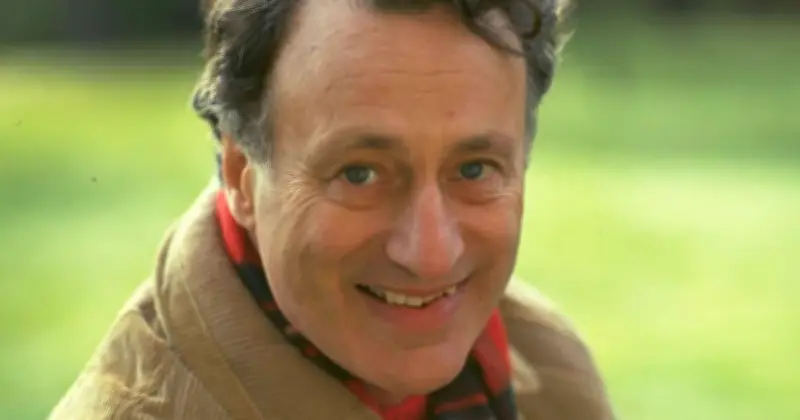
Paul Eddington, the beloved star of The Good Life and Yes, Minister, kept a rare cancer diagnosis secret for four decades before his death in 1995.
The actor, who died at the age of 68, was first diagnosed with mycosis fungoides at the age of 28, according to The Independent. The NHS describes the condition as a type of skin lymphoma that typically begins in cells found in the blood and lymph nodes, but also in other parts of the body such as the skin, gut and spleen.
A private battle
Eddington, who also lived with diabetes, preferred to keep his cancer diagnosis private and focused instead on his family life and acting career. He shared four children with his wife, Patricia.
One of the most prolific sitcom stars of the 70s and 80s, he was catapulted to fame after landing the role of Jerry Leadbetter in the legendary BBC series The Good Life. The show, which aired from 1974 to 1978, saw him acting alongside Felicity Kendal, Richard Briers and Penelope Keith, the latter of whom played his on-screen wife, Margo Leadbetter.
Going public
Following The Good Life's conclusion, Eddington enjoyed renewed success as James Hacker in Yes, Minister (1980-1984) and its sequel, Yes, Prime Minister (1986-1988).
In 1994, one year before his passing, he experienced significant hair loss, as well as darkening patches on his skin, which prompted him to publicly share his diagnosis. "I'm fine. I have only made it public recently because, while it has been a secret, it has got all out of proportion," he explained. "The press has been making a big issue of it when it is not. I had some radiotherapy treatment recently, and I started going bald. So I thought, 'Why not get rid of all my hair?'"
Final words
"I have to think about it because it has to be treated. I have thought of dying, but I am not scared - and I am not expecting to die yet," he added.
In one of his final interviews, Eddington sat down with Jeremy Isaacs for BBC Two's Face to Face programme. Asked how he would like to be remembered, the comedy icon replied: "I think I would like it to be, 'He did very little harm' – and that's not easy, because so many people do."
Eddington died in Southwark, London, on 4 November, 1995. He was survived by his wife, Patricia, and their four children.