The Barbican Centre in London has launched Project a Black Planet: Film, a new season of screenings and events that delve into the complex history of pan-Africanism. Running from 8 July to 6 September, the programme showcases how the movement served as an act of solidarity, resistance, and fierce creativity, bringing together works from across Africa and its diaspora.
Algiers 1969: The Pan-African Cultural Festival
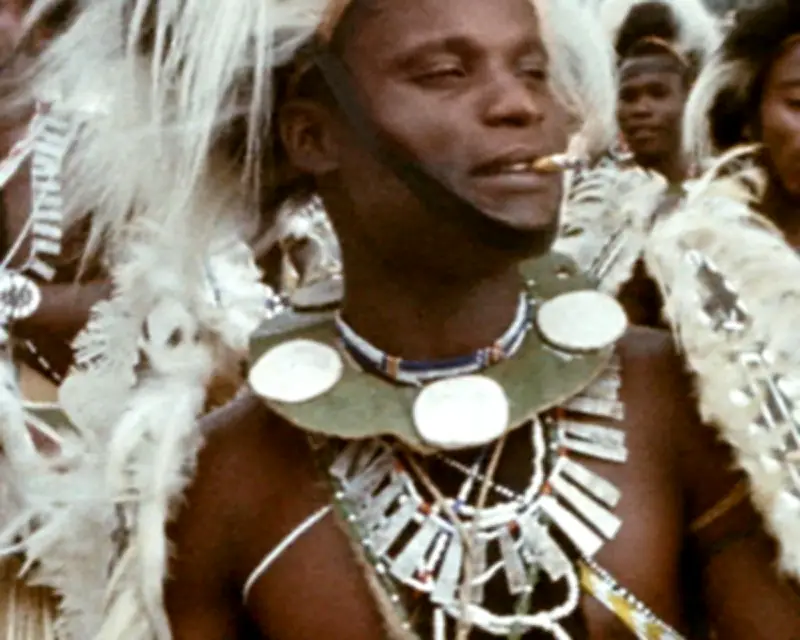
The season opened with William Klein’s documentary The Pan-African Festival of Algiers, capturing the first Pan-African Cultural Festival (Panaf) in July 1969. For 12 days, Algiers became a cosmopolitan hub, with streets filled with performers and placards announcing delegations from countries like Ethiopia, Liberia, and Mali. The film dissolves barriers between spectacle and spectator, bringing to life a quote from Guinea’s first president Sékou Touré: “We must make this revolution with the people … and the songs will come.”
A Diverse Programme Addressing Colonial Legacies
The film programme includes works that address colonial crimes, such as Roy Guerra’s 1979 feature Mueda, Memória e Massacre, which reflects on the 1960 Mueda massacre by Portuguese forces in Mozambique. Others, like Timité Bassori’s The Woman with the Knife (1969) and Djibril Diop Mambéty’s Hyenas (1992), explore the postcolonial condition through psychoanalysis and satire.

Curator Matthew Barrington emphasized that film, as an “inherently populist” medium, shows how pan-Africanism “manifests in the way of people and how they interact.” He invites audiences to “come to the space, see some of these films” and draw connections, with additional music, panel discussions, and performance lectures offering “different ways of thinking about these films.”
Highlighting Women and Diverse Voices
The season also features works by Sarah Maldoror, including Fogo, l’île de feu (1979), which meditates on land and labour in Cape Verde after independence. Her daughter, Annouchka de Andrade, noted that Maldoror’s most famous film Sambizanga “was kept by a producer for 40 years … and she didn’t have any copy,” highlighting the racism and sexism she faced as a Black woman filmmaker. More than 50 of Maldoror’s planned projects were left unrealised due to lack of financial resources.
De Andrade stressed that Maldoror’s “first three movies were dedicated to the struggle in Angola and Guinea-Bissau, but she was not part of the male discourse.” She pointed out that at the first Congress of Black Artists and Writers, “you have only one woman [but] Sarah was in the room,” alongside intellectuals like Suzanne Césaire.
Exploring Contradictions and Global Connections
The season’s Ambiguous Encounters strand, curated by Abiba Coulibaly, marks 60 years since the first World Festival of Black Arts (Fesman) in Dakar and the Tricontinental conference in Cuba. Coulibaly aims to “sit with all of the discomfort and contradictions within” pan-Africanism, focusing on cities like Dakar, Algiers, and Lagos. The programme also includes diasporic cinema such as Ola Balogun’s Nigerian-Brazilian collaboration Black Goddess.
Kodwo Eshun, co-founder of the Otolith group, whose films In the Year of the Quiet Sun and Nucleus of the Great Union are shown, argued that “pan-Africanism is the transformation of the continent, which implies the transformation of the planet.” He added, “If pan-Africanism was a dream, why did Belgium, USA and Britain go to the lengths they did to assassinate Lumumba? It wasn’t a dream, it was a threat.”
A Timely Reflection
Set against the backdrop of Apollo 11’s moon landing in July 1969, the season offers a grounded vision of pan-Africanism’s transformative potential. Project a Black Planet: Film runs at the Barbican Centre, London, from 8 July to 6 September.