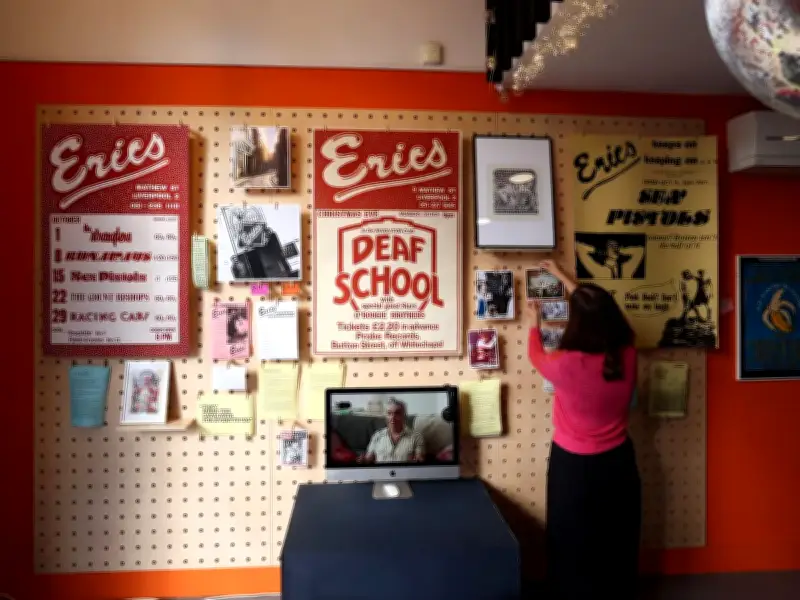
A new exhibition in Liverpool is celebrating the city's mid-1970s music scene, a period that spawned influential acts like Echo and the Bunnymen, The Teardrop Explodes, and KLF. Titled 50 Years of DIY Music and Creativity in Liverpool Part One: The Pool of Life, the show opened earlier this month at Dorothy on Jordan Street and runs until November 20.
Co-curated by Dorothy co-owner Jim Quail and documentary maker and author Grant McPhee, the exhibition features press cuttings, gig posters, photographs, and other ephemera. It focuses on the transformation of Mathew Street, from the arrival of Peter O'Halligan, who took over a warehouse to create Aunt Twacky's and O'Halligan's Parlour, through the Liverpool School of Music, Language, Dream and Pun, and the emergence of Eric's club and its surrounding scene.
Bringing the era to life
Quail told the ECHO that the exhibition came about after McPhee, who has been making a series of films about Liverpool's Mathew Street scene, visited Dorothy during a previous show. McPhee had gathered "an incredible amount of ephemera, and knowledge, and stories, and photography" reflecting the scene before, during, and after Eric's. Quail said: "He came down and saw our space when we had one of our previous shows on... And he was looking for a place to show that, to turn it from the research into a show itself, and we said, 'You could do it here'."
Quail added that the curators worked together to focus the show mostly around 1976, documenting the period through found objects, video clips, people's memories, and photography sourced from those who were there. He noted: "There's a wealth of really exciting photos of things happening. That energy that you can see in an image of people coming together to make something so energetic and vibrant."
Reflecting the energy of the scene
McPhee was particularly keen to reflect the era's energy through visual variety. Quail explained: "Visually we've tried to reflect that energy by using as much variety. Next to a beautiful piece of photography, there's a load of cut-up text. There's some scripts, there's handwritten lyrics, photo sheets from fantastic photographers."
The exhibition includes the original issue of Daredevil from which The Teardrop Explodes took their name, displayed alongside lyric sheets. Quail said: "We've tried to create that energy by making a real collage of different elements... Via all these different things, we've hoped to try and bring that sense of energy."
Personal connections and reactions
For the curators, the exhibition goes beyond displaying artefacts. Quail described visitors recognising themselves in the materials: "We've had people come in and see themselves there and go, 'Oh my God, look at us there.' That was so great." He noted the emotional impact on those connected to the scene, saying: "You see a light go on inside people when they see something that's connected to a period of their life that is so monumentally important to them."
Quail reflected on the deeper meaning of the era, adding: "That kind of sense of being in something and being drawn to something and you see your people in these places, and you figure out how you relate not just to the city, but how you relate to yourself by being a part of a scene and something that helps you understand yourself in a way. I've enjoyed seeing that reflected back in people when they look at the exhibition."