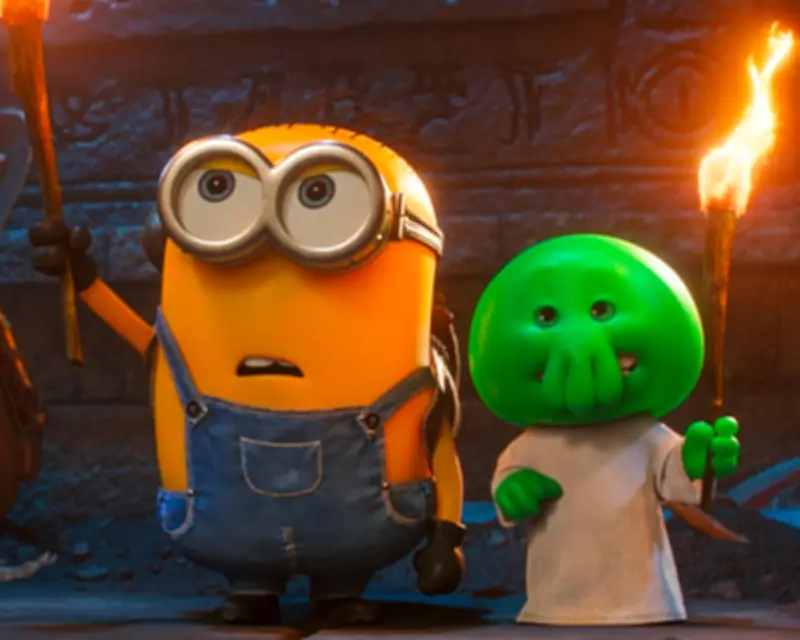
The seventh entry in the Despicable Me franchise, Minions & Monsters, opens with a promising premise: the yellow, gibberish-speaking Minions land in 1920s Hollywood during the silent film era. Director Pierre Coffin crafts a love letter to cinema, complete with references to Charlie Chaplin, Buster Keaton, and the Lumière brothers' train arrival. The Minions become silent-era stars under German-inflected director Max (voiced by Christoph Waltz) and the Bright Brothers (both voiced by Jeff Bridges), modeled on the Warner Bros. founders. Slapstick gags abound in joyful homage to physical comedy.
Returning to Familiar Territory
However, the film quickly abandons its clever setup. Once sound technology arrives, the Minions are fired because they cannot speak English—a nod to their signature gibberish, Minionese. But instead of exploring the conflict of preserving their place in Hollywood, the movie descends into repetitive chaos. The second and third acts become cluttered with extraneous characters and absurd plot points: an ancient spell book, a robot, and a women's rights movement subplot that fails to cohere.
The franchise, which began with Despicable Me in 2010, has become the highest-grossing animated franchise of all time, largely due to the Minions' viral appeal. But Minions & Monsters marks Illumination's first attempt to give the Minions pathos. Protagonist James dreams of making a monster film, creating tension with best friend Henry. They are ostracized because they operate with ego—something Minions are not supposed to have. This promising emotional arc, however, is soon abandoned as the Minions revert to their old ways.

Lack of Emotional Resonance
The film's core issue is its lack of emotional resonance. Cinco Paul, a co-writer on Despicable Me, has publicly disavowed the franchise's idea of the Minions as an immortal nomadic tribe, indicating a lack of conviction. Coffin himself has spoken about the toll commercial demand has taken on his investment. The Minions, once used by Gru to achieve far-flung dreams, are now mostly used by Illumination to make money.
By the end, the Minions save the day as heroes, contradicting their original purpose: to serve a villain. The film's ironic wink at Hollywood history—proposing the Minions deserve a place alongside George Lucas and E.T.—feels hollow. As Coffin said, the Minions continue to fulfill their purpose: generating revenue. Minions & Monsters is out in Australian cinemas now and in the UK and US on 1 July.