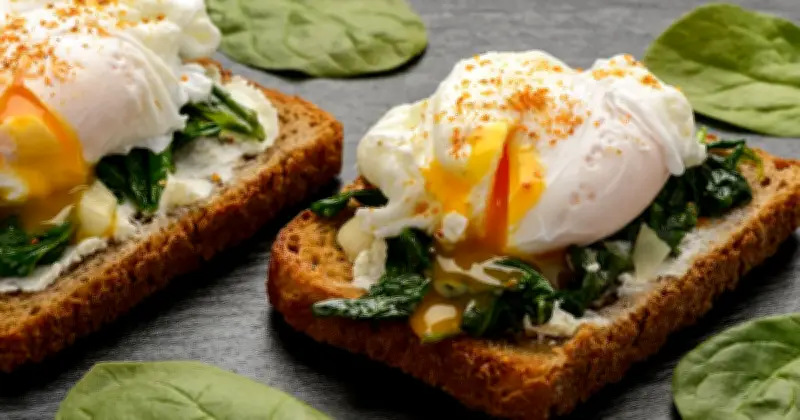
A food writer has shared a microwave method for poached eggs that takes just two minutes and requires no specialist equipment. The technique, which uses a mug or bowl, produces a soft, springy egg that holds its shape without the fuss of swirling simmering water.
Cindy, founder of food blog Salt and Serenity, said she had never made poached eggs at home until recently because they seemed complicated. She explained: "Poached eggs are not something I ever made at home until a few weeks ago. They always seemed so complicated to make. Swirling the simmering water into a vortex and then gently lowering the egg into this seemed like a recipe for disaster."
How the microwave method works
Cindy said she saw people making poached eggs in the microwave on Instagram and wondered if it could really work. "It took me over a dozen eggs until I finally cracked the code! (a little egg humour there)," she added.

Cooking the egg in a mug or bowl helps it maintain its shape, while the microwave gently heats it through. The result is a perfectly formed, springy poached egg without the risk of it breaking apart.
Ingredients and step-by-step method
To make the egg, you will need one large egg, 180ml of boiling hot water, and one teaspoon of vinegar. Any type of vinegar works, as the acetic acid helps the egg proteins coagulate and retain their shape.
Start by boiling a kettle and decanting the water into a heatproof bowl or mug, then stir in the vinegar. Tap the egg with a spoon to crack the shell, transfer it to the mug, cover with a plate, and microwave at roughly 80 per cent power for 30 seconds.
Cooking time and final steps
Cooking time will vary depending on the microwave, so some trial and error may be needed. Full power should be avoided, as it can set the yolk too quickly and leave the whites undercooked.
After 30 seconds, remove the egg and use a spoon to carefully turn it so the yolk is wrapped in the whites. Cook for an additional 10 seconds, and if it remains unset, continue in five-second bursts until fully cooked. When ready, drain off the water and rest the egg on kitchen paper to soak up surplus moisture.