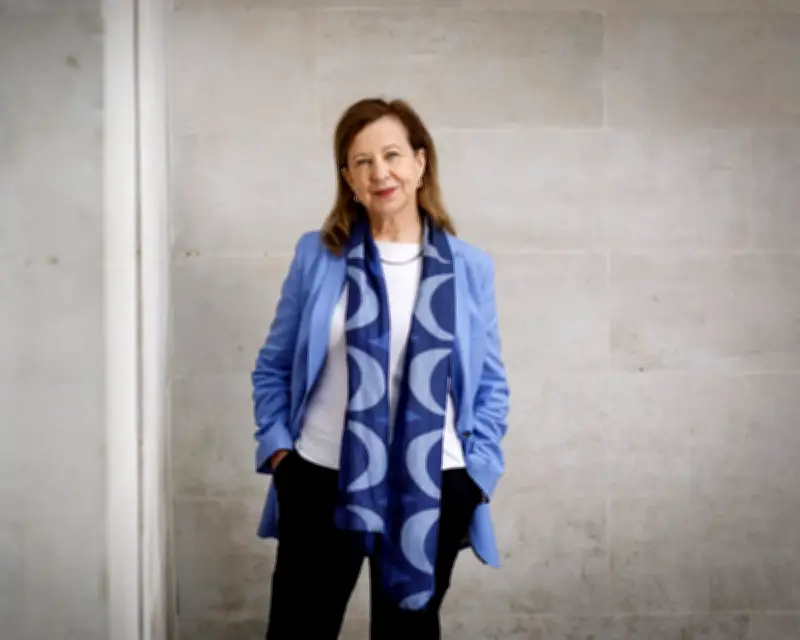
Lyse Doucet, the BBC's chief international correspondent, has been awarded the Women's Prize for Nonfiction for her debut book, The Finest Hotel in Kabul. The book offers a unique perspective on Afghanistan's turbulent history through the lens of the Intercontinental Hotel, where she first stayed in 1988.
A Symbol of Afghan Resilience
Doucet, 67, has reported from Afghanistan for nearly four decades, witnessing Soviet occupation, civil war, Taliban rule, and Western-backed democracy. Her book uses the hotel as a narrative device to draw readers into the country's complex story. 'I needed to find something that would draw people in rather than push them away,' she explains. 'A hotel was a device to tell the story in a way people could recognise.'
The Intercontinental Hotel, built by the British in the 1960s, once symbolized a progressive Afghanistan—known as the 'Paris of the east'—but remained open through decades of upheaval. The book focuses on the staff who stayed, including Hazrat the housekeeper, Abida the first female chef, and Malalai a pioneering waitress.
Women's Rights in Afghanistan
Doucet hopes the prize will draw attention to the Taliban's draconian treatment of women. 'Afghanistan has largely slipped from the headlines,' she says. 'Perhaps this win will bring some attention. None of us should accept a world where girls cannot be educated after 16, women cannot go to university, or are barred from jobs.'
Since the Taliban's return to power in 2021, they have systematically erased women from public life, banning secondary education, forcing women from workplaces, and requiring burqas. Recent decrees have legalized child marriage, and a protest in Herat against hijab arrests left two dead, including a child. 'Five years in and it is getting worse. It is a stain on our world,' Doucet says. 'But the courage of Afghan women is extraordinary.'
International Engagement
Doucet criticizes the lack of visas for Afghan women seeking education abroad. 'Afghan women getting scholarships face obstacles everywhere. We live privileged lives; it's not our privilege to give up on Afghans.' She also urges caution in dismissing post-2001 achievements, noting that period created the most educated generation in Afghan history.
As the EU prepares talks with Taliban representatives, Doucet remains cautious. 'My job is to explain, not advocate. But mediators say it's better to negotiate than isolate. The only change will come from within the Taliban.' She ends with an Afghan saying: 'The last to die is hope. Nothing lasts forever.'