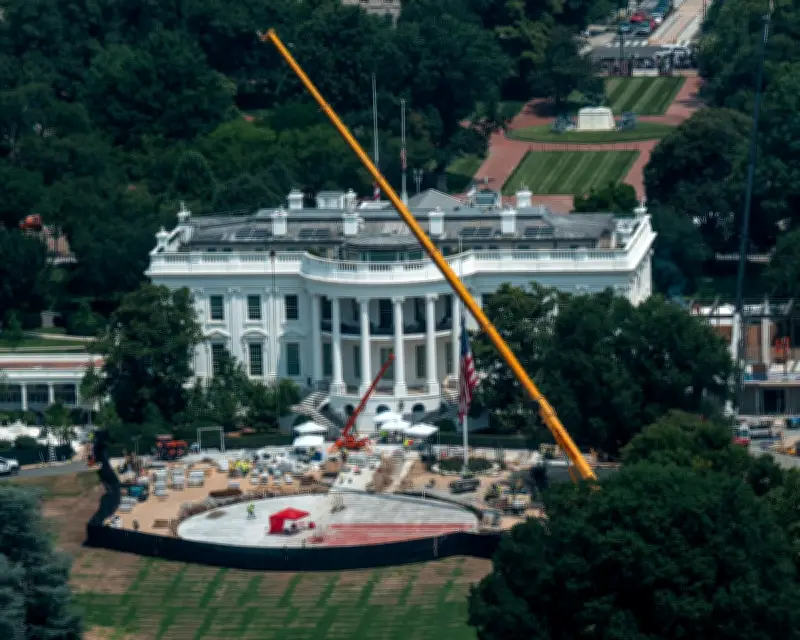
Recently, Jonathan Swan, co-author of a tell-all about Donald Trump's second term, told The View that a substantial slice of Trump's mind is devoted to interior decorating. Trump engages in design wars with Melania, moving her furniture and reportedly supergluing gilded accents to the Oval Office mantel. The New York Times reported that 18 major White House remodeling projects, including a botched reflecting pool and a paved-over Rose Garden, could cost $1.2bn.
Trump's Renovation Compulsion
Trump's obsession began in 2017 when he replaced the Oval Office's blue carpet with a Mar-a-Lago peach version. In his second term, he tore down the East Wing entirely. The author, who bought a money pit house, relates to this compulsion, describing a fear of ugly rooms and a fixation on design rules like 'one throw per sofa, draped not folded'.
The Stress of Renovations
Surveys show 12% of new couples considered separating during remodeling, and over two-thirds of millennials reported high stress. The interior design market hit $185bn globally in 2025, projected to reach $298bn by 2033. Yet homes look increasingly homogenized. Jia Tolentino describes a similar homogenization with faces, surgically or AI-enhanced, becoming 'more technically beautiful but more spiritually unattractive'.

Why Do We Do It?
The author questions why people undergo this torturous process—for resale value, to keep up with Joneses, or for emotional effects of built environment. Only 52% of couples felt happier in renovated homes. Annetta Grant's 2023 study found Americans design for resale value, leading to anxiety and isolation. The author concludes by quoting George Eliot: 'The mistakes that we male and female mortals make when we have our own way might fairly raise some wonder that we are so fond of it.'