In her essay on the rise of the epic domestic novel, Lisa Owens, author of Natural Disaster, argues that writing about home life does not have to be humdrum. She points to world-spanning, taboo-shattering works such as Ducks, Newburyport and All Fours as examples of how the domestic sphere can be a compelling subject for fiction.
The Allure of the Domestic Sphere
Owens begins by referencing Dorothy's declaration in The Wizard of Oz—'There's no place like home'—as a metaphor for how the domestic sphere is often portrayed in art: action and adventure happen 'out there,' while home is rendered in sober sepia tones. Home may be what we yearn for, but only after we have left it behind.
While working on her second novel, Natural Disaster, Owens was plagued by the potential pitfalls of putting domestic life front and centre. The story takes place over 24 hours, following a woman who plans to spend her final day of maternity leave having a nice time with her two small boys (it does not go to plan). She questioned why an author with young children would spend precious writing hours dwelling on the very environment she is trying to keep at bay, and why a reader would choose to consume more daily life when fiction offers escape. Yet, she concludes, what could be more compelling? The home is where we do so much of our living, where our most formative relationships are forged, and where early dynamics play out in later years.

The Perils of Writing About Domesticity
For authors, and women in particular, writing about domesticity offers a fraught prospect: making public the personal is often interpreted as a political or dissident act. In 2001, Rachel Cusk received intense criticism for her memoir A Life's Work; she later regretted writing it, feeling she had 'committed a violent act' against her family by telling the truth about her experience of motherhood. Her 2012 memoir Aftermath, detailing the breakdown of her marriage, was equally controversial, with criticisms of her personal life printed in newspapers and broadcast on the radio.
Fiction, where emotional truth is privileged over fact, may offer a more forgiving medium. Elizabeth Jane Howard's five-volume saga The Cazalet Chronicles, though based on her own family, incites fierce adoration rather than ire. Writing 50 years after the first novel is set provided a safe remove from the heat of its inspiration. Tessa Hadley remarked that the prose sometimes 'reads like a hymn to household management,' and the whole project could be characterised as a domestic epic, where the endurance of Home Place and its rhythms provide a consoling constant against the outside world.
Innovative Approaches to Domestic Fiction
In Good Good Loving (published earlier this year), Yvvette Edwards uses time to great effect. Beginning on the deathbed of protagonist Ellen, the narrative spools backwards through the years to the beginnings of Ellen's married life. This innovative approach elegantly reveals how attitudes, roles and expectations shift across generations, like stripping back the walls of an old house.
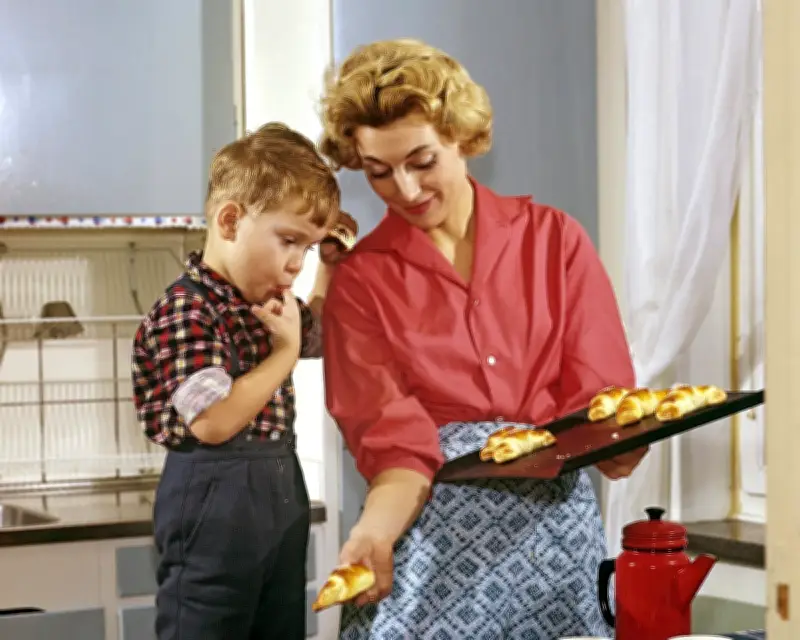
But the past holds an allure that present-day reality might struggle to attain. What can a novel about contemporary domestic life add to our knowledge? In her 2019 Booker-shortlisted novel Ducks, Newburyport, Lucy Ellmann takes these questions and runs an ultramarathon with them. The heroine, a housewife from Ohio, operates a one-woman pie-making business from her kitchen, allowing unlimited time to cogitate about everything from Donald Trump to the death of her mother and the disturbing refusal of an ice lolly to decompose. Weighing in at more than 1,000 pages, Ducks, Newburyport functions as an existential counterpart to Mrs Beeton's Book of Household Management. By writing a work of such scale and stylistic audacity (nearly every clause begins 'the fact that'), Ellmann transforms the domestic experience into a philosophical, heroic one.

The Domestic Novel in an Age of Instability
Owens argues that a fundamental concern of literary fiction has always been 'how should one live?' In recent years, global instability, environmental collapse and technological revolution have brought this problem into sharper focus. In Vincenzo Latronico's 2025 hit Perfection (translated by Sophie Hughes), protagonists Tom and Anna are beneficiaries or victims of tech disruptors like Airbnb and Instagram. They enhance their freelance incomes by subletting their Berlin apartment a few times a year. To them, 'home' is a meticulously curated environment—the novel skewers the millennial aesthetic so precisely that Owens found it difficult to look her mid-century coffee table in the eye for weeks. Latronico exposes how hollow the pursuit of perfection is, but offers no easy answers. The building blocks once considered givens—steady job, reliable housing, financial security—have become uncertainties. For young, urban, educated people like Tom and Anna, the domestic sphere is no longer a welcoming retreat but another potential revenue stream, whose existential costs risk outweighing material gains.
The preoccupation with how to live now is also central to Ayşegül Savaş's The Anthropologists, which follows another young couple making their way in a foreign city. For Asya and Manu, who do not share a common heritage, domestic life is about how much to preserve from their own cultures and what to invent for themselves. Savaş recognises that daily life has a sacred quality alongside the banal—perhaps it is the very nature of banality, with its rituals and repetitions, that makes it innately sacred. We are all faced with major choices (career, family, where to settle), but it is the infinite smaller ones—how we spend our Sundays, engage with our neighbours, take our morning coffee—that shape our sense of purpose and meaning.
Finding Inspiration in All Fours
In 2024, when Owens was racked with doubt about her own domestic novel-in-progress, Miranda July's All Fours crash-landed on her desk: a taboo-shattering, wild and funny fantasia about testing the limits of everyday life. July depicts a family unit full of love and intimacy, yet her narrator does not shy away from the conflict that even the best-case scenario can arouse in working mothers: 'Walking around my own house I felt haunted, fluish with guilt about every single thing I did or didn't do.' She likens re-entering the domicile after a day at her desk to 'Buzz Aldrin preparing to unload the dishwasher immediately after returning from the moon.' For July, the home's traditional function as a haven becomes complicated; what was familiar becomes alien. In All Fours, she turns the question of how to honour the creative self while maintaining an earthbound existence into such an epic quest that, by the end, it is as though we too have been to outer space and back, standing dazed in our kitchens.
All Fours enabled Owens to confront her own draft again, armed with hard evidence that a domestic novel does not have to be studied or quiet, or any other euphemism for boring. It renewed her understanding that the home—where we are our most intimate, lesser-seen selves—can be just as powerful, alive and stimulating an environment as anything we might encounter beyond the front door.
Natural Disaster by Lisa Owens is published by Virago.