Edinburgh is renowned for its fascinating and sometimes gruesome history. From the eerie Real Mary King's Close to Edinburgh Castle, the Scottish capital offers many attractions that delve into its past. However, some locations have been lost to time, with younger residents unaware of their existence. One such place is a tunnel lying approximately 50 feet beneath the city streets, long deserted but with an incredible history worth exploring.
The Construction of the Scotland Street Tunnel
In the 1840s, work began on a train line connecting the north of Edinburgh to Canal Street Station, now known as Edinburgh Waverley. The project required a large tunnel about 1,000 meters long, stretching between Canonmills, Dublin Street, and St Andrew Square. The Scotland Street Tunnel cost over £100,000—a massive sum at the time—and officially opened on May 17, 1847. It allowed passenger trains to travel between Waverley and Granton for the first time, though trains had to be hauled by a steel rope and winding engine due to the steep incline.
A Short-Lived Railway
Despite the costly construction, the tunnel was used by the public for only about 20 years. By 1868, the North British Railway company had built a more efficient route linking northern Edinburgh to Waverley, rendering the tunnel obsolete for passenger service.

Second Life as a Mushroom Farm
The tunnel soon found a new purpose as a mushroom farm. The Scottish Mushroom Company used one of the tracks to grow fungi, installing 800 mushroom beds measuring 12 feet by 3 feet. At its peak, the company produced around 500 pounds of mushrooms daily. The business was lucrative but shut down in 1929 after going bankrupt due to a parasite infection.
Air Raid Shelter During World War II
During the Second World War, the tunnel became an air raid shelter. Its position 50 feet underground and large capacity—able to hold thousands of people—made it one of the most effective bomb shelters in Edinburgh.
Post-War Uses and Abandonment
After the war, the tunnel was mostly abandoned but briefly used by the University of Edinburgh in 1948 for radiation experiments. In the 1960s, it served as a garage storing up to 150 cars, but this ended when a group of troublemakers started a devastating fire. The next major change came in 1983 when the south entrance was demolished during construction of Waverley Market, sealing the tunnel's fate.
The Tunnel Today
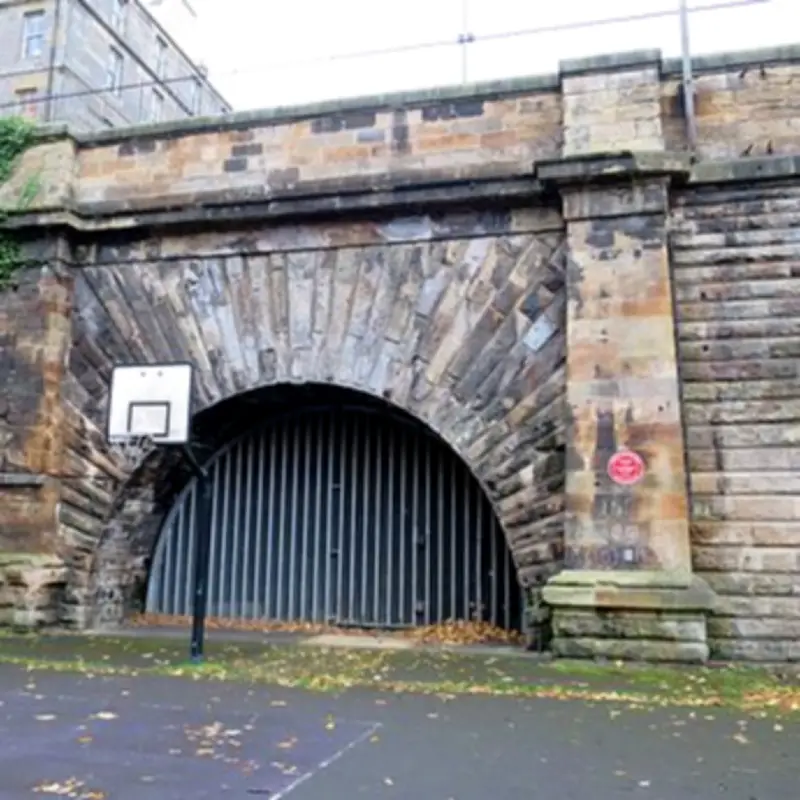
Today, the northern entrance can be seen at George V Park, but it is fenced off. Various proposals to use the site as a car park or power plant have been rejected, leaving the Scotland Street Tunnel a relic of the past. More information is available on the Forgotten Relics of an Enterprising Age website.