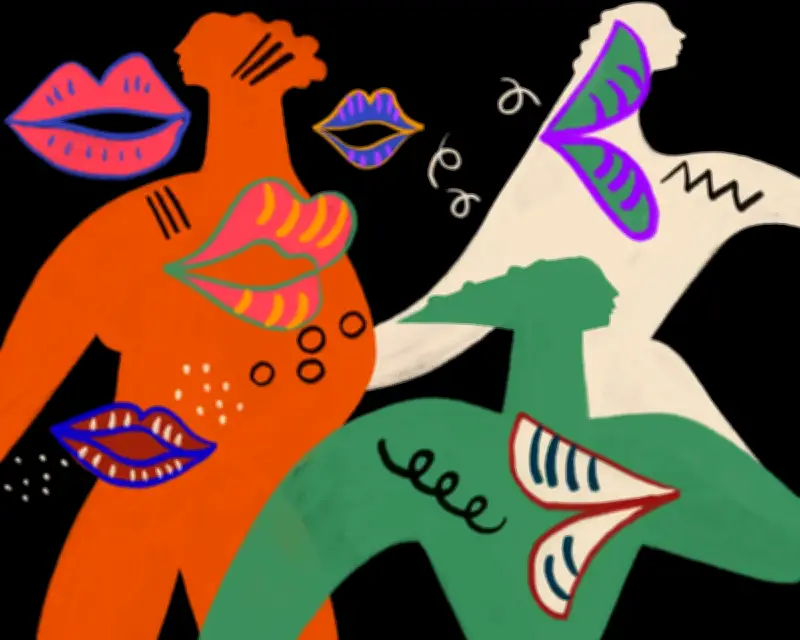
Black communities across the globe have large and complex vocabularies to describe race, shaped by their specific cultures and histories, according to a Guardian newsletter. These descriptors, which include colours like “green”, “red”, “yellow”, and “blue”, are often infused with cultural depth and do not map neatly onto Western notions of racism.
Colour Terms in Sudan and Ghana
In many parts of Sudan, tribes use words such as “green”, “red”, “yellow”, “blue”, and “wheat” to describe complexion, with no single word for “Black”. “Green” means dark but implies an even hue and comeliness; “yellow” is lighter and carries an unstated connotation of beauty; “blue” is the darkest, sometimes pejorative; and “wheat” is most likely a compliment. Their meanings depend on context and tone, grounded in a culture that merges Arab and African histories.
In Ghana, the Ewe language uses Ameyibɔ or ameyibɔr but Yibɔɔ to describe someone considered “beautifully darker-skinned”. A lighter complexion is referred to as Kɔkɔɔ in Twi, which translates to “red” but also “ripe plantain”. These categories are largely neutral descriptors, though lighter skin is seen as a class differentiator.
Somali and Brazilian Vocabularies
In Somali, maariin describes deep brown skin, while white refers to lighter skin. Brazil offers an even larger palette: a 1976 survey found 136 shades and variations Brazilians used to describe skin colour, including “burnt yellow”, “sea blue”, “thistle”, and “disappearing donkey”. This relates to Brazil’s project of “racial whitening” or Branqueamento after abolition.
Despite geographic and historical separation, these vocabularies share similarities, often using colours as metaphors. They are difficult to translate to outsiders and are distinct from racial slurs, despite sometimes having racial implications.
Blackness in Majority-White Countries
This array of descriptors vanishes where Black people are a racialised minority. In the US, even very light-skinned people are often racialised as “Black” by majority-white society, an identity shaped by the one-drop rule during slavery. Micha Frazer-Carroll, The Long Wave’s editor, grew up in the UK in the 90s identifying as “mixed race”, but later realised white British people identified her as Black, influenced by the US’s “one drop rule”. In her Caribbean family, her sister was described as “red skin”, and she herself as “coolie”, a word for Indian indentured labourers who settled in Jamaica after slavery’s abolition.
These terms are fraught with histories of racism and colonialism, but were also used light-heartedly. For the Black diaspora, Blackness as a political notion sits alongside a more layered identity that can be playful. These categorisations can sharpen and turn deadly when civil conflict erupts along ethnic lines, with colour becoming a crude signifier of friend or foe.
Blackness on Its Own Terms
What distinguishes these colour charts is that they are not exclusively defined by whiteness as a hegemonic political centre. Colonialism shaped standards of desirability, seen in the ubiquity of skin lightening creams, but it is only one feature of many power dynamics. Class, immigration, religion, and Arab and South Asian influences across Africa and the Caribbean all play a part.
These descriptions are not necessarily an indication of benign expansive rainbow nations, but a reality of Black life rarely reflected in global Black diaspora discourse, which is often situated in oppression and activism. There is more space to think of Blackness on its own terms: sometimes political and economic, but also rooted in longer histories, wit, and innovations of language that exist across distance and difference.