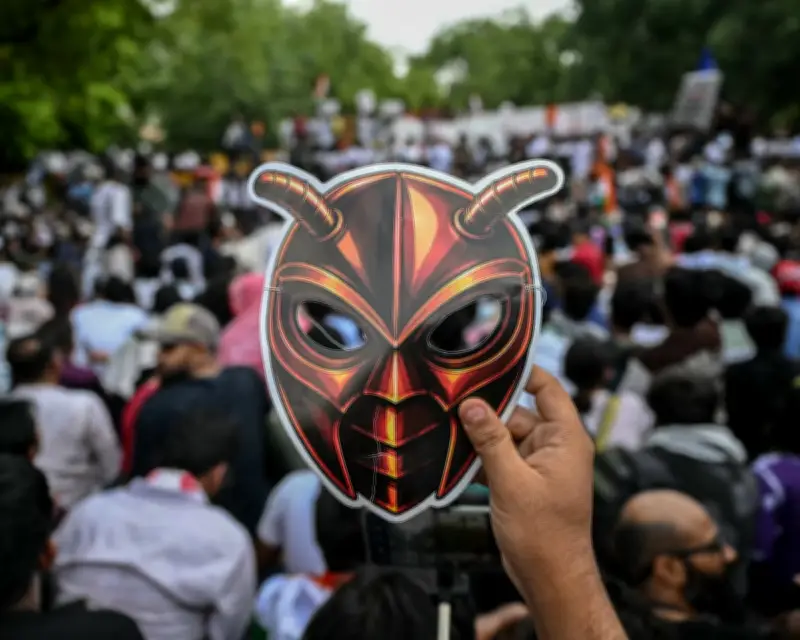
The Cockroach Janta party (CJP), which began as an online joke, has rapidly evolved into a formidable youth movement challenging the dominance of India's rightwing government led by Prime Minister Narendra Modi. The movement's first public protest in Delhi drew thousands of young demonstrators, many disillusioned by the country's education system and job market.
Origins of the Movement
The CJP was founded by Abhijeet Dipke, an Indian graduate of Boston University who was living in the US. Outraged by a comment from India's chief justice comparing unemployed youth to 'parasites' and 'cockroaches,' Dipke posted a satirical call on social media: 'What if all cockroaches came together?' The overwhelming response led him to create a website and social media accounts for the Cockroach Janta party, a parody of Modi's ruling Bharatiya Janta party (BJP). The party's manifesto criticizes the government, and its tagline reads: 'A political party for the people the system forgot to count.'
Rapid Growth and Government Response
Within two weeks, the CJP's Instagram account amassed over 22 million followers, surpassing the BJP's following. The Modi government, known for its intolerance of dissent, attempted to block the party's account on X, citing national security grounds. Despite its satirical beginnings, the CJP has resonated with India's Gen Z and millennials, who face a struggling education system and a job market that fails them. Nearly 40% of India's graduates under 25 are unemployed, according to recent studies.
Protest Demands
Saturday's protest demanded the resignation of Education Minister Dharmendra Pradhan, blamed for repeated exam scandals. This year's medical entrance exam, with over 2 million students competing for 130,000 places, was leaked, forcing its cancellation and retests. Protesters called for accountability and a revamp of the education system.
Ratna Singh, 30, a protester holding a rose and a copy of the constitution, stated, 'People are slaving away for exams that get leaked, and at the end there are no jobs for us anyway. There is a need for a revamp of the entire education system.'
Challenges Ahead
While the turnout of thousands was seen as heartening, some viewed it as disappointing compared to the millions supporting online. The movement faces a David and Goliath battle against the BJP's consolidated power across government, media, and judiciary. Dipke told the crowd, 'We have turned the joke into a revolution,' vowing to sacrifice his freedom for the cause.
The CJP's rise highlights growing criticism of India's 'toxic' exam industry and its toll on youth. More is spent on private tuition than the government's higher education budget, pushing families into debt. Student suicides have been linked to academic pressure. Analyst Pratap Bhanu Mehta wrote that exams are 'instruments of social control' that tell students 'simply to do and die.'
Despite uncertainties, many protesters expressed hope that the CJP could spark a youth-led mobilization similar to those in Nepal and Sri Lanka. Kriti, 21, a university student, said, 'The young people here have suffered enough too.'