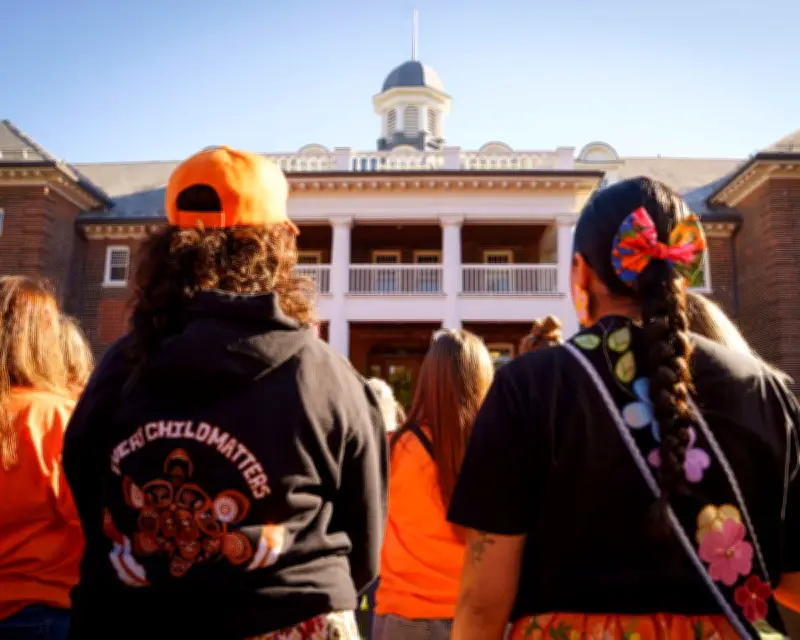
The former Mohawk Institute residential school in Brantford, Ontario, has reopened as a museum, marking a significant step in survivors' efforts to reclaim and preserve the history of Canada's residential school system. The building, which operated from 1828 to 1970, was part of a network designed to eliminate First Nations as a distinct cultural group. Now, it serves as an interpreted historic site, with plaques asking visitors to help identify unnamed survivors in photographs.
Survivors Vote to Reclaim the Site
In 2013, survivors voted to reclaim the Mohawk Institute, transforming it into a museum under the Woodland Cultural Centre. Heather George, the centre's executive director, expressed gratitude for the decision, stating that everything the centre does—from Indigenous art and languages to social dancing and the museum itself—is a form of protest against the residential school system's goals. The museum now hosts local school students to educate them about the school's history.
Brutal Conditions and Abuse
Conditions at the Mohawk Institute were harsh. Children were punished for speaking Indigenous languages, often beaten with a strap. Meals consisted of watery oatmeal, and one survivor recalled being beaten for picking an apple. Escape attempts led to solitary confinement for days, and sexual abuse by staff was rampant. Thousands of children passed through the school during its 140 years of operation.

Museum as a Tool Against Denialism
Sean Carleton, an Indigenous studies professor at the University of Manitoba, noted that commemoration can combat denialism. "If we look at other contexts of genocide, commemoration has played a really important role in facilitating that public awareness," he said. The museum's transformation comes amid what academics describe as a "backsliding" in reconciliation, with some residential school deniers downplaying abuses and new infrastructure legislation threatening First Nations sovereignty.
Survivor Stories and Unmarked Graves
Doug George-Kanentiio, a Mohawk Institute survivor, now works at the museum as an educator. He recalls being kidnapped by federal employees in 1967, made a ward of the state without parental consent, and confined for over a year. He described playing with asbestos wrapped around heating ducts, drinking water from lead pipes, and suffering malnutrition. Sexual assaults occurred behind the boiler room and in the headmaster's office. In 2021, ground-penetrating radar at former residential school sites in British Columbia and Saskatchewan identified over 1,000 anomalies suspected to be unmarked graves.
Preserving History for Future Generations
George-Kanentiio emphasized the importance of immersing people in the horrors of the residential school system to foster understanding. "Why do I keep coming back? The basic reason is, inside the confines of that building, there are still remnants. There's still children that are held, their spirits imprisoned," he said. Displaying these stories in the museum makes them harder to erase, he added, noting that he can still hear the echoes of children in the stairwell.