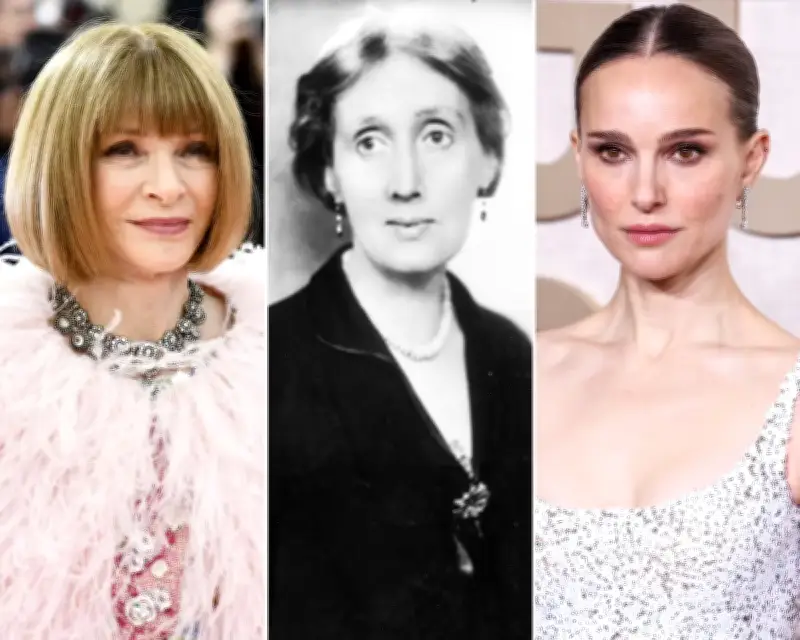
Rachel Cusk's new novel Life of M has become the latest addition to a literary lineage of celebrity satire that spans from Virginia Woolf to The Devil Wears Prada. The book, which features a famous actor protagonist named M, has sparked intense speculation about its real-life inspiration.
In the novel, the actor M participates in an after-hours event at a bookstore, joined by "a writer of some renown" and a fashion model with "some vague self-absorption." The event is sponsored by a brand. The opaque fictional passage has led readers on a search for real-world equivalents, from influencer book endorsements to luxury brand literary clubs.
The Natalie Portman Connection
As widely reported, M's character is based on Natalie Portman. The inspiration is clear from page three, when Cusk describes M's breakout film as having "immediately brought her childhood to an end" — a reference to Léon: The Professional, for which Portman was cast at age 11. A later film about obsessive ballerinas points to Black Swan.

Rumors that Portman is unhappy with her portrayal have circulated in tabloids, though this impression cannot be immediately gleaned from the book itself. Page Six has dubbed the work a "literary scandal," adding Life of M to the canon of "biogossip" — novels that stoke intense speculation over the person they're really about.
A Century of Biogossip
Nearly a century ago, Virginia Woolf's Orlando had high society abuzz, with the Daily Mail treating it as confirmation of Woolf's affair with Vita Sackville-West. In 2002, The Devil Wears Prada by Lauren Weisberger — a former assistant to Vogue's Anna Wintour — sold to Doubleday for around $250,000. Though Weisberger maintained Miranda Priestly was not based on Wintour, public opinion and Hollywood decided otherwise.
In 2018, Lisa Halliday's debut Asymmetry offered what the New Yorker called the "voyeuristic thrill" of imagining dating Philip Roth, which Halliday did for a time. The magazine likened her prose to "one of Rachel Cusk's cool-voiced narrators."
Fame and the Reader's Gaze
Biogossip functions like all gossip: most enjoyable from the outside. Noah Baumbach's Marriage Story, thought to be about his eight-year marriage to Jennifer Jason Leigh, would be a hard watch for her superfans. Baumbach has said the film is "not autobiographical; it's personal."
Cusk's approach strips away signifiers of class and taste, presenting a sketch of something familiar yet hard to pin down. The subject pronoun "we" is used throughout the novel, shifting biogossip into a meta register. Cusk writes: "Like the ugly tower we see everything from where we are, except ourselves. Fame is perhaps this tower, an ultimate entrapment in the self that is also a deliverance from it."
Cusk has been a tabloid fascination before, criticized by the British press for her books about motherhood and marriage. After publishing A Life's Work in 2001, she was accused of child-hating and epitomizing the crisis of contemporary feminism. "I've coped artistically by believing the criticisms weren't right," Cusk said. "They upset me, but they didn't challenge my understanding of how to write, nor of how morality functions in literature."
The allure of biogossip can propel literary fiction beyond book review sections onto gossip blog homepages. Cusk critiques not the concept of fame but our behavior in the face of it. The author's refusal to provide juicy details means readers don't feel allowed to get close to M at all — a test of the reader's own impulses.