Angela Hui's Dim Sum Heaven: A Sunday Ritual in Cardiff
Angela Hui, author of Takeaway: Stories from a Childhood Behind the Counter, declares dim sum as her ultimate death row meal. She explains that dim sum offers a unique experience each time, like snowflakes, covering all bases without fitting into traditional courses. It is overwhelming, loud, and chaotic for first-timers but an assault on the senses in the best way.
Happy Gathering: A Chinese Corner of Wales
Hui grew up eating dim sum every Sunday at Happy Gathering, one of the oldest Chinese restaurants in Cardiff. The entire Welsh Chinese community seemed to gather there. The Hui clan held wedding receptions there, making it their restaurant and a rite of passage. They picked at food, adults gossiped, children doodled on paper tablecloths, and drank pots of pu'erh tea for hours. While Westerners have Sunday roasts, they had dim sum.
The Ritual of Bamboo Baskets
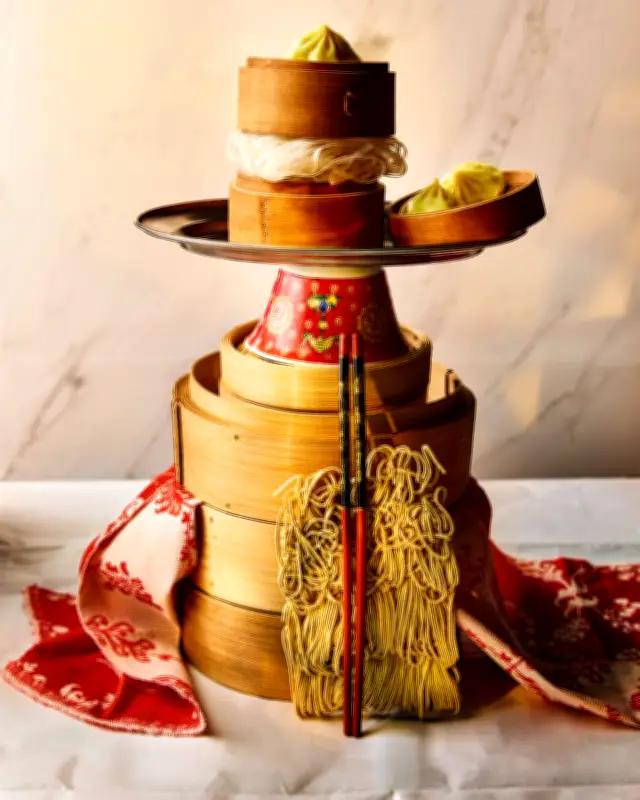
Every week, they returned to the same round table for bamboo baskets thudded down until they crowded every inch. Lifting the lids released steam revealing small, intricate dishes. The stacks grew higher until the person opposite disappeared. They played Tetris to make room for more. Hui turns into No-Face from Spirited Away, feasting on crispy ham sui gok, charred XO stir-fried turnip cake, and juicy braised chicken feet. She describes heaven as dainty portions in steamer baskets.

The Sensory Experience
Hui details the joy of lifting the lid off har gau, steam fogging glasses before biting through the pleated skin to the snap of prawn. She loves peeling lotus leaf from lo mai gai, revealing sticky rice with shiitake, lap cheong, and chicken. Tearing into char siu bao lets sweet barbecue pork spill out. Larger plates of Cantonese roast meats, duck, siu yuk, and soy chicken arrive to share and disappear quickly.
Family Traditions and Cultural Significance
Hui pours tea for her father, who taps two fingers in thanks, a tradition from the Qianlong emperor. Her brother reaches for the last dumpling, and the lazy Susan groans under weight. Dim sum was her parents' bribe to attend Chinese school on Sundays, but eating the dishes taught her how to eat, savor, and appreciate dining formalities, culture, heritage, and elders. It broadened her horizons and helped her understand textures, smells, and contrasts.
The Meaning of Dim Sum
The word dim sum translates to "touch the heart." It originated during the Tang dynasty in tea houses along the Silk Road, where small dishes accompanied tea for travellers. In Guangdong, it became yum cha, meaning "drink tea," expanding to include food. Sharing food and conversation over hours laid the foundation for dim sum culture.
Personal Devotion: Dim Sum Tattoos
Hui has permanently marked her arms with two dim sum tattoos: chopsticks holding cheung fun for its slippery, chewy texture, and a bamboo basket with har gau on her arm. She recalls squeezing prawn filling into her brother's bowl to eat the translucent skin, to her aunt's disapproval. She has a penchant for QQ texture, or "rebound teeth" in Chinese, a cultural difference in appreciating texture that expands eating possibilities.
The Art of Ordering Dim Sum
Ordering dim sum is an art of balance: fried, steamed, filling items like noodles or rice, and greens for health. It is better when someone else takes charge. In older places, staff weave metal trolleys between tables, calling out dishes. Each choice earns a stamp. Today, carts are replaced by pre-ordered menus and QR codes, but Hui misses the theatre of the trolley.
Dim Sum as a Third Space
Over years of code-switching between south Wales and Hong Kong, dim sum reunites Hui's extended family. Whether at Happy Gathering, New World Dim Sum in Cardiff, or Wing Wo in Hong Kong, Sunday dim sum trips felt like a release from daily Chinese takeaway life in a Welsh valley town. It was a third space in a predominantly white area that felt like theirs.
Conclusion
Dim sum is Hui's father and uncle arguing over the bill, then quietly settling it. It is stretching a meal and letting time slip. It is "a small touch of the heart," each basket arriving masterfully. And it is the unspoken promise to return next Sunday, doing it all over again.