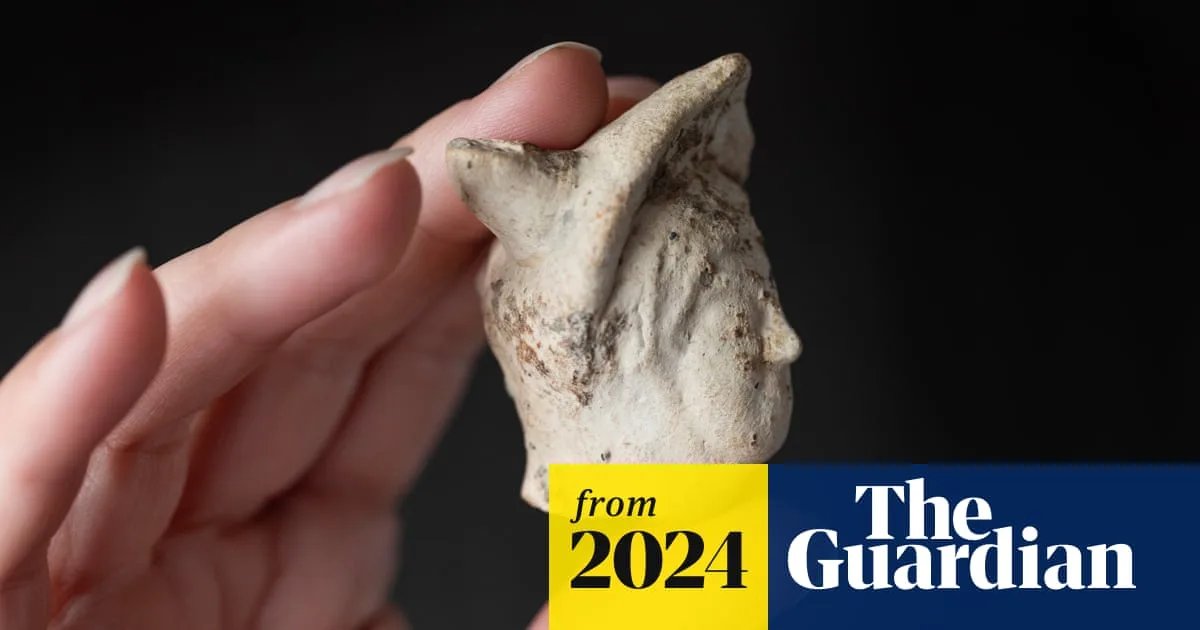
Archaeologists have discovered a 'very rare' clay figurine of the Roman god Mercury at a previously unknown settlement in Small Hythe, Kent. The site, now 10 miles inland, was once a busy port crucial to the Roman Empire's infrastructure network in southern England.
Only the head of the figurine remains, featuring Mercury's characteristic winged headdress. According to Nathalie Cohen, a National Trust archaeologist, pipeclay figurines of Mercury are incredibly rare, with fewer than 10 ever found in Britain. Most such figurines depict female deities like Venus.
The settlement was modest but vital, exporting timber and iron while importing materials from the continent. Other finds include a tile stamped with the mark of the Classis Britannica, the Roman fleet in Britain, highlighting the site's maritime significance.
Experts believe the figurine was used for private religious practice in domestic shrines. Matthew Fittock, an expert on Roman ceramic figurines, noted that the head appears deliberately broken, possibly as part of a ritual practice. Whole figurines are typically found in graves, while broken ones may indicate intentional damage.