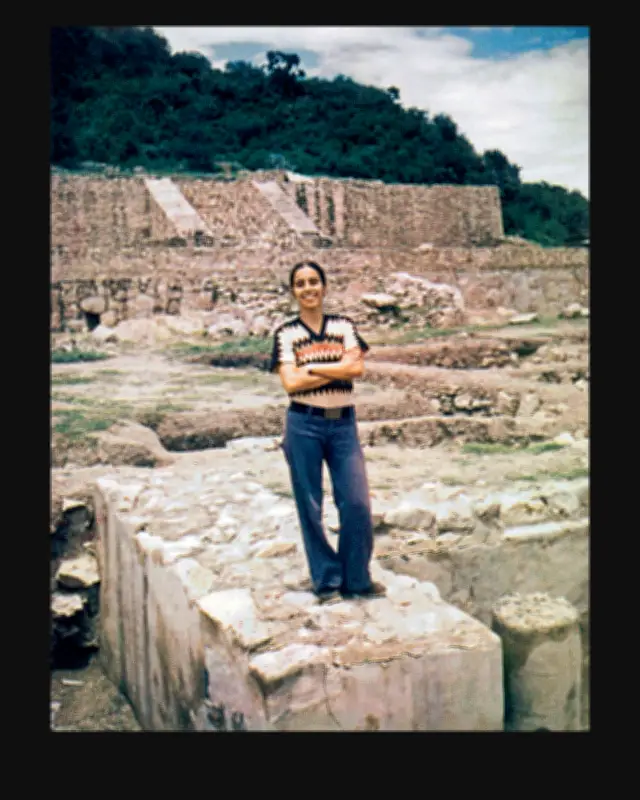
Ana Mendieta, the Cuban American artist known for her powerful performances and earthworks, died at age 36 after falling from a 33rd-floor apartment in New York in 1985. Her husband, minimalist sculptor Carl Andre, was charged with second-degree murder but acquitted in 1988. Now, a major exhibition at Tate Modern from 15 July to 17 January 2027 will showcase her work, focusing on her art rather than the controversy surrounding her death.
Early Life and Artistic Beginnings
Mendieta was born in Havana and sent to the United States at age 12 as part of Operation Peter Pan, a joint CIA-Catholic church initiative. She studied at the University of Iowa, where she began creating performance pieces using cow's blood, such as Sweating Blood (1973) and Body Tracks (1974). Her Silueta series, started in 1973, involved creating outlines of her body in nature using materials like flowers, mud, and gunpowder.
The Rome Residency and Marriage
In 1983, Mendieta won the Prix de Rome and moved to the American Academy in Rome. There, she worked on a commission for MacArthur Park in Los Angeles, cutting trees and burning gunpowder into them. She married Carl Andre in early 1985; he was 49, she was 36. Friends recall their passionate arguments about art. Ida Panicelli, curator of Italy's National Gallery of Modern Art, described Mendieta as a "volcano."

The Night of the Fall
On 8 September 1985, Mendieta and Andre argued at his Mercer Street apartment. Andre called 911 at 5:29 am, saying his wife had gone out the window. The bedroom was in disarray, the window was chest-high with no footprints on the sill, and a doorman heard a woman shouting "No, no, no!" followed by a sound "like an explosion." Andre changed his account multiple times.
Trial and Acquittal
In a bench trial (Andre waived a jury), his lawyer Jack Hoffinger portrayed Mendieta as suicidal and volatile, citing her art as evidence. The defence argued that her work with blood, fire, and self-burial indicated a death wish. Friends like B Ruby Rich called the defence "explicitly racist." On 11 February 1988, the judge found Andre not guilty, stating the evidence did not satisfy beyond a reasonable doubt.
Legacy and Protests
Mendieta's estate, managed by her niece Raquel Cecilia Mendieta, focuses on her art, not the death. However, protests against Andre's exhibitions have occurred for decades, including a 2016 march on Tate Modern chanting "Where the fuck is Ana Mendieta?" Her friends emphasize her ambition and the injustice of the trial. Marsha Pels noted that her dealer was told she would never show in New York again after testifying against Andre, and she did not for 15 years.
The Tate Modern Exhibition
The exhibition will feature works from across her career, including a restored Super 8 film Bird Run (1974), shown for the first time. Raquel Cecilia Mendieta says the family wants the art to speak for itself: "How is she overlooked if she's in all these art history books and museum shows?"