Frederick Wiseman, Prolific Documentary Film-Maker, Dies Aged 96
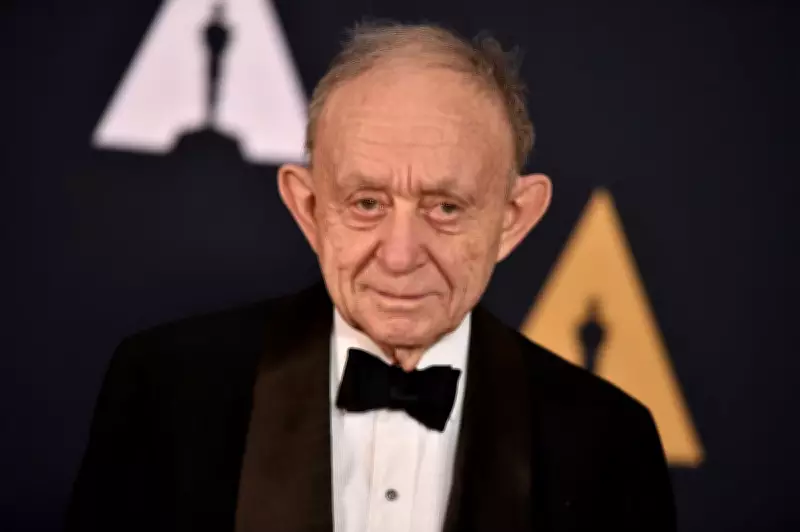
Frederick Wiseman, the renowned documentary film-maker celebrated for his in-depth explorations of public institutions and communities, has died at the age of 96. His passing was confirmed on Monday through a joint statement issued by his family and his production company, Zipporah Films.
Wiseman's extraordinary career spanned nearly six decades, during which he directed and produced almost 50 films. His work was honoured with an honorary Academy Award in 2016, recognising his lifelong commitment to curiosity and naturalism in documentary film-making.
A Legacy of Cinematic Excellence
The statement from his family and Zipporah Films highlighted his unparalleled body of work, describing it as "a sweeping cinematic record of contemporary social institutions and ordinary human experience primarily in the United States and France." His films, from Titicut Follies in 1967 to his most recent project, Menus-Plaisirs – Les Troisgros in 2023, are praised for their complexity, narrative power, and humanist perspective.

Notable works include City Hall (2020), which delved into Boston's city government; Ex Libris (2017), focusing on the New York Public Library; and In Jackson Heights (2015), a portrait of a neighbourhood in Queens, New York.
Unique Filmmaking Approach
Often associated with the direct cinema and vérité movements, Wiseman employed a distinctive methodology. He avoided interviews, staged events, voiceovers, and musical scores, relying solely on natural lighting and diegetic sound. He famously conducted no prior research before starting a project, approaching each film with a sense of adventure and a desire to learn.
In his 2016 Academy Award acceptance speech, Wiseman remarked, "Making a movie is always an adventure. I usually know nothing about the subject before I start ... I never start with a point of view about the subject, or a thesis that I want to prove." He documented extensive footage, often hundreds of hours, followed by an intensive editing process that could last up to 10 months.
Despite his association with vérité, Wiseman viewed his films as "visual novels" rather than journalistic accounts, emphasising their artistic and narrative qualities.
Early Life and Career Beginnings
Born in Boston, Wiseman attended Williams College and Yale Law School. After graduating in 1954, he served two years in the U.S. Army as a court reporter before studying law in Paris under the GI Bill. Upon returning to the United States, he taught at the Boston University Institute of Law and Medicine.
His interest in documentary film-making emerged during this period. He produced the 1963 semi-documentary The Cool World, adapted from a novel about Harlem gang life. His directorial debut came in 1967 with Titicut Follies, a harrowing depiction of life at Massachusetts' Bridgewater State Hospital for the criminally insane. The film faced a public screening ban until 1991, but Wiseman persevered, producing three more films in the subsequent years.
Diverse Subjects and Personal Views
Wiseman's filmography also reflected his passion for theatre and dance, with works like La Danse (2009), offering a behind-the-scenes look at the Paris Opera Ballet, and Crazy Horse (2011), about a famous Paris cabaret club.
While his progressive political views were evident in films such as Welfare (1975), which examined New York's benefits system, Wiseman resisted the idea of documentaries as tools for political change. In a 1994 article for Dox: Documentary Quarterly, he stated, "Documentaries, like plays, novels, poems – are fictional in form and have no measurable social utility."
His most recent film, Menus-Plaisirs – Les Troisgros (2023), explored the inner workings of a Michelin triple-starred restaurant in France. Reflecting on his career in 2016, Wiseman described it as a "50-year course in adult education," where he learned about new subjects with each project, documenting both kindness and cruelty in human behaviour.

Personal Life and Survivors
Frederick Wiseman is survived by two sons, David and Eric, three grandchildren, and his long-time friend and collaborator, Karen Konicek, with whom he worked for 45 years. His wife of 65 years, Zipporah Batshaw Wiseman, passed away in 2021.