King’s College London and Cranfield University have announced plans to merge by August 2027, aiming to create an “extraordinarily powerful” and “global” institution. The two universities have signed an agreement that they describe as the “first step” toward unification, with the goal of becoming a single entity within the next 14 months.
Cranfield, a postgraduate public research university specialising in science, engineering, design, technology, and management, will integrate into King’s College London. Leaders from both institutions stated that the move would establish a “global university” and “bring some of the best of the UK to compete with the best in the world.”
Leadership Perspectives
Professor Shitij Kapur, vice chancellor and president of King’s College London, said: “The merger would bring new educational possibilities for students, new discoveries from academics, and a clear focus on working in partnership with industry and government to support national resilience. This is a deliberate step to bring some of the best of the UK to compete with the best in the world.”
Professor Dame Karen Holford, chief executive and vice chancellor at Cranfield University, added: “It is an intentional step, which brings Cranfield University’s outstanding applied research, nationally important facilities, sovereign capability, and long-standing industry links to King’s, creating enormous potential and continuing our mission to tackle real-world issues. Together we will create a global university that is not only committed to excellence, but delivers it with purpose, drive and scale.”
Government Support
Science minister Lord Patrick Vallance commented: “The combination of Cranfield and King’s creates an extraordinarily powerful university. It holds huge potential for the Oxford-Cambridge Growth Corridor and for wider UK research capability and training, bringing together two world-class institutions and giving King’s a place at the heart of one of our most important regions for science and technology.”
This merger follows the formal approval for the universities of Greenwich and Kent to merge into the UK’s first “super-university” in August of this year, signalling a trend toward consolidation in higher education.
Historical Background
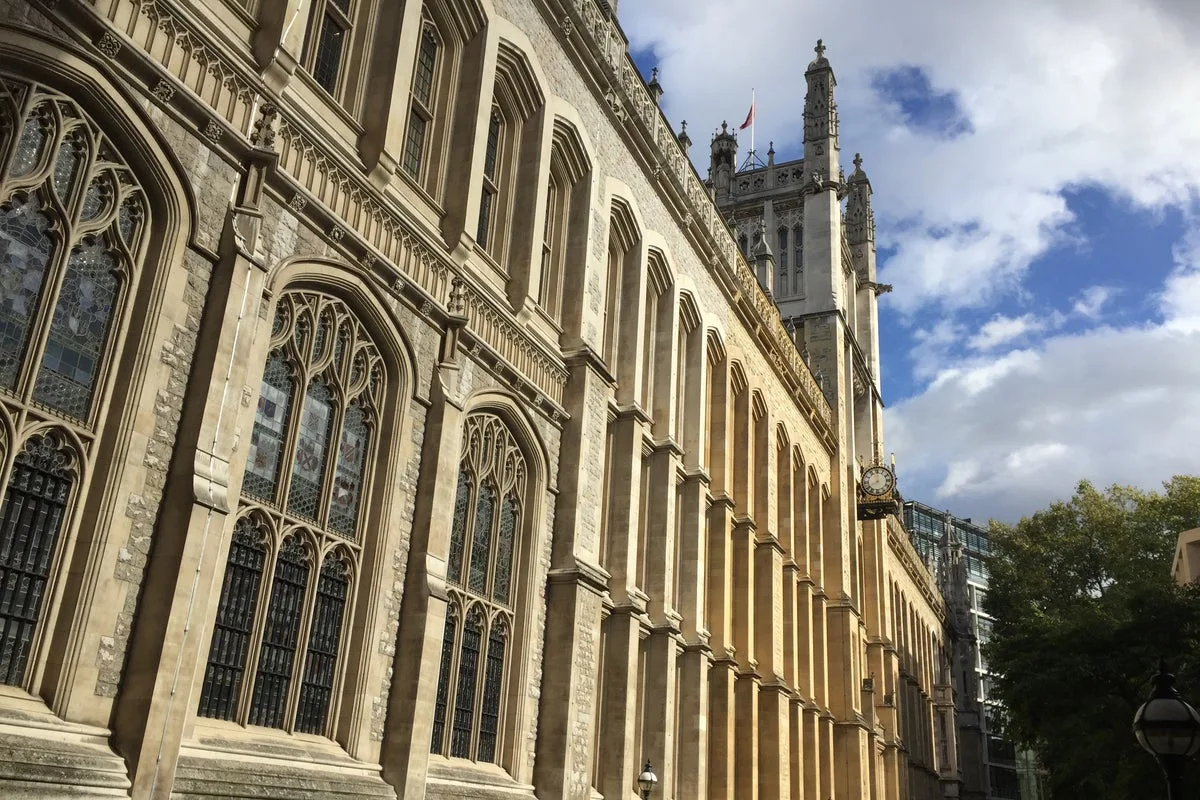
King’s College London is one of England’s oldest universities, established by royal charter in 1829. It grew through a series of mergers in the late 20th century, including with Queen Elizabeth College and Chelsea College of Science and Technology in 1985, the Institute of Psychiatry in 1997, and the United Medical and Dental Schools of Guy’s and St Thomas’ Hospitals and the Florence Nightingale School of Nursing and Midwifery in 1998. It is now the sixth-largest university in the UK by enrolment.
Cranfield University was founded as the College of Aeronautics in 1946, incorporated by royal charter, and became a university in 1969. It is renowned for its postgraduate programmes and applied research in technology and management.