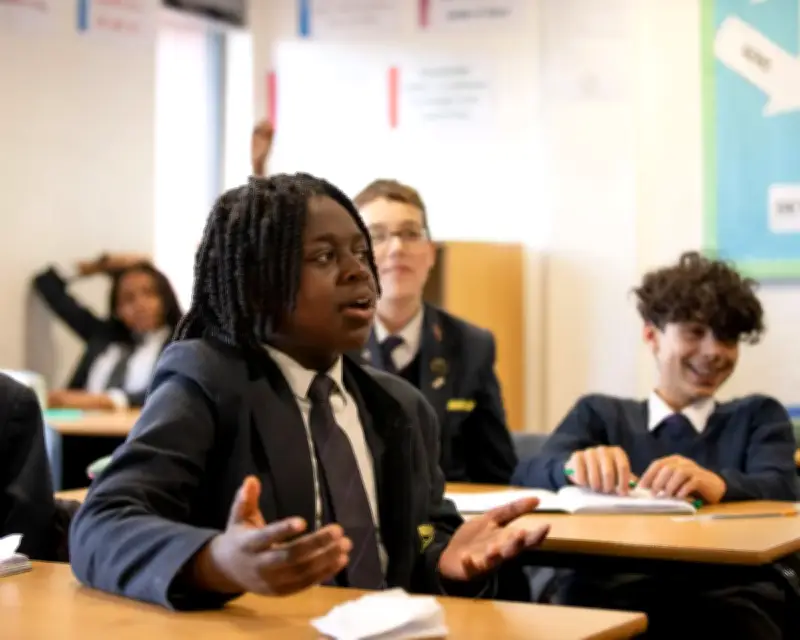
The education secretary, Lucy Powell, has called for a radical reform of the national curriculum in England to reduce “desktop” working in favour of verbal fluency and practical skills, a move that would see articulation join reading, writing and arithmetic as a core educational skill.
In a Guardian column, Simon Jenkins argues that the promotion of oracy – the ability to speak fluently – means teaching young people once again to use the spoken word to their advantage. He contends that the spoken word, human-to-human communication, must finally be recognised by the “gods of reactionary schooling”.
The decline of conversation
Jenkins notes that artificial intelligence and mobile phones are progressively distancing young people from adults and each other. He observes that gatherings of young people who used to chatter, laugh and banter now stand gazing at their screens or shout at each other. Conversation – sharing, informing, discussing, sympathising – seems on the way out.
Research suggests that in the past two decades the number of words people say each day has shrunk by nearly a third, with a preference for texting. A quarter of young people now say they never even answer the phone unless pre-arranged, fearing a phone call means bad news.
Oracy's historical roots
To the Greeks and Romans, oracy was the towering skill of rhetoric, central to citizenship. The New Education movement of Steiner and Montessori in early 20th-century Europe stressed building on the qualities of the individual child rather than imposing rote learning from above. The movement has seen a revival in the Waldorf schools now favoured by California’s AI executives in Silicon Valley.
Jenkins argues that the aversion to the spoken word has corresponded with the increasing prominence of maths in the curriculum, whose skills beyond foundational arithmetic are irrelevant to all but a tiny minority of adults. Children need to master elementary maths in primary school, but after that they only need to know how to use a calculator.
Maths and the curriculum
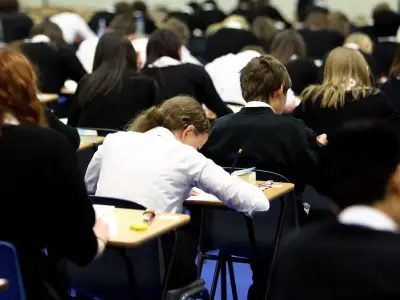
He questions the requirement for most apprenticeships to pass a GCSE paper that includes questions such as working out the volume of a sphere with diameter 20cm in terms of π, noting that former prime minister Rishi Sunak wanted maths to be compulsory until the age of 18. Maths has long headed the list of “most hated” school subjects.
Jenkins highlights that the hyper-centralisation of British government has meant ever more school time spent on exams, leading to cutbacks on individualised learning and creativity. Teachers are pressed to “teach to the test”, at peril of damnation from Ofsted. Only the private sector dares resist, with Winchester college devoting an hour a day to its form of oracy: “div” and “forum” sessions where pupils discuss contemporary topics not covered by the examination syllabus.
Speech-centred concepts such as group learning and peer tutoring are being pursued in some universities, and the cause was taken forward in the 2024 oracy commission report. But the catch is always resources, as the essence of teaching people how to speak lies in personal contact – the human relationship of tutor and pupil, once the essence of teaching as a profession.
Jenkins concludes that one key might lie in killing maths, leaving it to its enthusiasts. For the rest, school should be about the world outside, a world of other human beings, and it is about how to go about handling them that young people have most to learn.