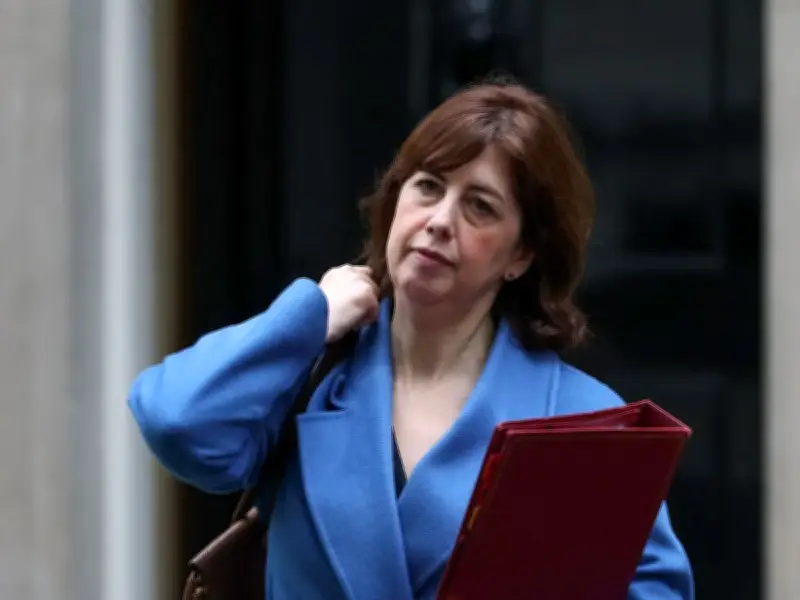
Education Secretary Lucy Powell has ordered a leak inquiry after expressing frustration that details of a major antisemitism review were reported in the media before its findings were presented to Parliament.
Ms Powell apologised for the reporting as she addressed MPs in the House of Commons on Wednesday (October 21), where she formally responded to Sir David Bell's independent review into antisemitism in schools and colleges.
Ms Powell said: "Let me just apologise for some reporting of this in the media. The full report and the government response were laid to the house this morning and weren't given to the media first. I have ordered a leak enquiry into this matter."
Review exposes 'shocking scale' of antisemitism
The review, commissioned by the Department for Education, has exposed what Ms Powell described as the "shocking scale" of antisemitism across Britain and the education system.
It found that almost three in five Jewish young people and half of Jewish teachers had experienced or witnessed antisemitism. Ms Powell said antisemitism is "normalised and amplified" on social media and said "old tropes" had found a "new life" online.
She added: "We all know that antisemitism is an ancient evil. Today it remains as pernicious as ever. But its modern mutation is in many ways more prominent and more prevalent. And perhaps most concerning of all, it's especially true amongst young people."
Government accepts all 27 recommendations
The Government has accepted all 27 recommendations made by Sir David, a former chief inspector of schools, and pledged a number of measures to help schools and colleges identify, challenge and prevent antisemitism.
Among the recommendations are dedicated antisemitism training for education leaders, strengthened safeguarding guidance, improved reporting of incidents and greater support for teachers dealing with complex cases.
Ms Powell also vowed to write to schools and colleges to inform them that they should adopt the International Holocaust Remembrance Alliance's working definition of antisemitism.
Ms Powell told MPs: "Sir David has published this seminal review exposing the shocking scale of antisemitism in British society and how that's reflected across education.
"Almost three in five Jewish young people and half of Jewish teachers have experienced or witnessed antisemitism. This cannot continue."
She added: "All children and teachers should be able to go to school or college free from fear. But there's a wider responsibility for education as a whole to teach our young people British values of tolerance, acceptance and respect for one another.
"Collectively we have a duty to educate this generation and the next on what antisemitism is, on why it's wrong, and what happens when it takes hold in society.
"So whether or not there are Jewish staff and Jewish students in your school or college, this report is for you. This generational challenge belongs to us all."
Changes planned for schools
The review found that antisemitism had evolved into contemporary forms, including when linked to the Middle East, and warned that it had become "unacceptably casual" in some educational settings.
Ms Powell said: "As a house and a government we must be absolutely clear, blaming British Jews for the acts of the Israeli government is antisemitism.
"Assuming British Jews have a particular political standpoint because they are Jewish is antisemitism. Targeting British Jews out of concern for Palestine is antisemitism."
Ms Powell said she would write to schools and colleges to inform them that they should adopt the IHRA working definition of antisemitism, arguing that a "common and consistent definition will improve understanding and confidence."
She also promised to strengthen safeguarding guidance to make clear that antisemitism is "a distinct risk and therefore requires a distinct safeguarding response," while schools and colleges will be encouraged to record antisemitic incidents as a "specific category".
Noting Sir David's findings that school leaders need more support to challenge antisemitism, she said: "We will develop and roll out high-quality training, good practice guidance, and practical resources, as well as dedicated support for leaders in managing complex serious incidents involving antisemitism, including where escalation is needed.
"We'll also give schools and colleges clear and specific support for how and when controversial and sensitive issues should be discussed."
Ms Powell promised to "update and strengthen" Holocaust education in schools and confirmed that it will continue to be compulsory in the national curriculum. Schools will also receive guidance in navigating difficult issues relating to political impartiality and discussions about Israel and the Middle East, the response said.
However, Ms Powell agreed with Sir David that the Holocaust "shouldn't be the only thing they know about Jewish people". The curriculum will also place greater emphasis on Jewish history, culture and contributions to Britain.
The Government will seek to "boost opportunities for engagement with Jewish cultural experiences". Ms Powell told MPs that visits to Manchester Museum had fallen by half following the terrorist attack at Heaton Park Synagogue.
She also said the Government would continue working with the Community Security Trust to ensure Jewish pupils and staff were "safe, happy and supported".
Implementation group established
An implementation group has been established to oversee the recommendations and will begin work immediately. Sir David will review progress after a year.
Ms Powell said: "Implementation is now my priority. I will make sure schools and colleges are better equipped to spot, challenge and prevent antisemitism wherever it happens."
The report follows warnings from Jewish community organisations about rising antisemitism in educational settings. The Community Security Trust, which monitors antisemitism in the UK, found there were 178 school-related antisemitic incidents in the first six months of this year, an increase of 59 per cent from the 112 incidents reported over the same period last year.
The organisation's figures from when the review was announced found there were 204 school-related antisemitic incidents in 2025, double typical levels before 2023.
The review was commissioned by the Department for Education in March, with pupils, parents and teachers invited to share their experiences between April and July.
In August, Sir David warned that Jewish schoolchildren faced "regular and hostile abuse" from young people and adults. He also said some leaders of Jewish faith schools had identified security as their main concern, with education sometimes taking second place.
Sir David said: "In leading this review, I have been seized of the urgency in tackling antisemitism in schools and colleges. Its modern manifestations are having a pernicious impact in too many places, so it is vital that my recommendations are acted upon and acted upon quickly.
"Our schools and colleges play a vital role in educating the next generation of Britons. They are at the centre of our efforts to tackle antisemitism amongst the young. So, I call upon everyone with an interest in our nation's future to redouble their efforts to ensure that our education system is safe for everyone, including our fellow Jewish citizens of whatever age."